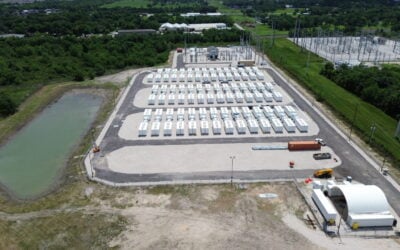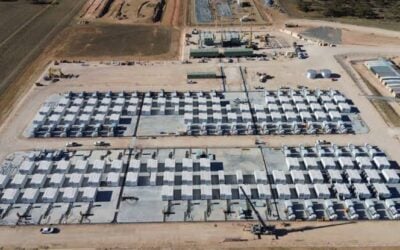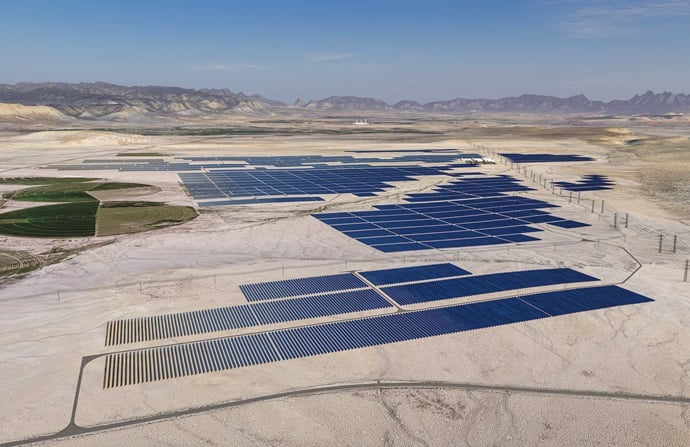
Renewable power and energy storage developer rPlus Energies has broken ground on a solar PV plant in Utah, US, co-located with 1.6GWh of battery storage.
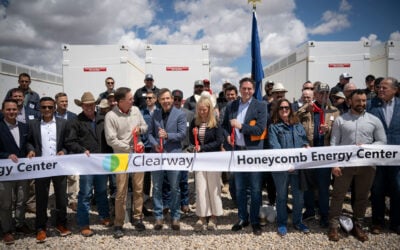
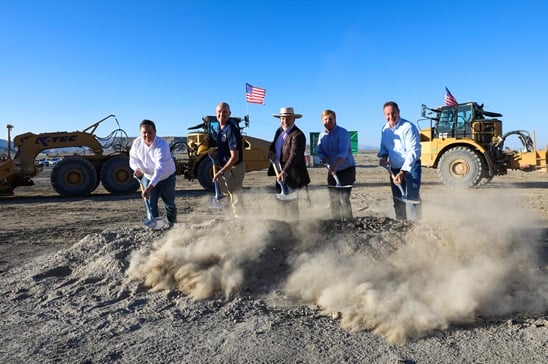
“This project is being built in rural Utah, by rural Utahns, and for all of Utah,” said state governor Spencer Cox at a groundbreaking ceremony held last week at the site of rPlus Energies’ Green River Energy Center project.
“When rural Utah thrives, the entire state prospers. Today, we’re not just breaking ground—we’re building a future of affordable, abundant energy in Utah,” Cox said.
The project will feature 400MW of solar PV alongside a 400MW, 4-hour duration (1,600MWh) battery energy storage system (BESS) in Emery County in Eastern Utah.
Try Premium for just $1
- Full premium access for the first month at only $1
- Converts to an annual rate after 30 days unless cancelled
- Cancel anytime during the trial period
Premium Benefits
- Expert industry analysis and interviews
- Digital access to PV Tech Power journal
- Exclusive event discounts
Or get the full Premium subscription right away
Or continue reading this article for free
Solar PV modules will be provided by Elite Solar and the BESS solution by Tesla, while Sundt Construction will carry out engineering, procurement and construction (EPC) duties.
Rural regions are a deep energy market in need of a just transition, Resta says
The developer signed a power purchase agreement (PPA) for the plant’s full output with Berkshire Hathaway Energy-owned utility Pacificorp back in 2022.
The original document was amended earlier this year to quadruple the site’s energy storage capacity from 400MWh, and in July the developer secured a financing package for the Green River Energy Center worth more than US$1 billion in construction debt financing from five lenders.
Company president Luigi Resta told Energy-Storage.news in a recent interview at the RE+ clean energy trade show that developing clean energy assets in rural areas, particularly in the Western Electricity Coordinating Council (WECC) region, is the key pillar of RPlus Energies’ business strategy.
While California and Texas may be the US’ most prolific adopters of solar, wind and storage, those markets are already saturating, Resta said. Meanwhile, developing assets in places like Utah and Idaho may be a more initially challenging prospect, but the deep need for energy capacity and economic revitalisation in the rural US offers a potential long-term value.
The company develops assets to own and operate across four technologies: solar PV, wind, battery storage and pumped hydro energy storage (PHES).
Resta said he can relate to the concerns of communities in those regions as someone with a rural background. At the same time, rPlus understands that burning coal was not just an industry for the region but part of the economic engine that built the US.
“Emery County, where we’re building this project, has a 145-year history of energy exploration and development through coal and coal burning and gas. We really appreciate that,” Resta said.
“As we look at the future and some of those industries drying up, or that economic focus needing diversity, we’ve viewed those as good areas to go into because it’s kind of a continuation of their legacy with energy generation and development.”
The US government, too, has recognised the need to create a ‘just’ energy transition in the country. Tax credit incentives under the Inflation Reduction Act (IRA) are offered at higher rates for so-called ‘energy communities’.
With rPlus’ projects in the WECC region already largely in development since 2015-2017, those bonus incentives did not motivate its choice to work there. Instead, the basic market fundamentals did.
“[The IRA] certainly is helpful from an economic perspective to accelerate those [projects for energy communities], but when you look at the map, and the transmission system and power system that we have, there are centralised, big coal plants and nuclear, natural gas that are scattered around the country, and the grid has been made up of centralised power plants with big distribution,” Resta said.
Co-locating renewables and storage near centralised power plants means leveraging the existing transmission system, which also means a much shorter queue for grid interconnection than may be found on California’s CAISO grid.
On the other hand, while Texas’ ERCOT market is seeing rapid deployment of wind, solar and storage, the pure merchant nature of ERCOT means bigger risk, Resta said. Within WECC, the opportunity to sign a long-term offtake agreement with a solid counterparty in the form of utility PPAs offers more revenue certainty, the rPlus president claimed.