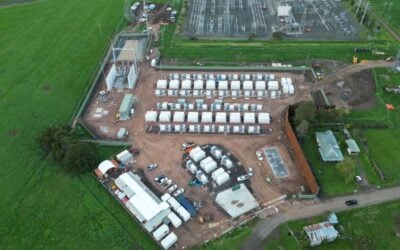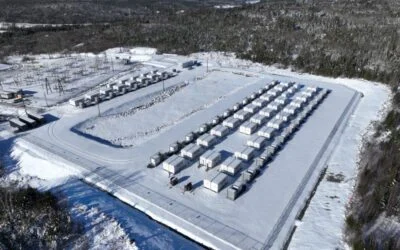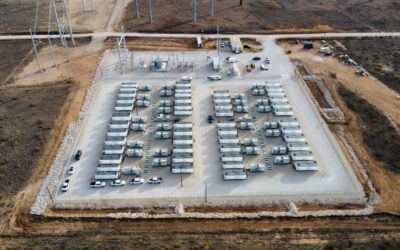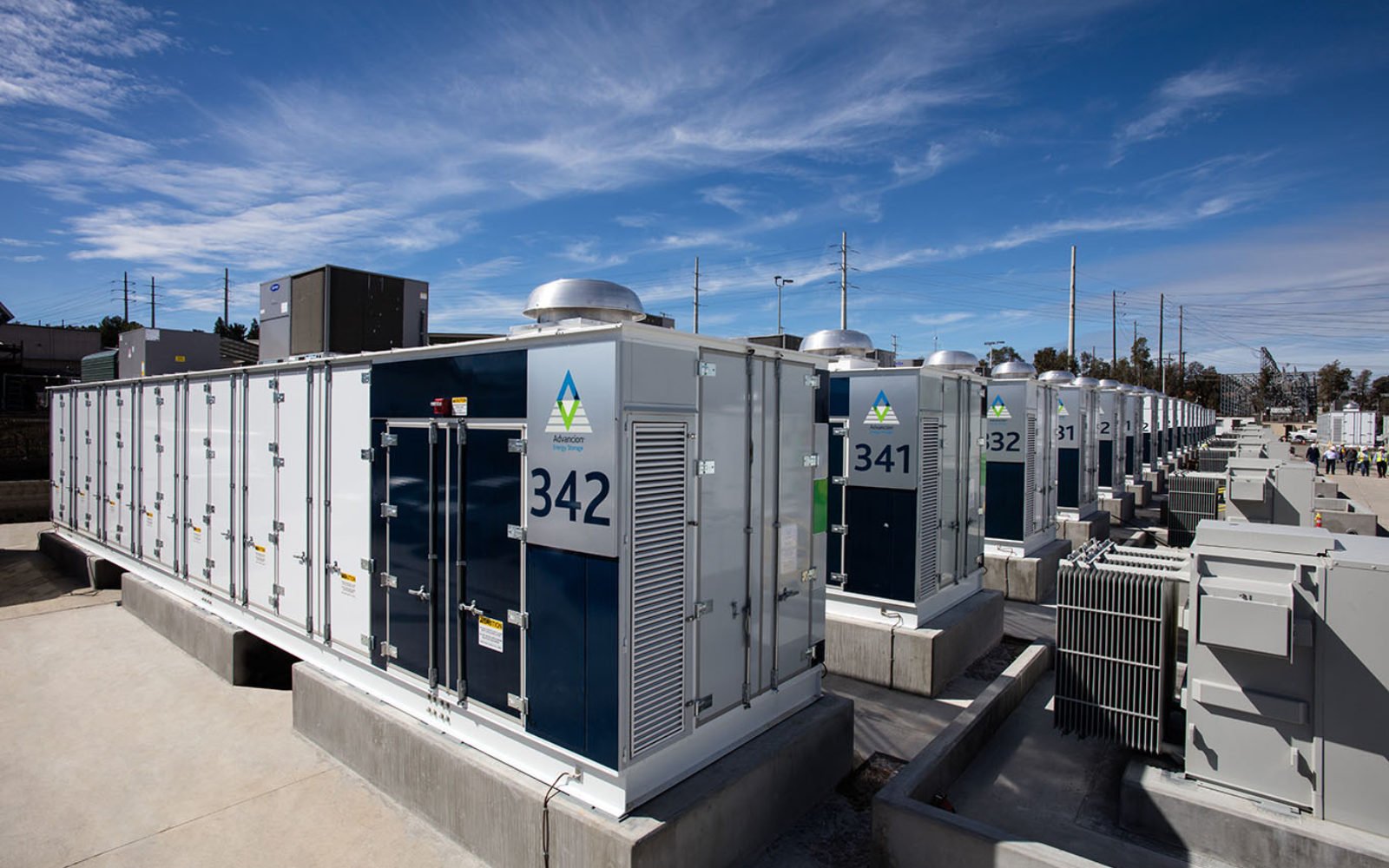
A vast new energy storage system – thought to be the largest of its kind in Canada to date with 48MW / 144MWh capacity, will be built in the city of Sault Ste Marie, Ontario.
Fluence, the venture jointly owned by developer AES Corporation and Siemens, will provide energy storage technology and provide engineering, procurement and construction (EPC) services. The company has signed an agreement for the project with PUC Services, an affiliate of the city’s designated Local Distribution Company (LDC) for electricity, PUC Distribution.
The Fluence-PUC partnership will be used to offer energy management solutions to PUC’s biggest customers. Through use of the battery, businesses with a large energy profile should be able to save money on their monthly energy costs.
As often reported by this site, Ontario pays for grid upgrades and decarbonisation partly through the Global Adjustment Charge, a peak demand pricing mechanism which levies higher rates on commercial customers than residential. This has led to numerous C&I projects that have been used to ‘peak shave’ businesses’ energy demand from the grid in the province, but nothing on the scale of this latest project announcement to date.
Try Premium for just $1
- Full premium access for the first month at only $1
- Converts to an annual rate after 30 days unless cancelled
- Cancel anytime during the trial period
Premium Benefits
- Expert industry analysis and interviews
- Digital access to PV Tech Power journal
- Exclusive event discounts
Or get the full Premium subscription right away
Or continue reading this article for free
Customer Energy Management programme to be paid for through shared savings
Local news outlet The Sault Star carried a report about the project late last week. A Fluence spokesman said today that broadly, the report was correct but did mistakenly state that the capacity was expected to be 45MW / 165MWh, which the Fluence representative corrected. The report also put some numbers on potential savings businesses could make. Some 357 business customers could save a total of CA$3 million (US$2.29 million) to CA$5 million savings annually between them, amounting to around CA$100 million over the course of the project’s lifetime.
The project will also aid in the reduction of greenhouse gas emissions, by lowering the use of fossil fuels to keep the grid stable and to meet times of peak demand. Canada is currently in the process of developing stringent rules on emissions, including carbon pricing. That legislature is at the draft stages with jurisdictions of Canada asked to submit details of their proposed carbon pricing systems to the government by the beginning of September.
The project – to be known as the Customer Energy Management (CMEa) programme – will be paid for by shared savings on energy bills and independently financed, requiring no further investment from the city or from PUC. Sault PUC supervisor of customer engagement Giordan Zin also told the Sault Star that two sites are currently being contemplated in proximity of the distribution company’s transformer stations to be connected to PUC’s distribution network at eight separate feeder locations. Construction will commence once the location is selected and design work completed, while Zin also told the Star that the project would also support critical facilities and infrastructure including the local hospital and emergency services.
While Canada has several huge pumped hydro energy storage systems, in terms of advanced energy storage with batteries, the biggest project listed in the country so far on the US Department of Energy’s Global Energy Storage Project Database is a 53MWh project by developer Hecate Energy, also in Ontario. To date in Sault Ste Marie, Convergent Energy + Power, a US-Canadian developer, has installed a 7MW / 7MWh lithium-ion battery storage system supplied by GE (General Electric) in the summer of 2017. Convergent Energy + Power has been somewhat prolific in Ontario’s energy storage market, having netted investment from oil & gas major Statoil towards its projects.
Aside from energy storage, Ontario’s renewables sector appears to be in flux, with the recent cancellation of contracts for hundreds of projects, ostensibly to lower the cost of hydroelectric power, as well as the recent election of populist politician Doug Ford as the province’s Premier – who enacted the cancellations.