Fluence has formed a partnership with TECO Group to pursue energy storage opportunities in Taiwan’s growing market.
The energy storage system integrator and energy tech and services provider has formalised an existing relationship with TECO, a Taiwan-headquartered conglomerate which began — and continues to be — in the field of heavy industrial and electrical equipment, but has diversified into numerous other business areas.
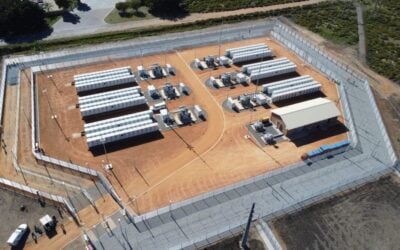
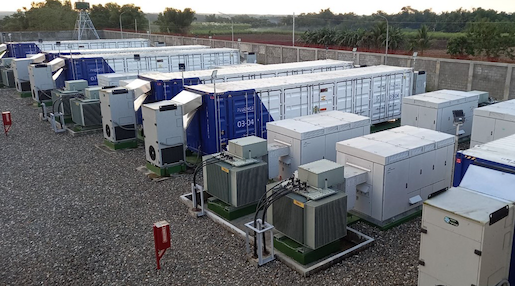
The two companies have worked together on energy storage system projects since 2020, with their first 6MW project together announced publicly in late 2021. In the initial stages of their newly announced partnership, Fluence’s battery storage technologies will be installed at TECO Group factories.
Those battery systems will participate in the Automatic Frequency Control (AFC) ancillary services market launched by Taiwan’s grid operator Taipower. AFC tenders have brought a number of international energy storage players onto island, which is a hub of high tech manufacturing.
Try Premium for just $1
- Full premium access for the first month at only $1
- Converts to an annual rate after 30 days unless cancelled
- Cancel anytime during the trial period
Premium Benefits
- Expert industry analysis and interviews
- Digital access to PV Tech Power journal
- Exclusive event discounts
Or get the full Premium subscription right away
Or continue reading this article for free
Through the tenders, Taipower is expected to procure about 590MW of energy storage over four years.
Companies including Powin Energy, Wärtsilä and New HOrizons Ahead (NHOA) have been contracted to deliver, or have already delivered, battery energy storage systems (BESS) to participate in the AFC market opportunity.
NHOA in particular, formerly known as ENGIE EPS, was acquired last year by Taiwan Cement Corporation (TCC) and is set to deploy 420MWh at facilities owned and operated by its new majority owner.
In fact prior to the acquisition being completed, TCC Group announced in March 2021 that it had completed work on Taiwan’s first grid-scale storage project, participating in AFC. It was soon followed by other companies’ project announcements throughout the rest of the year.
Fluence and TECO meanwhile will also seek opportunities to deploy BESS for offshore wind and solar PV applications, as well as continued involvement in ancillary services. Offshore wind has been a big area of focus for TECO, which claimed to have deployment onshore substations to support about 2GW of offshore wind in the last three years alone.