UK Power Reserve, a British developer of flexible electricity assets, has confirmed that battery storage solutions from Fluence will be used to build out its entire 120MW portfolio of projects.
In June, UK Power Reserve said it had selected Fluence, which is a joint venture between German engineering giant Siemens and AES Corporation’s energy storage division, as technology provider for half of this portfolio, delivering 60MW across locations in the north and the Midlands of England.
The second phase of six 10MW projects across four locations – all of which secured contracts in the 2016 Capacity Market auction – have now also been handed to Fluence.
And the battery storage firm now claims the combined 120MW portfolio represents the largest contracted energy storage portfolio transaction to date globally.
Try Premium for just $1
- Full premium access for the first month at only $1
- Converts to an annual rate after 30 days unless cancelled
- Cancel anytime during the trial period
Premium Benefits
- Expert industry analysis and interviews
- Digital access to PV Tech Power journal
- Exclusive event discounts
Or get the full Premium subscription right away
Or continue reading this article for free
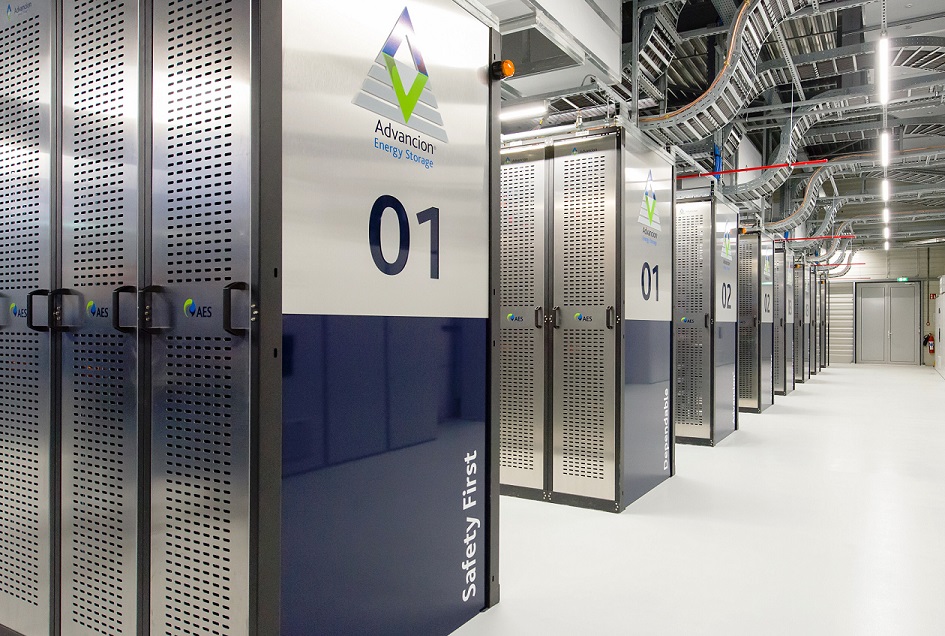
The additional 60MW of battery storage projects, as with the sites currently under construction, will be built using Fluence’s Advancion platform and are expected to be brought online by the end of summer next year. Advancion is among three main containerised grid-scale solutions offered through Fluence and was developed by AES Energy Storage previously, while the company also offers Siemens’ Siestorage and Fluence’s own Sunflex platform, which is aimed squarely at solar-plus-storage applications.
Meanwhile the original tranche of projects are on schedule and expected to be connected by the end of this winter.
Sam Wither, head of UK Power Reserve, said: “By splitting our portfolio into two 60MW sets of projects, we’ve had the opportunity to fully assess the market and took a nimble approach to keep up with this rapidly evolving space. Fluence and its Advancion technology again proved their worth throughout this highly competitive process.”
Sean Greany, project development director for UK Power Reserve, added that the decision to award the rest of the portfolio to Fluence had been informed by the battery storage company’s efforts to work “tirelessly to meet every need”.
In July, Solar Media Market Research analyst Lauren Cook said that installed grid-scale energy storage capacity in Britain could exceed 500MW this year.