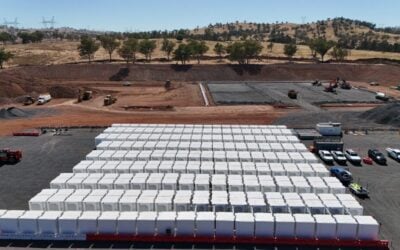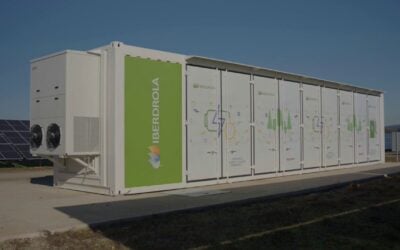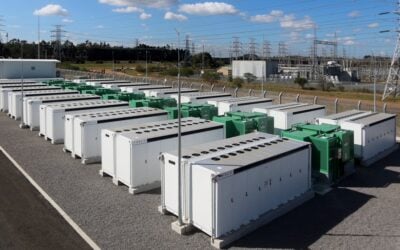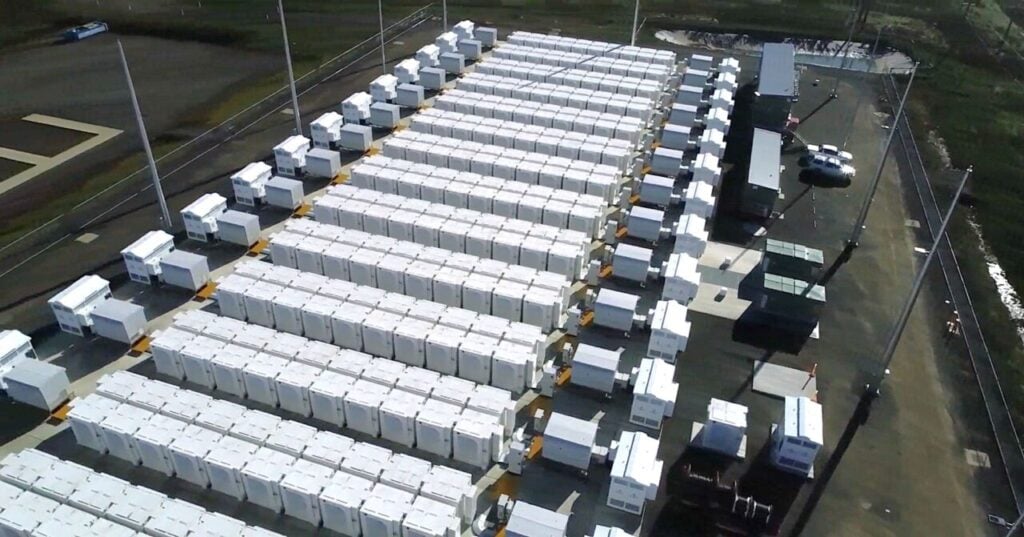
Australian renewable energy company Tilt Renewables has officially inaugurated its 100MW/200MWh Latrobe Valley battery energy storage system (BESS) near Morwell, Victoria.
The project, which is connected to the National Electricity Market (NEM), was formally opened by Victorian minister for climate action, energy and resources Lily D’Ambrosio at a ceremony held at the site adjacent to the existing Morwell Terminal Station, approximately 150km southeast of Melbourne.
This large-scale battery storage system is the first to be deployed globally to incorporate the complete product ecosystem of battery storage system integrator and clean energy software and services company, Fluence, alongside Fluence’s OS7 operating system.
It combines the company’s Gridstack energy storage technology with its Mosaic AI-powered bidding software and Nispera asset performance management platform.
Try Premium for just $1
- Full premium access for the first month at only $1
- Converts to an annual rate after 30 days unless cancelled
- Cancel anytime during the trial period
Premium Benefits
- Expert industry analysis and interviews
- Digital access to PV Tech Power journal
- Exclusive event discounts
Or get the full Premium subscription right away
Or continue reading this article for free
Tilt Renewables CEO Anthony Fowler highlighted the project’s strategic importance to the company’s expanding renewable energy portfolio.
“This project wouldn’t have been possible without the incredible efforts of our team, the support of the Latrobe Valley community, and the expertise of our delivery partners Fluence, AEMO, and AusNet,” Fowler said.
“Together, we’ve built a system that will play a vital role in Australia’s energy transition.”
The Latrobe Valley BESS functions by storing excess energy, particularly from solar generation during daylight hours, and discharging it during peak demand periods such as evenings.
This capability helps reduce fossil fuel dependence, stabilise supply fluctuations, and enhance grid reliability across Victoria’s network.
Latrobe Valley BESS alignment with Victoria’s renewable energy and storage targets
Minister D’Ambrosio emphasised the project’s alignment with Victoria’s clean energy objectives during the opening ceremony.
“This battery is a powerful symbol of our commitment to a cleaner, more reliable energy future. It will help us meet our ambitious 95% renewable energy target by 2035 and ensure Victorians have access to affordable, secure power,” D’Ambrosio said.
The Latrobe Valley BESS contributes significantly to Victoria’s renewables goals while also supporting the region’s economic transition. During construction, the project created 45 direct and 240 indirect jobs and will maintain three permanent operational roles.
Energy storage technology provider Fluence also served as the project’s engineering, procurement and construction (EPC) contractor.
The project team included several other partners, with Zenviron serving as the balance of plant subcontractor, AEMO handling grid connection, AusNet providing connection assets, Wilson Transformers supplying the connection asset transformer, TwoMorrows Electrical performing electrical balance of plant works, and LAI manufacturing the switchroom.
Latrobe Valley BESS adds to Tilt’s 1.9GW operational assets
The Latrobe Valley BESS represents a cornerstone of Tilt Renewables’ expanding clean energy portfolio, which currently includes wind and solar assets in the NEM and a wind plant in Western Australia.
The Latrobe Valley project joins other operational large-scale BESS in Victoria, including the Victorian Big Battery (300MW/450MWh) developed by French IPP Neoen and the Gannawarra Energy Storage System (25MW/50MWh), which is co-located with a 50MWac solar PV power plant.
As coal-fired power stations in the Latrobe Valley and elsewhere in Australia approach retirement, battery storage systems like the one developed by Tilt Renewables will play an increasingly crucial role in maintaining system security and enabling greater renewable energy penetration across the grid.
Our publisher, Solar Media, will host the Energy Storage Summit Asia 2025 on 7-8 October 2025 in Manila, the Philippines. You can receive 20% off your ticket using the code ESN20 at checkout.