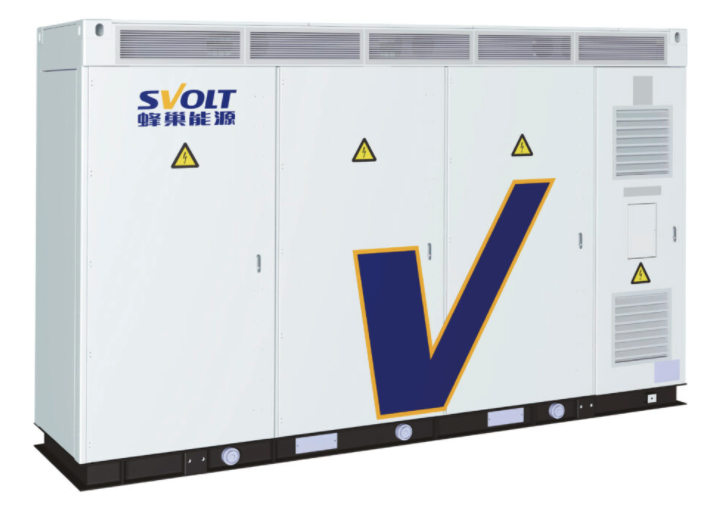
Lithium-ion battery producer SVOLT has announced an LFP-based energy storage system (ESS) solution having until now predominantly focused on battery cells for the electric vehicle (EV) market.
The Jiangsu-headquartered company with a presence in Europe says its Energy Storage Units (ESU) are now available and use lithium iron phosphate (LFP) technology.
It says its CE-Series ESU is a “highly modular and standardised energy storage solution” which can help with renewable energy integration, dynamic capacity expansion, demand-side energy management, distributed power generation, emergency power supply and fast charging of electric vehicles.
The solution has cells with 280 Ah and 3.2 V, it adds, and it has medium-scale systems available which boast advanced thermal management and fire protection mechanisms. The company also has a ‘cloud-based big data service platform for regional energy supply’ available.
Try Premium for just $1
- Full premium access for the first month at only $1
- Converts to an annual rate after 30 days unless cancelled
- Cancel anytime during the trial period
Premium Benefits
- Expert industry analysis and interviews
- Digital access to PV Tech Power journal
- Exclusive event discounts
Or get the full Premium subscription right away
Or continue reading this article for free
“From 2023, modular liquid-cooled ESS components will then be launched on the market. In the same year, SVOLT also plans to offer accompanying Smart Energy Professional Services,” the press release said.
SVOLT is a spinout from Chinese sports and truck vehicle manufacturer Great Wall Motors. It has to-date mainly announced deals with the automative sector, including its former parent company.
It is the most recent example of a vertically integrated battery manufacturer adding BESS products to its range and thus becoming a direct competitor to system integrators like Fluence, Wartsila and Tesla. Others to have done this include BYD, LG Energy Solution, CATL and Samsung SDI.
SVOLT was the second-most funded battery storage company in the world last year after Swedish group Northvolt, according to Mercom. It raised US$2.6 billion over two fundraising rounds.
It has new gigafactories planned in Germany, India and China. It is says it is investing €2 billion (US$2.19 million) into its Saarland, Germany, site. Some two dozen companies are building lithium-ion gigafactories in Europe.