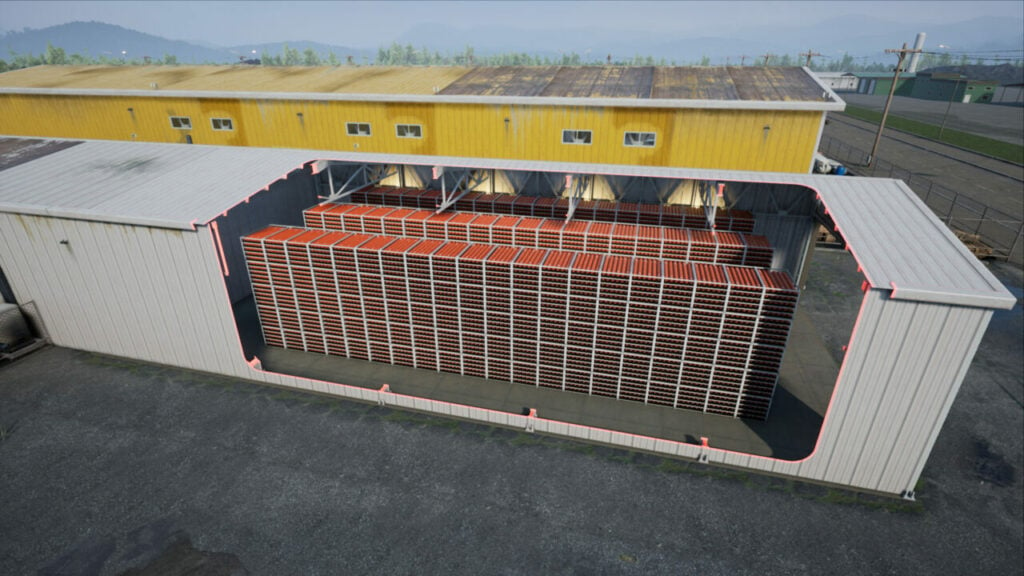
The newest metal-hydrogen ‘vessel’ from US startup Enervenue has “even more advantages over lithium-ion for stationary storage applications”, the company’s chief revenue officer has claimed.
Enervenue came out of stealth mode in 2020, bringing to market nickel-hydrogen batteries which are based on a technology used in outer space at the likes of the International Space Station and Hubble Telescope.
The California-headquartered company claims its adaptation of the space-age tech is low cost, versatile in offering large outputs of power along with capacities and durations of storage, while it is also designed to be rugged and durable enough to last 30,000 cycles of charging and discharging.
It is among many startups and technology providers with non-lithium storage technologies vying for commercialisation, particularly in the long-duration energy storage (LDES) segment, where the potential for offering big capacities of storage that lithium-ion may struggle to do means there could be a market opportunity, as long as demand for LDES solutions grows.
Try Premium for just $1
- Full premium access for the first month at only $1
- Converts to an annual rate after 30 days unless cancelled
- Cancel anytime during the trial period
Premium Benefits
- Expert industry analysis and interviews
- Digital access to PV Tech Power journal
- Exclusive event discounts
Or get the full Premium subscription right away
Or continue reading this article for free
Enervenue would say that that demand is already there, with a claimed order backlog of 7GWh and bookings being taken for projects in delivery for 2025 and beyond, while the company is also building a factory in Kentucky, US, with 1GWh initial annual production capacity, ramping to 20GWh over time.
As explained by CEO Jorg Heinemann in a 2022 interview with this site, the building blocks of Enervenue’s systems are its Energy Storage Vessels (ESVs). At that time, these were 1.2kWh units that could be stacked to create anything from distributed residential scale storage systems to large utility-scale storage with durations between 2 – 12 hours.
It is also better from a fire safety perspective than lithium-ion as it does not encounter thermal runaways Enervenue claimed, while also being uncoupled from lithium battery supply chains. CEO Heinemann said in that interview that while it does use nickel, the amount used per vessel is very small.
The newly unveiled next-generation ESV will be produced from the Kentucky factory and apparently has 100% higher energy density than the previous iteration, as well as 150% more energy storage capacity, which based on the previous being 1.2kWh, would make the new ESVs 3kWh per unit.
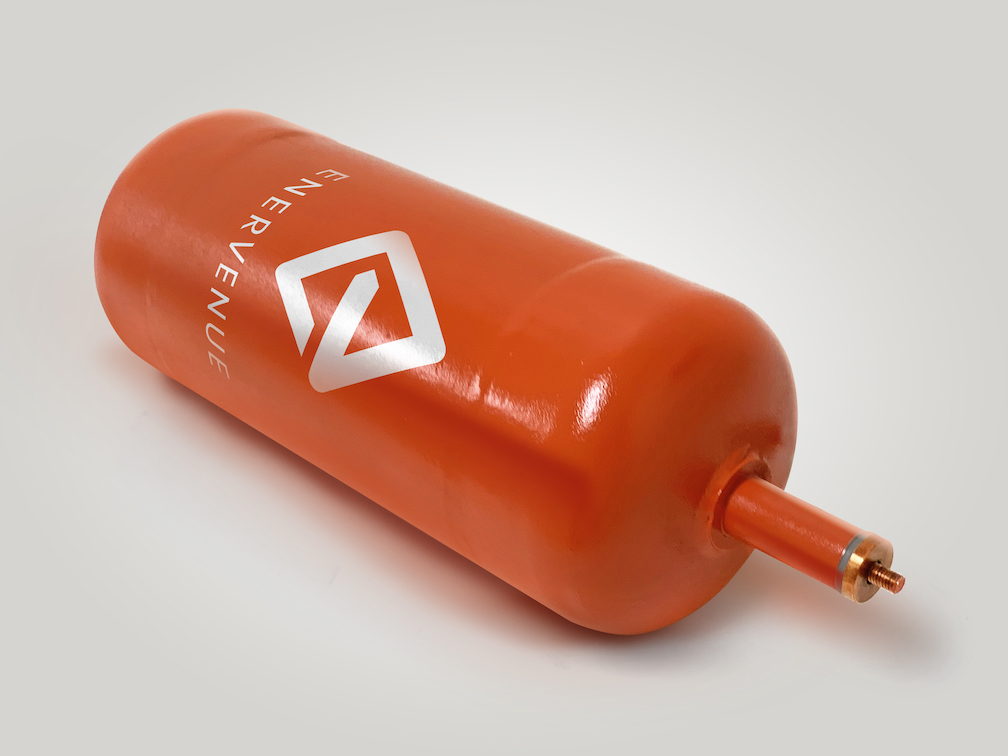
It is also better optimised for use in environments with a wider range of temperatures and the company said it comes with better monitoring features, while it can be warrantied over 20 years or 20,000 cycles, after which time the company will guarantee at least 88% of battery capacity will remain.
“We are excited about the next-generation ESVs, which offer even more advantages over lithium-ion for stationary energy storage applications. EnerVenue has continued to improve the performance, versatility, and flexibility of our unique solution,” Randall Selesky, Enervenue chief revenue officer (CRO) told Energy-Storage.news.
“Customer demand has accelerated quickly, and we are preparing to mass-produce the solution at our new gigafactory in Kentucky. EnerVenue has come a long way, quickly, since launching three years ago—and our new ESV technology will enable us to grow even faster as we meet global demand for a clean energy future.”