Energy Vault has entered what it has described as “one of the world’s fastest-growing energy storage markets,” acquiring a portfolio of development projects in Japan.
The US company, which first launched in Switzerland in 2017 as the progenitor of a novel gravity-based energy storage technology but has since largely pivoted into the lithium-ion (Li-ion) battery storage system integration and project development space, announced the acquisition yesterday (9 April).
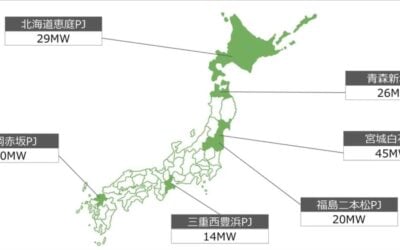
Energy Vault has signed a binding agreement to buy an 850MW pipeline of battery energy storage system (BESS) projects from an undisclosed Japanese developer.
The portfolio includes 350MW of sites expected to reach notice to proceed (NTP) in the second half of 2027, with commercial operations targeted in the latter half of 2028, along with a further 500MW of early-stage projects.
Try Premium for just $1
- Full premium access for the first month at only $1
- Converts to an annual rate after 30 days unless cancelled
- Cancel anytime during the trial period
Premium Benefits
- Expert industry analysis and interviews
- Digital access to PV Tech Power journal
- Exclusive event discounts
Or get the full Premium subscription right away
Or continue reading this article for free
Energy Vault said the multi-year pipeline of development opportunities gives it a foothold in Japan, a market that CEO Robert Piconi said “represents one of the most compelling energy storage growth opportunities globally.”
“Despite being a highly developed economy, Japan’s energy storage market remains significantly underpenetrated and is now entering a period of accelerated growth driven by renewable expansion and structural grid constraints,” Piconi said.
“Importantly, storage demand in Japan is not tied to load growth, but to the increasing need for flexibility, resilience, and system stability—creating a powerful, long-duration growth tailwind for our broad portfolio of solutions.”
Japan’s energy storage market is indeed experiencing rapid growth, based on a unique ability within Asian markets for BESS owners to stack revenues from a number of applications, most prominently trading in the wholesale JEPX power exchange, but also providing ancillary services in balancing markets and, to a lesser extent, securing 20-year capacity market contracts through the government’s Long-Term Decarbonization Auction (LTDA) mechanism.
That said, market experts and industry insiders have cautioned developers and investors that both government policy and the regulatory environment are frequently in flux when it comes to Japan’s energy sector and that this risk should be regarded appropriately.
The majority of projects announced and brought online so far have been around 2MW/8MWh per asset. This is thought to be for two reasons: firstly, that developers are testing the waters with relatively small assets, but also that even 2MW projects with 4-hour duration storage capacity, are amply sized to capture decent returns from trading.
However, bigger projects are being announced, with French independent power producer (IPP) Neoen unveiling a planned 200MW/400MWh BESS with partners Equans and Toho, and real estate conglomerate Tokyo Land forming a consortium with domestic investors to target 174MW of deployments across six projects, as reported by Energy-Storage.news this week.
Meanwhile, Energy Vault reported a 340% increase in annual revenue in its full year 2025 financial results in March, growing from US$46.2 million in 2024 to US$203.7 million in the year just gone. It also improved its adjusted EBITDA from a US$58 million loss in 2024 to a US$21.2 million loss last year.
The company said this improvement was based on its integrated offerings of system integration technology, including proprietary software and BESS enclosures, with a develop-to-own IPP strategy through a newly established subsidiary, Asset Vault.
Energy Vault said it would leverage technologies, including its VaultOS energy management system (EMS) software, B-Vault AC BESS solution and sodium-ion (Na-ion) cell technology sourced from US startup Peak Energy, to meet Japan’s market demands, which it said include stringent safety and high energy density of systems.