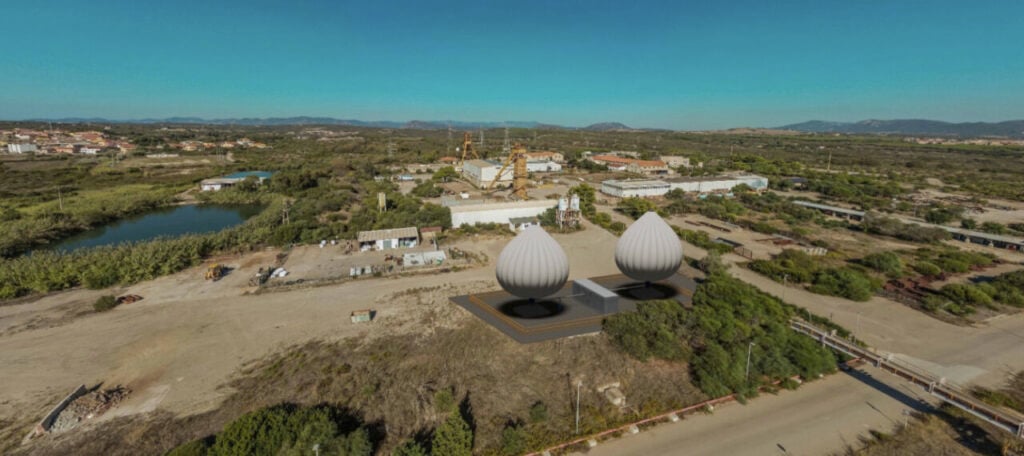
Energy Vault and a coal mining company owned by the local government in Sardinia, Italy, have signed a land lease agreement to deploy a project combining gravity energy storage and BESS technology.
The energy storage technology firm has partnered with Carbosulcis S.p.A to develop a 100MW ‘Hybrid Gravity Energy Storage System’, a solution that Energy Vault has designed for deployment in underground mines.
It combines its proprietary gravity energy storage technology for which it is known and battery energy storage system (BESS) technology, and would be deployed in a large coal mine shaft that Carbosulcis is set to fully retire in 2026, called Nuraxi Figus.
Carbosulcis is owned by the Autonomous Region of Sardinia, the large Mediterranean island that is part of Italy. The Sardinia government wants to turn the coal mine into a Carbon Free Technology Hub to aid the industrial and economic development of an area heavily affected by the phase-out of coal production.
Try Premium for just $1
- Full premium access for the first month at only $1
- Converts to an annual rate after 30 days unless cancelled
- Cancel anytime during the trial period
Premium Benefits
- Expert industry analysis and interviews
- Digital access to PV Tech Power journal
- Exclusive event discounts
Or get the full Premium subscription right away
Or continue reading this article for free
The solution would comprise a form factor of Energy Vault’s gravity tech that also combines with a water-based, modular pumped hydro application, though the company didn’t say more about how this would work. It would also utilise the company’s VaultO energy management software (EMS).
Installation of the first modular gravity components will begin in September 2024 with the testing of the underground component of the Hybrid Energy Storage System expected to be completed in 2025.
Energy Vault revealed a number of new form factors of its gravity storage tech earlier this year, including one for use in skyscrapers in partnership with world-leading architecture consultancy SOM.
The company has had several projects commissioned recently, including a BESS in Texas and its first gravity storage project in China, and will release its financial results for the most recent quarter after markets close today.