Source: www.ted.com
Elon Musk has revealed the widely anticipated sequel to the ‘Master Plan’ that he wrote almost 10 years ago, where he finally pieces together the missing pieces of the energy puzzle; uniting batteries and electric cars with solar power.
In a post on the Tesla website, Musk detailed how among four points of action in the initial plan was the goal to provide solar power. “No kidding,” writes Musk, “this has literally been on our website for 10 years.
If the planned acquisition of leading US installer SolarCity was not enough of an indication of a new direction for the electric motor company, this revelation is a sure sign of a switch for Tesla to a renewable energy company.
Earlier this week, before the release of Part two of the plan, Bloomberg pinpointed a one-word change in Tesla’s mission statement on their website. “Sustainable transport” had been changed to “sustainable energy”.
Try Premium for just $1
- Full premium access for the first month at only $1
- Converts to an annual rate after 30 days unless cancelled
- Cancel anytime during the trial period
Premium Benefits
- Expert industry analysis and interviews
- Digital access to PV Tech Power journal
- Exclusive event discounts
Or get the full Premium subscription right away
Or continue reading this article for free
Despite the initial reaction to the merger being less than favourable, reports emerged that Tesla’s US$1.91 billion bid to buy the biggest US solar power system company was far more than “just business”.
“The point of all this was, and remains, accelerating the advent of sustainable energy, so that we can imagine far into the future and life is still good. That’s what ‘sustainable’ means. It’s not some silly, hippy thing – it matters for everyone,” writes Musk.
The ‘Master Plan Part Deux’ is a roadmap to what Musk feels will allow the company, and the public, achieve sustainability sooner.
Integrating energy generation and energy storage
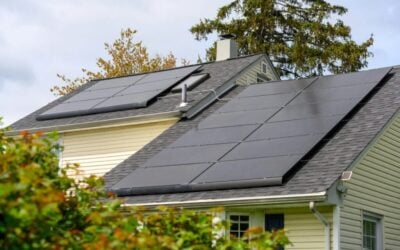
The first point of the plan is to “create a smoothly integrated and beautiful solar-roof-with-battery product that just works, empowering the individual as their own utility, and then scale that throughout the world.” Musk continues by saying that the fusion of Tesla and SolarCity was necessitated to achieve this point. “Now that Tesla is ready to scale Powerwall and SolarCity is ready to provide highly differentiated solar, the time has come to bring them together,” he writes.
Aside from integrating solar roofs with integrated battery storage, the Plan is set to expand Tesla’s vehicles to address “all major segments”; develop a self-driving capability that is 10x safer than manual and enables cars to make money for owners when not in use.