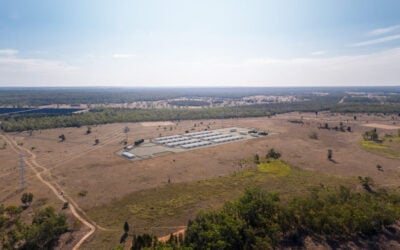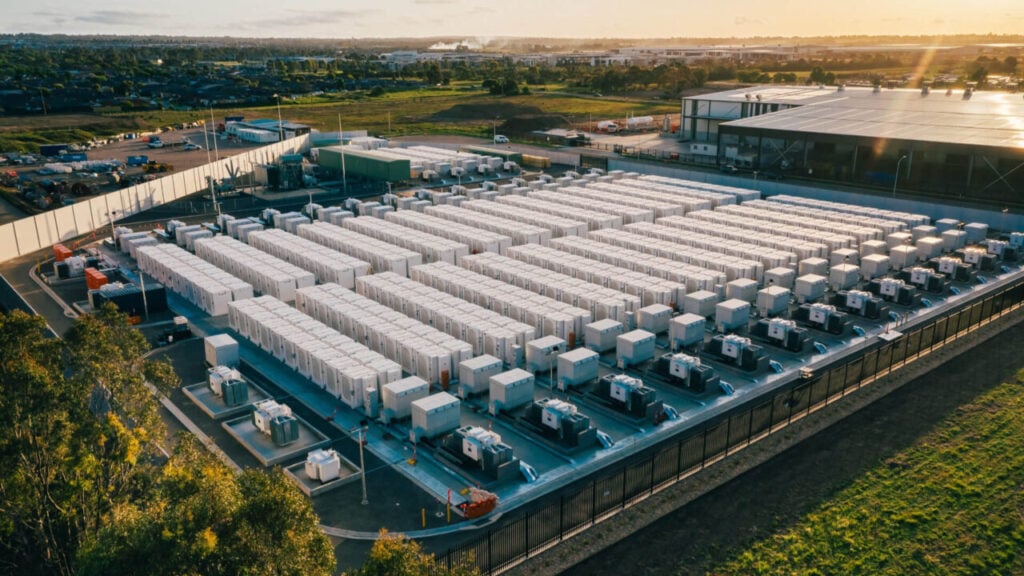
Developer Eku Energy and LP Renewables have announced plans for the 400MW/1,600MWh Belah battery energy storage system (BESS) in Queensland, Australia.
The proposed 4-hour duration Belah BESS will be located around 19km south of Chinchilla in the Western Downs region. The rural town of Chinchilla is known as the ‘Melon Capital of Australia’ and plays host to a Melon Festival every second year in February.
It has also become the scene of several renewable energy and storage developments, such as CS Energy’s 100MW/200MWh Chinchilla BESS, which went into operation last year.
Eku Energy’s Belah BESS project will connect directly to the Orana substation through a new underground high-voltage transmission line and generate electricity for the National Electricity Market (NEM) over a proposed operational lifespan exceeding 20 years.
Try Premium for just $1
- Full premium access for the first month at only $1
- Converts to an annual rate after 30 days unless cancelled
- Cancel anytime during the trial period
Premium Benefits
- Expert industry analysis and interviews
- Digital access to PV Tech Power journal
- Exclusive event discounts
Or get the full Premium subscription right away
Or continue reading this article for free
The London-headquartered BESS developer confirmed that its partners have completed specialist studies covering environmental, heritage, safety and amenity impact assessments as part of their development application lodgement.
Community consultation sessions are planned to enable stakeholders to meet with the project team and learn about environmental and social impact assessments, including Eku Energy’s “Powering Big Dreams” benefit-sharing plan, which encompasses local partnerships and community investment initiatives.
Eku Energy expands its presence in Australia
The Belah project represents the latest addition to Eku Energy’s expanding Australian portfolio, which includes multiple large-scale battery developments across the country. Eku Energy previously lodged its 400MW/1,600MWh Monduran BESS project in Queensland for environmental assessment under Australia’s Environment Protection and Biodiversity Conservation (EPBC) Act.
The Monduran project, located in the Bundaberg region, underwent a comprehensive bushfire hazard assessment and management planning process, with detailed fire safety studies commissioned to inform development and operational planning.
As a result, Eku Energy ensured that the Monduran BESS site incorporated fire risk mitigation measures as key design features, reflecting Eku Energy’s commitment to safety and environmental responsibility.
Community engagement for that project included visits to nearby neighbours and drop-in sessions at the Gin Gin Community Hub, establishing a template for stakeholder consultation that appears to be replicated with the Belah development.
Eku Energy’s Australian development activity has accelerated significantly, with the company and Origin Energy submitting a combined 2,200MWh of battery storage applications to Australia’s EPBC Act environmental assessment process. Eku Energy’s submission was the 1,200MWh Byellee BESS, located near Gladstone in Central Queensland.
Beyond its Australian operations, Eku Energy has expanded internationally with its entry into the New Zealand market through a utility-scale BESS acquisition. The company acquired an undisclosed-sized battery storage system on New Zealand’s North Island.
The Belah BESS proposal adds to Queensland’s substantial pipeline of energy storage projects as the state pursues ambitious renewable energy targets. Queensland’s Energy Roadmap 2025 targets 4.3GW of short-duration energy storage by 2030, creating significant opportunities for utility-scale battery developments, such as the proposed Belah project.