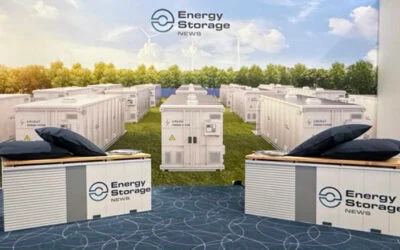
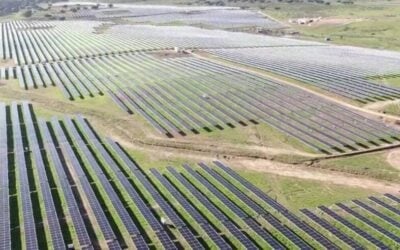
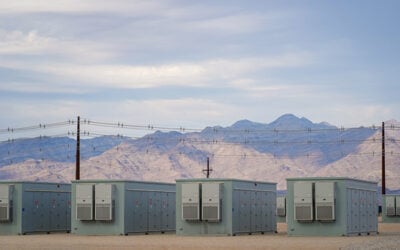
One of the two systems will be built by an arm of European utility giant E.On. Image: E.On.
Tucson Electric Power (TEP), a utility in Southern Arizona with around 420,000 customers, has received approval to build two 10MW energy storage systems, including one co-located with solar, from the state’s regulator.
Arizona Corporation Commission (ACC) approved the projects on Wednesday, for which TEP had issued a request for proposals (RfP) to lease last summer. TEP reached long-term agreements with E.On Climate & Renewables, an arm of the European utility which last year split off from its parent to work on clean, sustainable technologies and innovation, and NextEra Energy Resources, a wholesale electricity supplier and itself a subsidiary of a utility, US-headquartered NextEra Energy.
The systems’ uses will be twofold, boosting electric system reliability and for the purposes of studying how they could help the region expand its use of solar and other renewables. TEP had said in March in its most recently published resources plan that large solar arrays and other community renewables were a cost-effective investment for its portfolio of renewable generation capacity.
TEP’s plan, which involves boosting the utility’s renewable portfolio by around 800MW by 2030, around 30% of its power, and reducing reliance on coal, also highlighted the potential for energy storage and smart grid technologies to boost system reliability.
Try Premium for just $1
- Full premium access for the first month at only $1
- Converts to an annual rate after 30 days unless cancelled
- Cancel anytime during the trial period
Premium Benefits
- Expert industry analysis and interviews
- Digital access to PV Tech Power journal
- Exclusive event discounts
Or get the full Premium subscription right away
Or continue reading this article for free
Competitive bids meant two systems will be built instead of one
TEP received bids from more than 20 interested and qualified parties in the projects, with a TEP director commenting that the competitiveness of the participants and technologies meant that both projects will be built for less than the estimated cost of one single system. In fact, the original RfP only referred to the intended construction of one 10MW facility.
“These systems will help us build a more resilient grid at a reduced cost to consumers,” Carmine Tilghmann, who oversees TEP renewables projects, said.
The systems’ primary use will be to maintain the balance between energy supply and demand, including regulating grid frequency, with battery storage able to respond very quickly to grid signals and ramp up its output when needed. This has been seen in the US PJM wholesale market and now in Britain with a 200MW tender for enhanced frequency response (EFR) taking place this year.
The systems can provide backup power in the case of outages, about 5MW of power for an hour’s duration, could also defer infrastructure investment costs and, looking further ahead to the future, also ensure reliability of electric resources when adding increased amounts of renewables.
A solar array at Arizona State University. Image: wikimedia user: schwnj.
Tech and 10-year contracts
The two systems will use different battery chemistries, with E.On Climate & Renewables and NextEra Energy Resources building one of them each.
E.On’s subsidiary will build a 10MW lithium titanate oxide (LTO) system at the University of Arizona Science and Technology Park near Tucson, co-located with a 2MW solar PV array and pencilled for completion in the first quarter of next year.
NextEra Energy Resources will build its 10MW facility at a substation, based on lithium nickel-manganese-cobalt battery cells. This system is expected to be in operation before the end of this year.
Equipment, materials and component suppliers for either project have not yet been revealed.
TEP claimed the 10-year contracts the projects are being built under will “protect customers and the company from financial risks associated with investing in new technologies”, as they include a performance guarantee.
In related news, last week Arizona’s biggest utility, Arizona Public Service, agreed with installer SolarCity to mediate between them how solar customers will be compensated for their produced power. The state has become one of several battlegrounds in the US over solar policy, particularly with regard to net metering for residential solar.