Duke Energy would still choose lithium-ion for an upcoming 7.3-hour duration energy storage system in Florida if it redesigned the project today, a spokersperson told Energy-Storage.news.
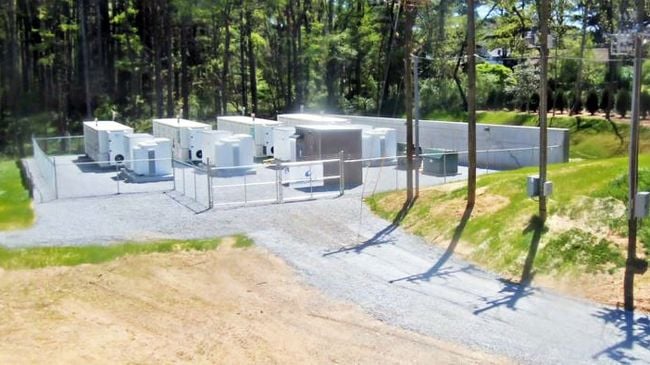
As recently reported on this site, the North Carolina-headquartered energy firm recently brought online the bulk of a 50MW/94MWh pipeline of battery energy storage system (BESS) projects in Florida.
The projects vary in size and duration and the last to come online is a 2.475MW/18MWh unit to be commissioned later this year, at John Hopkins Middle School, which a Duke Energy spokesperson told Energy-Storage.news uses lithium-ion battery cells.
They explained that the school is a hurricane emergency shelter so the company wanted to oversize the battery for a longer duration. When asked whether it considered other battery technologies when designing the project, and whether it would still choose lithium-ion if starting it from scratch today, they said:
Try Premium for just $1
- Full premium access for the first month at only $1
- Converts to an annual rate after 30 days unless cancelled
- Cancel anytime during the trial period
Premium Benefits
- Expert industry analysis and interviews
- Digital access to PV Tech Power journal
- Exclusive event discounts
Or get the full Premium subscription right away
Or continue reading this article for free
“At the time this project was designed, there were no other technologies that were as cost competitive while providing the same benefits as lithium-ion.”
“Duke Energy continues to test newer technologies and will soon be piloting newer chemistries to determine their capabilities; however, if this project was being redesigned today, lithium-ion would still be the technology of choice due to its cost, performance characteristics and proven reliability.”
The company’s comments are noteworthy and feed into the ongoing debate about lithium’s suitability for long duration energy storage versus other technologies like flow batteries (though many long duration storage solution companies may not consider eight hours as long duration at all).
The cost base of lithium-ion BESS projects has increased 25% year-on-year, according to system integrator Wartsila, driven by battery cells which have increased in cost as lithium carbonate has seen 1,000% price spikes.
Despite this, and flow battery companies’ claims that their solutions are cheaper in the long-term, lithium-ion continues to be chosen for many six and eight hour projects, including a 50MW/400MWh system in California in March.
The same month, Energy-Storage.news was told that lithium-ion could eventually become cost-competitive at up to 24 hours’ duration by Haresh Kamath, director of distributed energy resources and energy storage at EPRI, the R&D and demonstration project organisation funded by electricity industry stakeholders.
In April, Mitsubishi Power Americas’ head of energy storage Thomas Cornell told this site that the technology is still the best one even at 10-12 hours’ duration.
That said, Duke Energy continues to try out and test alternative technologies: in the past it has piloted the deployment of Eos Energy Enterprises’ zinc hybrid cathode battery technology for long-duration storage and is preparing to be the first to test out a new flow battery made with a proprietary electrolyte chemistry from Honeywell.