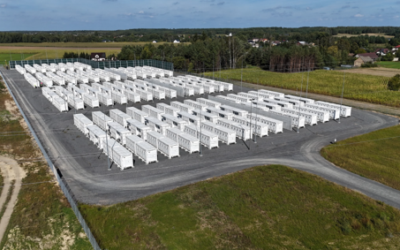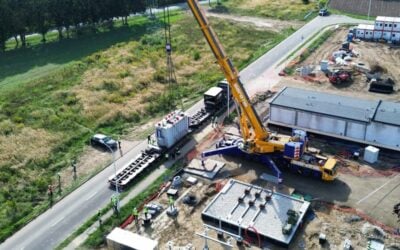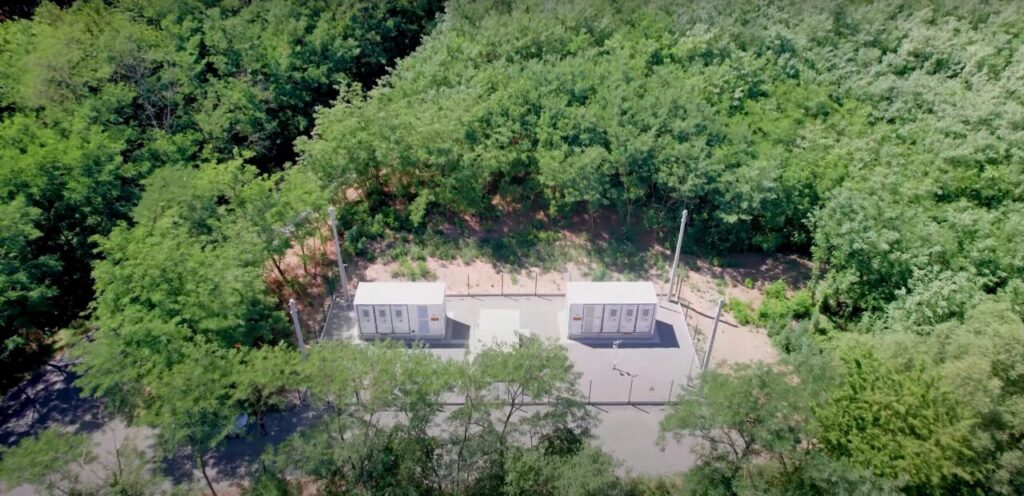
Opus Titasz, a distribution system operator (DSO) in Hungary, has commissioned and put into operation four BESS projects.
The four grid-connected battery energy storage system (BESS) projects total 4.5MW/15.88MWh of energy storage capacity. They are spread throughout Hungary, located in Rakamaz (2.75 MWh), Aranyosapáti (3.65 MWh), Csenger (6.9 MWh) and Nyírlugos (2.58 MWh).
A total of HUF 4 billion (US$11.6 million) was invested into the projects, with support from Hungary’s share of the EU Modernisation Fund, which supports energy system decarbonisation in 13 member states and is funded by the EU Emissions Trading System (EU ETS).
The four BESS are only be used for improving network quality parameters via ancillary services like voltage regulation, and cannot provide energy trading services. The systems can be connected to at least two medium-voltage networks each, Opus said.
Try Premium for just $1
- Full premium access for the first month at only $1
- Converts to an annual rate after 30 days unless cancelled
- Cancel anytime during the trial period
Premium Benefits
- Expert industry analysis and interviews
- Digital access to PV Tech Power journal
- Exclusive event discounts
Or get the full Premium subscription right away
Or continue reading this article for free
The ownership of energy storage facilities by DSOs as fully integrated network components was enabled by the EU’s 2019 Clean Energy Package.
Balázs Péli, Deputy CEO of the electricity network of Opus Titasz, said: “The use of storage also means that existing network capacities can be used more efficiently, there is no need to oversize the network, and the entire electricity system needs to be adapted to the peak production of renewables.”
“Battery storage installed in the electricity network can ensure the balancing of the network for 10 years and is capable of eliminating voltage fluctuations on the network in real time, both on the low-voltage and medium-voltage sides.”
Hungary has an energy storage capex support scheme which is mainly funded by the EU’s Temporary Crisis and Transition Framework, launched in 2022 to support economies’ transition away from fossil fuels in the context of Russia’s invasion of Ukraine, and partially by the Modernisation Fund.
That scheme has allotted €1.1 billion for energy storage in Hungary, and has been called ‘one of the most advanced’ in Europe.
The largest operational BESS in the country at 40MW/80MWh was recently put into commercial operation by independent power producer (IPP) MET Group.