
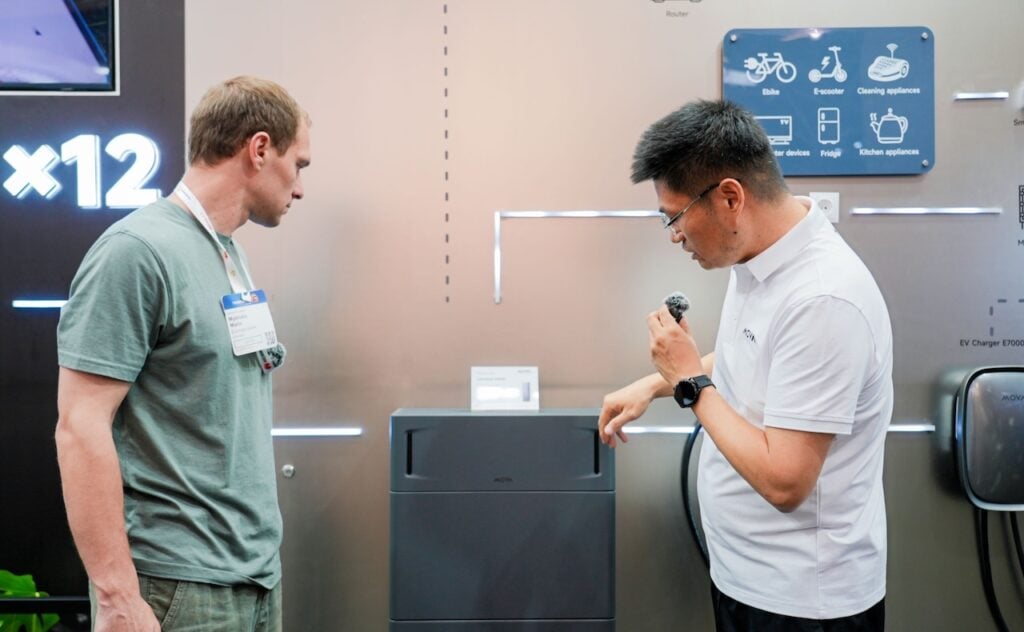
As hardware margins compress and consolidation accelerates, smart appliance brand’s energy division argues that intelligent software—not just batteries—will determine who survives
The residential energy storage market is entering a brutal phase. Margins are tightening, competition is intensifying, and industry consolidation looms. Yet MOVA LumeGret, the energy division of Chinese smart living brand MOVA, is entering Europe with the thesis that AI-driven energy management, not hardware specs alone, will separate winners from casualties in the coming shakeout.
At Intersolar Europe, the company unveiled its S4800 system alongside its existing A2000 balcony storage unit and A4000 home battery. But the real story isn’t the product lineup—it’s the company’s belief that residential storage is evolving from a hardware game into a software-driven energy optimisation play.
Roger Shen, president of MOVA LumeGret, spoke with Energy-storage.news to explain why the company thinks its AI platform can carve out space in an increasingly crowded market, and how it plans to scale from online sales to mainstream retail adoption.
Try Premium for just $1
- Full premium access for the first month at only $1
- Converts to an annual rate after 30 days unless cancelled
- Cancel anytime during the trial period
Premium Benefits
- Expert industry analysis and interviews
- Digital access to PV Tech Power journal
- Exclusive event discounts
Or get the full Premium subscription right away
Or continue reading this article for free
Entering the consolidation wave
MOVA LumeGret isn’t entering Europe despite the market consolidation—it’s entering because of it. Shen argues that as the market matures, differentiation matters more than ever, and the long-term winners won’t be determined by who can build the cheapest battery, but by who can deliver the most intelligent energy management experience.
“MOVA has spent years building AI-powered ecosystems across home appliances, cleaning robots, and personal care devices,” Shen explains. “We understand how to create products that learn from user behaviour and optimise automatically. That’s the capability we’re bringing to residential energy through MOVA LumeGret.”
The company is a global premium smart living brand committed to advancing AI-powered innovations for everyday life, building intelligent ecosystems across home cleaning, outdoor, personal care, kitchen appliances, pet care, and air purification. In Europe, the focus is on intelligent, scalable, and user-friendly energy solutions that support the region’s transition toward clean and decentralised energy.

Beyond “smart” marketing claims
Every energy storage company claims to have “smart” or “intelligent” features, but Shen insists MOVA LumeGret’s approach is fundamentally different. At the core of its products is the MOVA LumeGret Orbit™ energy management platform, which continuously analyses solar generation, household energy consumption, battery status, weather forecasts, and dynamic electricity tariffs to optimise energy flows in real time. The system automatically determines when to charge, store, or discharge energy.
But Orbit™ isn’t just about maximising self-consumption. It’s designed to help homeowners reduce electricity costs by responding to time-of-use tariffs, preparing for weather changes, and adapting to their actual usage patterns. The system gets smarter over time, learning from household behaviour.
“As tariffs become more dynamic and grid services become more valuable, that intelligence layer becomes the real product,” Shen emphasises. “We believe AI will play an increasingly important role in helping households optimise energy usage, improve self-consumption, and support a more flexible and resilient energy system.”
A scalable ecosystem strategy
MOVA LumeGret’s product strategy centres on building a scalable residential energy ecosystem rather than selling individual products. The three-tiered portfolio covers different market segments and use cases.
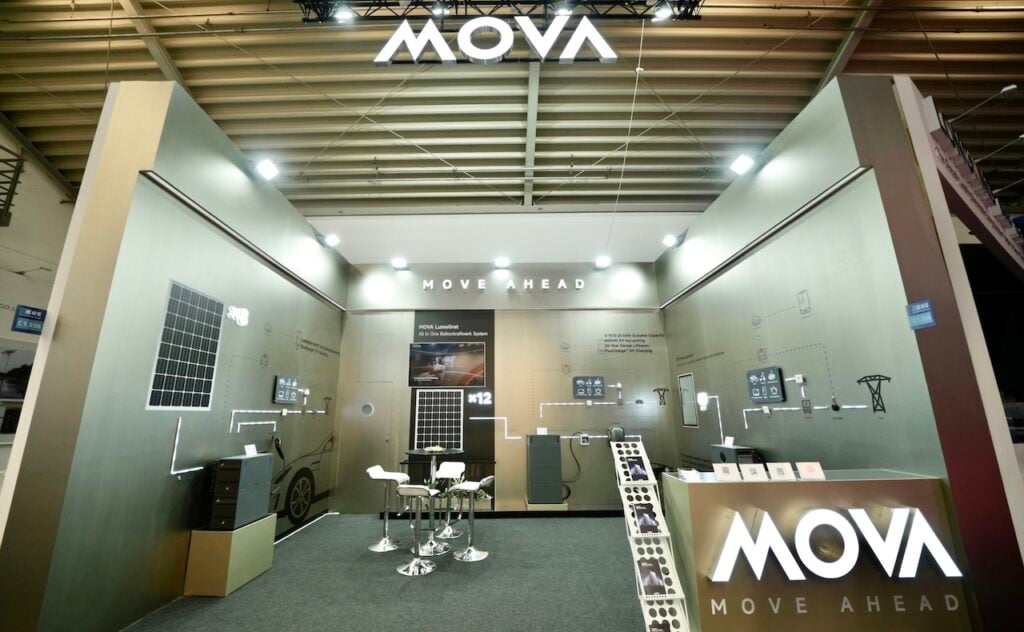
The A2000 is a plug-and-play balcony storage system designed for simple and safe entry-level solar usage—perfect for apartment dwellers or first-time solar users. The A4000, which has been on sale since June 9, is the flagship home storage solution for higher-capacity energy needs and backup power. The newly debuted S4800 expands the portfolio with higher solar input, intelligent energy management, and EV charging readiness for whole-home applications.
Together, these three products cover balcony users, standard households, and advanced home energy independence scenarios. Shen indicates the company won’t stop there, with plans to continue expanding into additional residential energy segments and introduce more innovations soon.
Targeting mainstream adoption
MOVA LumeGret primarily targets homeowners, early adopters of solar and storage systems, and households seeking energy independence and lower electricity costs. The route-to-market strategy combines online channels and installer networks to reach early adopters efficiently, but Shen sees the real scale coming from planned expansion into major European retail and home improvement chains.
“MOVA already has strong retail relationships from our other product categories—we know how to make complex technology accessible to mainstream consumers,” he notes.
Installation complexity has been a major barrier to residential storage adoption, and MOVA LumeGret is addressing this through plug-and-play simplicity, modular architecture, and fast installation designed to reduce system complexity and installation costs. At the same time, the company prioritises multi-layer safety design and certified hardware standards to ensure reliable and safe operation for residential users.
The goal, Shen says, is to make energy storage feel as straightforward as buying any other home appliance—which is exactly where MOVA’s experience comes in.
Betting on software over hardware commoditisation
Shen’s confidence in surviving the market shakeout stems from MOVA LumeGret’s positioning as more than just a battery company. The company believes that those who will lead the next phase of the industry are those that can combine energy hardware with AI-driven optimisation, ecosystem integration, and superior user experience.
“The residential energy storage market is becoming increasingly competitive and is moving toward consolidation,” Shen acknowledges. “We believe the long-term differentiation will come not only from hardware, but from intelligent software, ecosystem integration, and user experience. Companies that can combine energy hardware with AI-driven optimisation will lead the next phase of the industry.”
As Europe’s residential storage market enters its consolidation phase, MOVA LumeGret’s success will test whether software intelligence can indeed trump hardware commoditisation—and whether a smart appliance brand can translate its AI expertise into energy market leadership.
For more information about MOVA LumeGret’s residential energy solutions, visit the company’s website at www.movatech.com.
