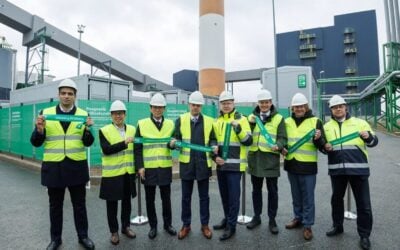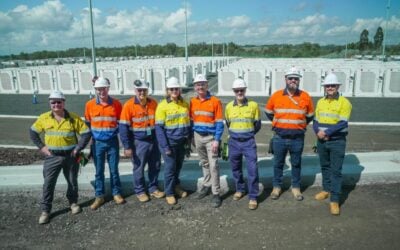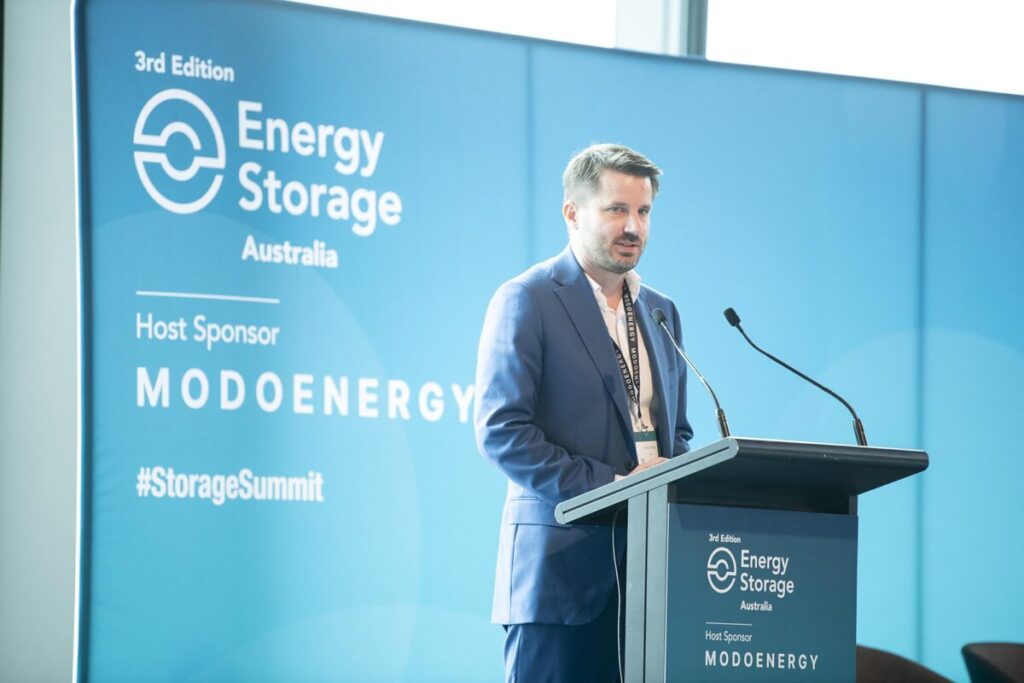
Thimo Mueller, general manager of commercial at ASL, has urged that a “culture of collaboration and partnerships” will be key to New South Wales (NSW) achieving its energy storage targets.
NSW is making substantial progress toward its ambitious energy storage objectives, with over 30GWh of long-duration storage already contracted and nearly half of supported projects in the state now past the financial commitment stage, according to Mueller.
Speaking at the Energy Storage Summit Australia 2026 in Sydney last week, Mueller outlined how the state’s Long-Term Energy Service Agreement (LTESA) programme is bridging the gap between policy ambition and project delivery, with tangible results now emerging across the development pipeline.
ASL, which serves as a consumer trustee under the New South Wales electricity infrastructure roadmap, has supported almost 3GW of energy storage since launching its first tender in late 2022.
Try Premium for just $1
- Full premium access for the first month at only $1
- Converts to an annual rate after 30 days unless cancelled
- Cancel anytime during the trial period
Premium Benefits
- Expert industry analysis and interviews
- Digital access to PV Tech Power journal
- Exclusive event discounts
Or get the full Premium subscription right away
Or continue reading this article for free
The organisation’s most recent LTESA tender awarded six contracts totalling around 12GWh of capacity, representing more than 40% of New South Wales’ minimum storage objectives.
“It’s one thing to put out an announcement. It’s another thing to really deliver those projects,” Mueller said, emphasising the programme’s focus on moving developments through to commercial operation.
Of the 25 projects currently supported by LTESA in New South Wales, 12 have now moved past financial close and into construction, commissioning or operation.
Five projects are fully operational, two are in commissioning, five are under construction, and 13 remain in development.
Mueller noted that six of those 13 were only awarded contracts a few months prior, reflecting ASL’s appetite for earlier-stage projects.
“We’re not only awarding LTESA to projects six months before commercial close or financial close, but that would also be too easy,” he explained.
“We are looking for projects where the LTESA can really make a difference, and oftentimes those are projects that are more than 12 months away from financial close.”
Grid-forming technology and deep storage emerge
Among the notable projects advancing through the pipeline, Mueller highlighted two battery developments that represent significant technical milestones.
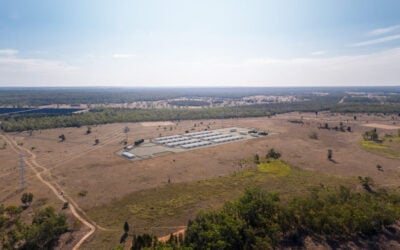
The Great Western battery, owned by Neoen Australia and awarded an LTESA in the latest tender round, will deliver 3.5GWh of storage capacity upon full operation, positioning it as one of the largest battery storage projects in Australia when complete.
Mueller was keen to note that earlier LTESA awards are already delivering results.
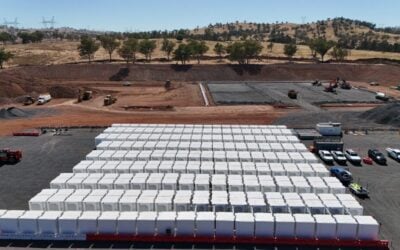
The Limondale BESS, a 400MWh project that received the first LTESA awarded to a battery in early 2023, is now commissioning and approaching commercial operations.
That project, Mueller said, “really kicked off developments of 8-hour duration BESS projects in the state.”
Projects awarded contracts in the 2023 firming tender are similarly progressing, with Smithfield BESS in Western Sydney fully operational, while Liddell and Orana BESS are close to entering commissioning.
New South Wales has set a target of up to 16GW of renewable generation and 42GWh of long-duration storage by 2030, objectives Mueller described as producing “the best outcome for New South Wales electricity consumers and for the system as well.”
Grid-forming technologies were a major discussion point at the Energy Storage Summit Australia 2026, with Fluence hosting a panel discussion that revealed exclusive insights into the development of the 1,000MWh Liddell BESS, which recently entered commissioning.
Hybrid projects and new market mechanisms
ASL is now developing new contract structures to accommodate the growing interest in hybrid renewable energy and storage projects.
Following consultation with industry, the organisation published outcomes on its website detailing a new product designed specifically for hybrid developments.
“From policy intent, we want more megawatt hours in the system, megawatt hours being electricity volume that reaches the system when prices are high for consumers,” Mueller said. “We think hybrid projects can achieve that.”
The product, which will be open to both wind and solar projects paired with storage, is scheduled to go to market in the second quarter of this year as part of the next-generation LTESA tender.
The pipeline of upcoming tenders remains substantial. ASL is currently finalising a 500MW firming tender targeting reliability issues in the Sydney-Newcastle-Wollongong sub-region, with results expected around May.
A 12GWh LTESA tender, the largest to date, will launch in the second quarter, followed by another 12GWh tender a year later.
These tenders are designed to help the state reach its 42GWh target by the end of 2033. An additional firming tender with a longer lead time, targeting commercial operation in the early 2030s, will launch toward the end of this year or early next year, allowing projects with extended development timelines to participate.
Mueller acknowledged that securing an LTESA does not guarantee project completion, noting that ASL plans for attrition and may contract beyond the 42GWh target if projects can demonstrate consumer benefits.
“The fact that a project has an LTESA doesn’t mean it will achieve commercial operation,” he said. “There’s a lot to do for projects beyond securing enough offtake.”
Concluding his keynote, Mueller outlined the broader requirements for successful energy transition delivery in New South Wales. Policy certainty beyond election cycles, clear investment strategies, and partnership structures are foundational, he argued, but capital allocation remains critical.
“We need capital that is capable of managing diverse risk and return profiles,” Mueller said.
“We will not be successful in delivering the energy transition if everybody looks at the infrastructure type, low risk, lower return profile. We need people who can adjust their return and risk appetite depending on what’s required in the market.”
He also emphasised the importance of workforce capability, community support, and what he described as “a culture of collaboration and partnership” across government, developers and local communities.
The LTESA mechanism, Mueller noted, addresses revenue risk but does not eliminate the many other development challenges projects face.
New South Wales has established support initiatives through the state government and the Energy Security Corporation to help developers navigate these complexities.