Copenhagen Infrastructure Partners begins construction on 1,500MWh Chile BESS

LinkedIn
Twitter
Reddit
Facebook
Email

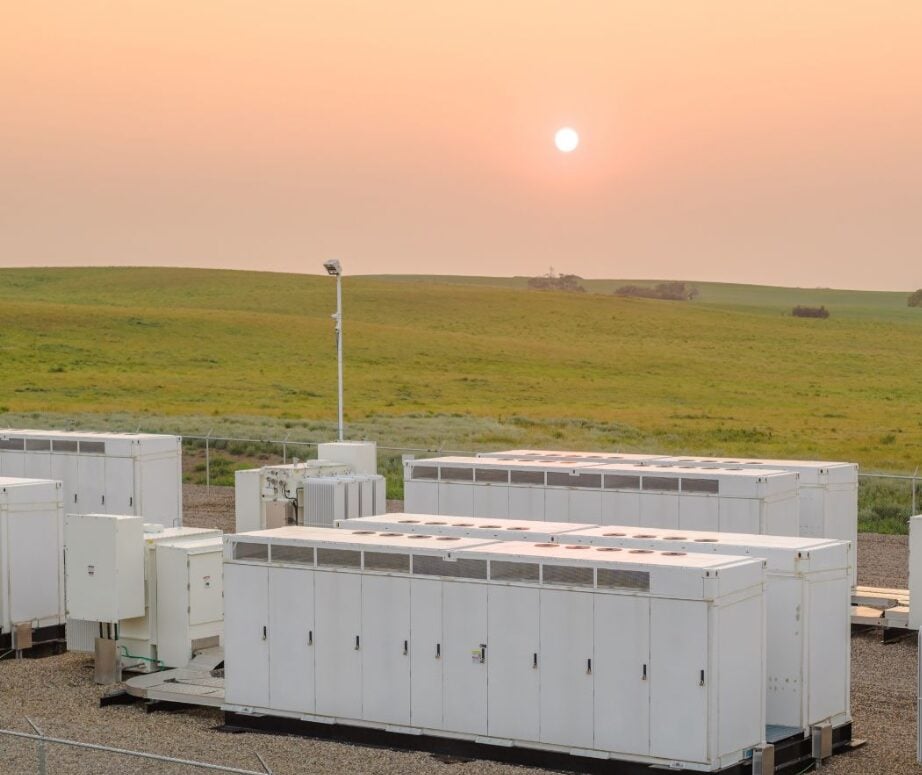
Danish investment firm Copenhagen Infrastructure Partners (CIP) has begun construction on the 300MW/1,500MWh Patache battery energy storage system (BESS) in northern Chile.

CIP, through its Growth Markets Fund II (GMF II) issued final notice to proceed (FNTP), authorising the start of construction activities under the main supply and construction contracts.

CIP claims that Patache is “strategically located in an area with world class solar resource”, sited adjacent to existing transmission infrastructure and energy intensive industrial clusters. 

The company said further that the solar power shifting and balancing services provided by Patache will reduce reliance on thermal generation during peak hours, lower CO2 emissions, and enabling further integration of large-scale solar energy into the Chilean power system.

This article requires Premium SubscriptionBasic (FREE) Subscription

Try Premium for just $1

  • Full premium access for the first month at only $1
  • Converts to an annual rate after 30 days unless cancelled
  • Cancel anytime during the trial period

Premium Benefits

  • Expert industry analysis and interviews
  • Digital access to PV Tech Power journal
  • Exclusive event discounts

Or get the full Premium subscription right away

Or continue reading this article for free

Additionally, the project has qualified for an “internationally recognised” carbon offset programme.

In 2024, CIP reached final investment decision on the 220MW/1,100MWh Arena BESS project in Antofagasta.

Most BESS projects in Chile are paired with solar PV. While Arena is a standalone project, it’s still located in Chile’s northern region, where high irradiation levels have concentrated the country’s solar capacity.

As reported earlier this year by our colleagues at PV Tech, solar and wind curtailment in Chile surpassed 6TWh in 2025, up 8% year-on-year, according to Chilean renewable energy and storage association ACERA.

Without BESS absorbing curtailed generation, the situation would have been far worse. ACERA estimates that curtailment could have reached 8TWh, a 43% increase, if operational BESS hadn’t stored renewable energy that would otherwise have been wasted.

ACERA noted that if all curtailed solar and wind had reached the grid in 2025, renewable energy’s share would have been 49.4% instead of 42.4%.

Energy storage deployment is accelerating in Chile. If current trends continue, ACERA projects approximately 9GW of BESS, averaging 4-hour duration, will be operational by the end of 2026, quickly surpassing the country’s 2GW BESS deployment by 2030 target four years ahead of schedule.

In March, Spain-headquartered independent power producer (IPP) Grenergy ordered 2,600MWh of BESS equipment from Chinese manufacturer BYD for its Central Oasis solar-plus-storage complex.

Central Oasis is Grenergy’s second GWh-scale hybrid project in Chile, following Oasis de Atacama in the country’s Atacama Desert region.

Earlier this month, CIP exited one of South Australia’s largest BESS projects, agreeing to sell its stake in the 240MW/960MWh Summerfield BESS to Palisade Investment Partners.
9 June 2026
Stuttgart, Germany
Held alongside The Battery Show Europe, Energy Storage Summit provides a focused platform to understand the policies, revenue models and deployment conditions shaping Germany’s utility-scale storage boom. With contributions from TSOs, banks, developers and optimisers, the Summit explores regulation, merchant strategies, financing, grid tariffs and project delivery in a market forecast to integrate 24GW of storage by 2037.
15 September 2026
San Diego, USA
You can expect to meet and network with all the key industry players again in 2025 from major US asset owners, operators, RTOs and ISOs, optimizers, software and analytics providers, technical consultancies, O&M technology providers and more.
15 September 2026
Berlin, Germany
Launching September 2026 in Berlin, Energy Storage Summit Germany is a new standalone event dedicated to Germany’s energy storage market. Bringing together investors, developers, policymakers, TSOs, manufacturers and optimisation specialists, the Summit explores the regulatory shifts, revenue models, financing strategies and technology innovations shaping large-scale deployment. With Germany targeting 80% renewables by 2030, it offers a focused platform to connect with the decision-makers driving the Energiewende and the future of utility-scale storage.
27 October 2026
Santiago, Chile
Energy Storage Summit Latin America brings together developers, investors, utilities and policymakers to explore how storage is advancing system stability, regulation, deployment and new revenue models across the region. With insights from Chile, Argentina, Brazil, Mexico and beyond, the Summit focuses on financing, policy clarity, hybridisation, supply chain development and project optimisation as LATAM accelerates its storage buildout.

Read Next

May 14, 2026
Developer Akaysha Energy has received federal environmental clearance for its 400MW/1,600MWh Glenrowan battery energy storage system (BESS) in Victoria, with the project deemed “not a controlled action” under Australia’s Environment Protection and Biodiversity Conservation (EPBC) Act.
May 13, 2026
In this US news roundup, battery energy storage system (BESS) project updates from Spearmint Energy in Texas, Polaris Renewable Energy in Puerto Rico, and Clearway Energy Group in Utah.
May 12, 2026
Chinese renewable energy solutions provider Envision Energy will explore renewables opportunities in Sydney, Nova Scotia, Canada, with Nova Scotia-based Cape Breton China Corp.
May 12, 2026
US sodium-ion (Na-ion) battery startup Alsym Energy and California-based renewables developer Juniper Energy have announced a 500MWh strategic partnership.
May 12, 2026
Energy storage owner-operator BW ESS has submitted a 700MW battery energy storage system (BESS) to Australia’s Environment Protection and Biodiversity Conservation (EPBC) Act for environmental assessment.