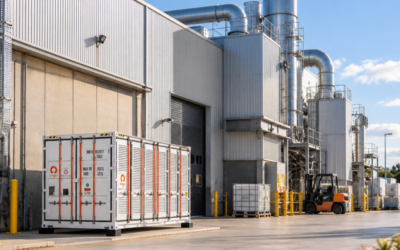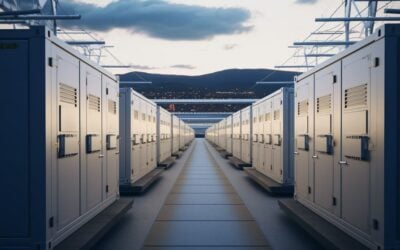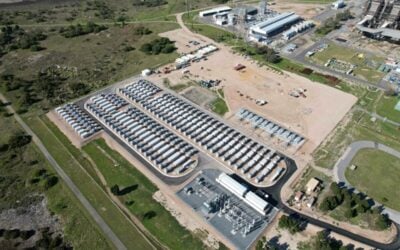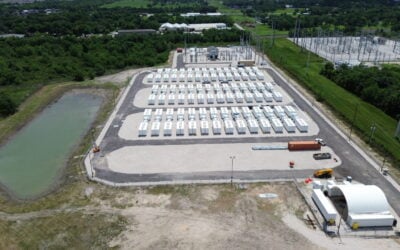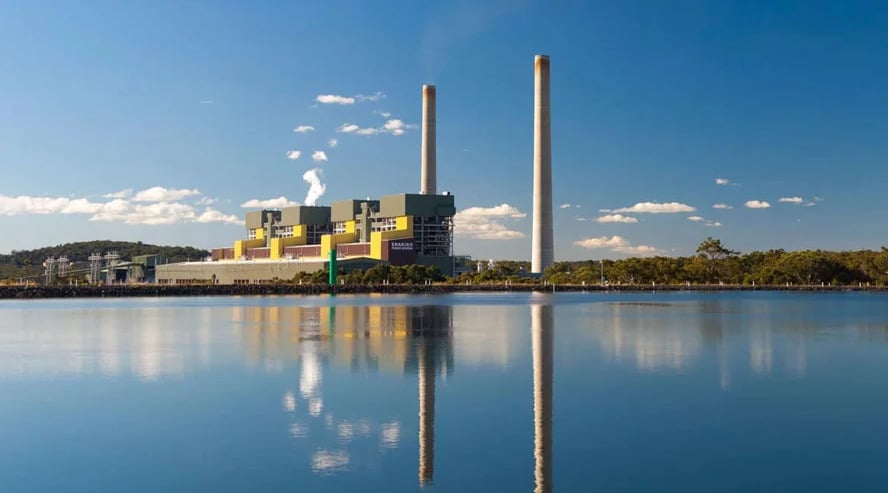
Australian utility Origin Energy yesterday (30 October) confirmed it had started construction on the second phase of its 2.1GWh Eraring battery energy storage system (BESS) in New South Wales, Australia.
The second stage of the Eraring BESS, which was approved in late July 2024, will see an additional 240MW/1030MWh grid-forming system added to the project’s existing 460MW/1073MWh 2-hour duration BESS, which is expected to come online sometime next year.
Origin said the project’s second stage will see the utility invest around AU$450 million (US$295 million).
Frank Calabria, CEO of Origin, highlighted the “ongoing transformation” of the Eraring Power Station, which is currently operating as a 2.8GWh coal-fired power station.
Try Premium for just $1
- Full premium access for the first month at only $1
- Converts to an annual rate after 30 days unless cancelled
- Cancel anytime during the trial period
Premium Benefits
- Expert industry analysis and interviews
- Digital access to PV Tech Power journal
- Exclusive event discounts
Or get the full Premium subscription right away
Or continue reading this article for free
Readers of Energy-Storage.news may be aware that the Eraring BESS project is part of Origin’s plans to withdraw Australia’s largest coal-fired power station from service and instead contribute to the uptake of variable renewable energy generation technologies, such as wind and solar.
Located on the shores of Lake Macquarie, southwest of Newcastle, the black coal power plant provides 2,880MW to the National Electricity Market (NEM). In early 2022, Origin said it would be retiring the coal-fired power plant in 2025, yet in May 2024, the New South Wales government controversially extended this by an additional two years to “guarantee a maximum of electricity supply”. The new expected closure date is scheduled for August 2027.
Calabria also emphasised the need for BESS in Australia’s NEM. “Large-scale batteries like the one we are developing at Eraring will play an important role in the energy transition, charging when renewables are abundant and discharging when needed, such as during the evening peak,” Calabria said.
Wärtsilä to deliver second stage BESS for Origin Energy
Much like the project’s first stage, the Eraring project, the BESS will be delivered by Finnish marine and energy technology group Wärtsilä via an engineering equipment delivery (EED) contract. Enerven Energy Infrastructure will provide design and construction services.
Previous coverage by Energy-Storage.news revealed that the BESS will operate in virtual synchronous machine (VISMA) mode. This will enable short-circuit current capabilities, such as reactive current, droop control, and synthetic inertia, to support grid stability and security. This will be achieved via Wärtsilä’s energy management system (EMS), GEMS Digital Energy Platform, together with hardware including advanced inverter power electronics.
Enerven, a subsidiary of SA Power Networks, will provide balance of plant design and construction services. At the same time, Lumea, the commercial arm of Transgrid, will complete the dedicated high-voltage substation works.