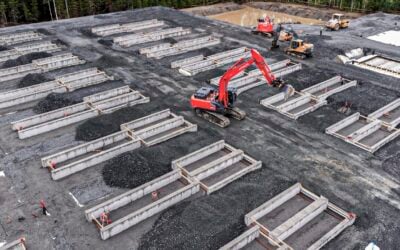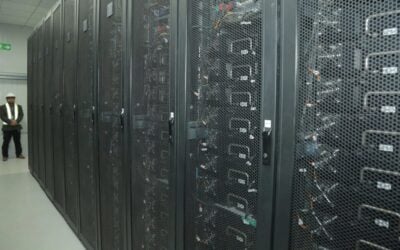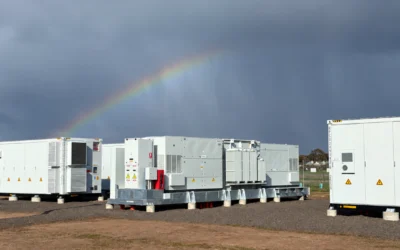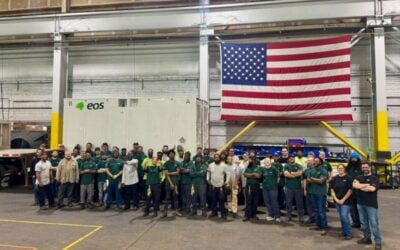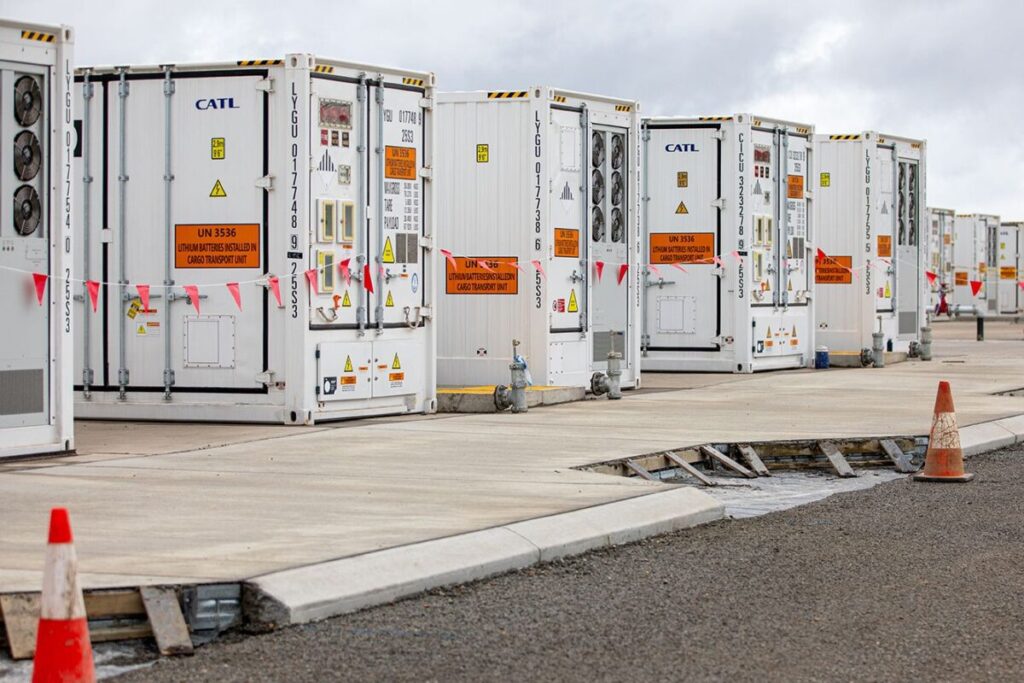
The Western Australian government and state-owned Synergy have confirmed that all 640 battery packs have been installed at the 2,000MWh Collie battery energy storage system (CBESS).
Installation of the battery packs and the inverters started in early October 2024, and construction on the site, which is set to be one of Australia’s largest battery projects, started in March 2024. It is located at the site of the 300MW Collie Power Station, a coal-fired power plant scheduled for decommissioning in 2027.
It will be connected to the South West Interconnected System (SWIS), which links urban areas such as Albany, Bunbury, Perth, Merredin, Kalgoorlie, and Geraldton in Western Australia.
With the installation of all 640 battery packs and the 160 inverters, battery commissioning has now started. Synergy expects the BESS to be fully completed later this year, ahead of the Australian summer period.
Try Premium for just $1
- Full premium access for the first month at only $1
- Converts to an annual rate after 30 days unless cancelled
- Cancel anytime during the trial period
Premium Benefits
- Expert industry analysis and interviews
- Digital access to PV Tech Power journal
- Exclusive event discounts
Or get the full Premium subscription right away
Or continue reading this article for free
CATL, a China-headquartered battery manufacturer, provided its EnerC containerised lithium iron phosphate (LFP) BESS solution to the Collie project. CATL recently joined Sungrow and Tesla as AAA-rated energy storage suppliers in PV Tech Research’s latest Battery StorageTech Bankability Ratings report.
Collie, a town in the South West region of Western Australia, is around 213km south of state capital Perth. It is also home to another utility-scale BESS in the form of French independent power producer (IPP) Neoen’s 540MW/2,240MWh Collie Battery, which is being developed across two stages. The first, a 219MW/877MWh stage, was completed in late October 2024.
Tesla is exploring a battery re-manufacturing facility near the two Collie battery sites.
Synergy owns another two utility-scale BESS projects in Western Australia. These are the Kwinana BESS 1, a 100MW/200MWh 2-hour duration system at the existing gas-fired Kwinana Power Station, and the 200MW/800MWh Kwinana BESS 2.
Albanese takes swipe at Peter Dutton’s nuclear policy: ‘We’re not waiting decades’
The completion of the battery pack installations was marked by a site visit from Australia’s prime minister, Anthony Albanese, who is currently gearing up for the general election on 3 May.
Joining Albanese were Chris Bowen, the federal minister for Climate Change and Energy; Roger Cook, the Western Australian premier; Amber-Jade Sanderson, the Western Australian minister for Energy and Decarbonisation; and Jodie Hanns, the Collie-Preston MLA.
Albanese took to LinkedIn to reiterate the Labor Party’s support for “clean, affordable energy to cut power bills now”, before taking a swipe at Peter Dutton, leader of the National-Liberal Coalition’s plans to develop seven nuclear power stations across Australia to tackle rising energy costs.
“Peter Dutton wants to put a nuclear reactor here instead. It’d drive power prices up and take 20 years to build. We’re not waiting decades, we’re getting on with the job of providing cheap, clean energy now,” Albanese said.
The three-year parliamentary term time for the next government coincides with one of the most defining periods for the energy transition. For that reason, the next government will be a conduit to whether Australia will grasp the opportunity and become a “renewable energy superpower”, a term often used by Albanese to make his stance clear on the energy transition.
The same cannot be said for climate sceptic Dutton, who is likely to take a stance on energy policy similar to that of US President Donald Trump and attempt to reduce the Australian public’s energy bills by focusing more on oil and gas, coal-fired power, and nuclear reactors. In the process, he would controversially seek to lift a ban on nuclear power that has been in place since 1983 via the Nuclear Activities (Prohibitions) Act.
Transitioning from a supportive government of renewables to one prioritising fossil fuels could disrupt the country’s energy transition and jeopardise Australia’s opportunity to capitalise on the economic benefits, Energy-Storage.news has heard.