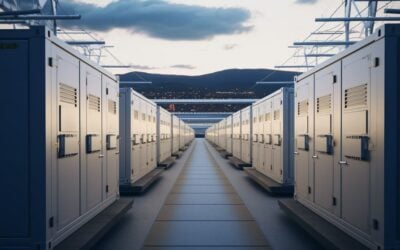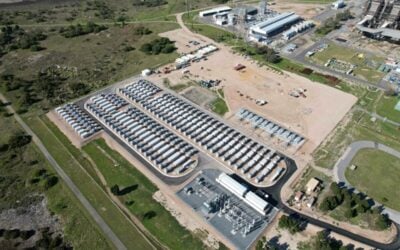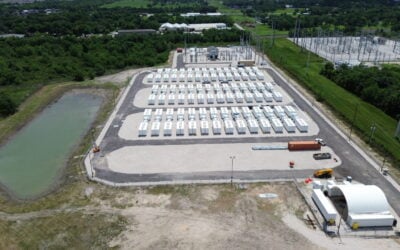
Compressed air long-duration energy storage solution provider Hydrostor has received an investment commitment of US$25 million from Canada Pension Plan Investment Board (CPP).
The announcement comes three months after Hydrostor, which is also Canada-based, bagged a US$250 million investment from Goldman Sachs.
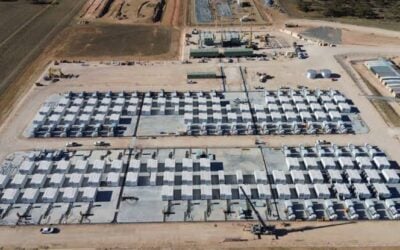
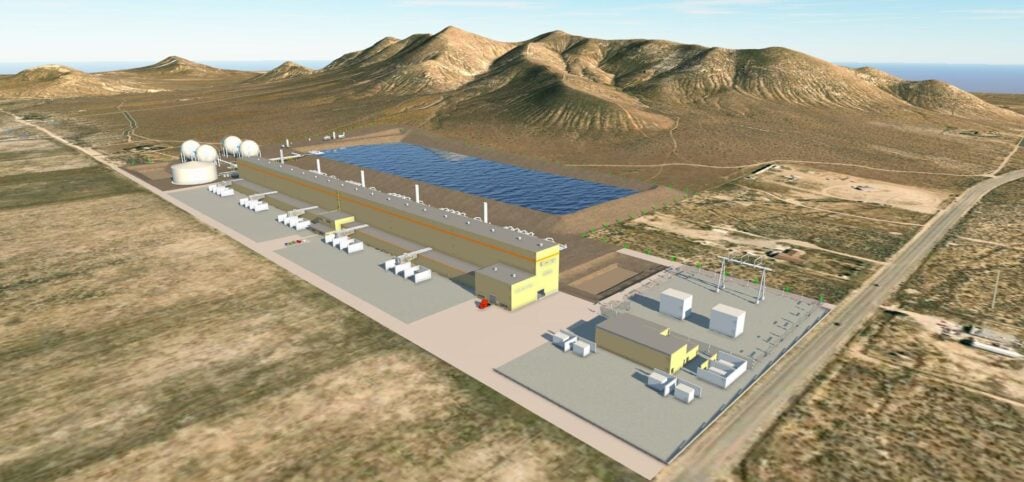
Hydrostor said the money raised from CPP will support its strategy of developing, constructing, and operating advanced compressed air energy storage (A-CAES) facilities. It currently has one commercially operating 2.2MW/10MWh+ system which came online in 2019 in Ontario, but claims 1.1GW/8.7GWh of projects are underway in Australia and California.
Bruce Hogg, Managing Director, Head of Sustainable Energies, CPP Investments, said: “Long-duration energy storage is a critical component in the decarbonisation of electrical grids. Hydrostor’s solutions are well-placed to address this growing need and provide a unique investment opportunity aligned with our focus on the energy evolution.”
Try Premium for just $1
- Full premium access for the first month at only $1
- Converts to an annual rate after 30 days unless cancelled
- Cancel anytime during the trial period
Premium Benefits
- Expert industry analysis and interviews
- Digital access to PV Tech Power journal
- Exclusive event discounts
Or get the full Premium subscription right away
Or continue reading this article for free
CPP manages a fund from the pension contributions of 21 million people into the Canada Pension Plan. Its managed fund totalled C$550 billion (US$440 billion) as of end-2021.
It has invested in around 18 companies it classifies as Sustainable Energies within its Real Assets portfolio, including UK-based sustainable energy group Octopus Energy which it invested in late last year. The Hydrostor investment is at the very low end in terms of deal size within this classification for CPP, with the smallest deal sizes disclosed in its existing portfolio standing at a little over US$200 million.
Hydrostor believes it can get its three projects totalling 8.7GWh of storage in California and Australia built by 2026 but needs regulators elsewhere to remove barriers to A-CAES, its CEO Curtis VanWalleghem told Energy-storage.news in January.
All of its current planned systems are eight-hour durations partially because that is the threshold for capacity auctions in California, for example, but VanWalleghem said that A-CAES systems can scale fairly simply. Several high-profile sources have told Energy-storage.news that lithium-ion is now competitive at that sort of duration and even higher.
For A-CAES, Hydrostor expects half of revenues to come from capacity contracts with most of the remainder from arbitrage and a small amount of ancillary services.