From Texas, US, Bimergen Energy has acquired eight BESS projects totalling 79.2MW. Meanwhile, Habitat Energy announced its first US co-located solar-plus-storage partnership with Birch Creek.
Bimergen acquires 79.2MW of Texas BESS
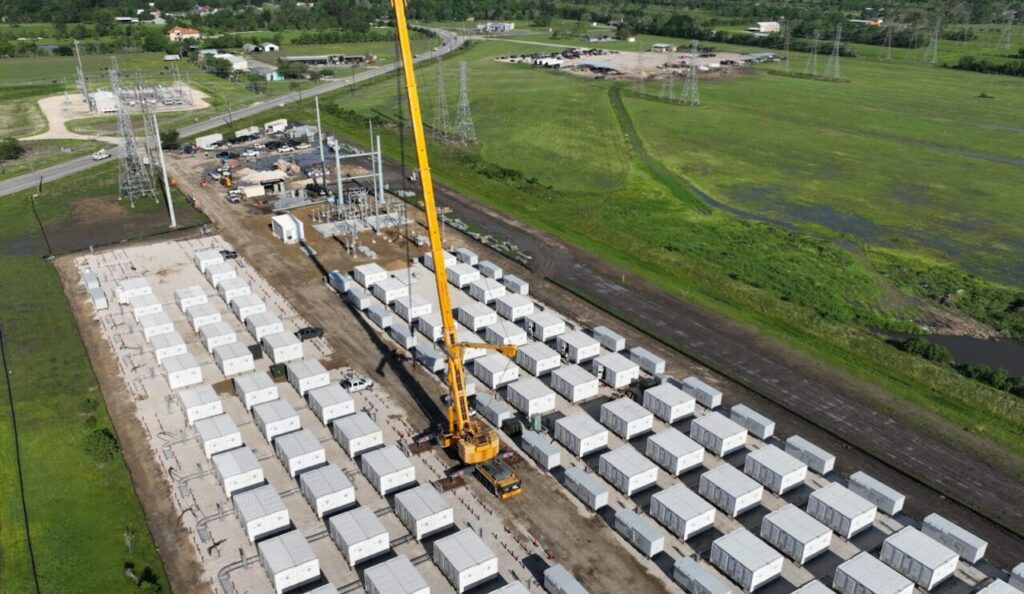
BESS developer-operator Bimergen Energy has acquired eight late-stage 9.9MW distributed generation BESS projects in Texas, from mobile energy solutions provider Aggreko.
The eight projects, totalling 79.2MW of nameplate capacity, are located in the ERCOT South region of Texas. Bimergen financed the acquisition through its joint venture (JV) with BESS manufacturer RelyEZ.
The projects will also use RelyEZ’s lithium-based utility-scale batteries. Five projects are anticipated to be operational in late 2026, and the remaining three in early 2027.
Try Premium for just $1
- Full premium access for the first month at only $1
- Converts to an annual rate after 30 days unless cancelled
- Cancel anytime during the trial period
Premium Benefits
- Expert industry analysis and interviews
- Digital access to PV Tech Power journal
- Exclusive event discounts
Or get the full Premium subscription right away
Or continue reading this article for free
According to Bimergen, the projects are strategically positioned to provide essential grid stability, support renewable integration, and address accelerating power demand in ERCOT. The company plans to award construction contracts for the project soon.
The 9.9MW capacity allows for a quicker interconnection process in the ERCOT market. Developer vailable Power’s VP of business development, Alex Krass, explained how this process works at the Energy Storage Summit USA in 2023:
“You can skip a part of the interconnection process with ERCOT (with projects under 10MW) so your time to market is quicker, which is fantastic.”
Due to faster interconnection processes, multiple developers have opted for smaller, distributed projects under 10MW.
In April 2025, energy storage platform GoodPeak closed construction debt financing to start construction on two 10MW BESS in Texas.
In January 2025, On.Energy closed a credit agreement for its Texas BESS portfolio, with each project having a capacity of 9.9MW/20MWh.
Developer-operator Plus Power’s Farmersville West BESS 1 and Mainland BESS, located in the ERCOT service region, both comprise 9.9MW of storage capacity.
(Note that the 2026 edition of the Energy Storage Summit USA will be take place in a few weeks’ time in Dallas.)
According to its website, Bimergen currently has 23 BESS projects in development across the US, including five in MISO, two in PJM, and five in CAISO.
In 2020, Aggreko completed what was at the time one of the largest renewable energy microgrids in the world at the Granny Smith gold mine in Western Australia. The project featured more than 20,000 solar panels and a 2MW/1MWh BESS.
Habitat Energy announces first US solar-plus-storage partnership with Birch Creek
Optimisation specialist Habitat Energy has announced its first US co-located solar-plus-battery energy storage system (BESS) partnership with solar and storage developer Birch Creek in Texas, US.
Habitat will co-optimise Birch Creek’s solar and battery projects behind a shared point of interconnection in the Electric Reliability Council of Texas (ERCOT) South Zone.
For an asset in Bee County, Texas, Habitat said it has achieved the production load date (PLD) with ERCOT on behalf of Birch Creek and is now in the early stages of commissioning.
Solar commercial operations are expected in August 2026, with the battery expected to follow in October 2026.
Habitat, as the project’s qualified scheduling entity (QSE), oversees the representation of power injections and withdrawals from the site starting at PLD. During commissioning, Habitat also assists with telemetry alignment, verifies data flows to ERCOT, and develops the trading framework for live operations.
Habitat explained that sharing an interconnection point necessitates real-time coordination of assets. During peak solar periods, the battery can store surplus energy while preparing for later price fluctuations.
Effectively managing this interaction requires integrated weather and price forecasts, risk management, congestion control tools, and a platform that can co-optimise two assets at a node within ERCOT’s Real-Time Co-Optimisation Plus Batteries (RTC+B) framework.
ERCOT recently introduced the RTC+B market changes. RTC is a new process where energy and Ancillary Services (AS) are dispatched interchangeably in the Real-Time Market.
Speaking with Energy-Storage.news Premium in November 2025, Mike Kirschner, US managing director for Habitat Energy, stated about RTC+B:
“Now, ancillary service obligations are adjusted in real time, rather than carried over from day-ahead commitments. This shift means units must adapt quickly to changes like outages or transmission issues, often encountering illiquid markets and high penalties, which made participants conservative.”
He continued, “The new system allows for more flexibility, enabling assets to be reassigned obligations in real time, likely increasing volatility while lowering average prices. This change aligns with a more efficient system, potentially benefiting battery storage, and effectively shifts the day-ahead process from physical to financial.”
RTC+B was launched on 5 December 2025. Aaron Zubaty, CEO and Founder of IPP Eolian, posted on LinkedIn that on 4 December, many energy storage assets did not bid into the ancillary markets for the next day, perceiving the risks as outweighing the potential revenue.
This led to a surge in the costs of ancillary market products, with some hours experiencing expenses more than five times higher than usual, or a 500% increase. However, aside from a few outliers, the market appeared to stabilise by the morning.
Shortly before RTC+B was implemented, ESN Premium spoke with CEO of optimisation platform provider Ascend Analytics, Dr. Gary Dorris, PhD, about RTC+B.
Ascend mentioned in a presentation on an ERCOT report that, “Ancillary service markets are already saturated, and RTC+B will only decrease opportunity costs and increase supply for everything except non-spin.”
Dorris commented on this statement, explaining that “Saturation occurs when supply exceeds demand, leading to economic indifference between serving ancillary service markets and energy markets. This means the opportunity cost of providing ancillary services is equal to the value of energy arbitrage. At any moment or over time, you’re indifferent—alternating between energy and ancillary services because the market is saturated.”
Energy Storage Summit USA 2026 will be held from 24-25 March 2026, in Dallas, TX. It features keynote speeches and panel discussions on topics like FEOC challenges, power demand forecasting, and managing the BESS supply chain. ESN Premium subscribers can get an exclusive discount on ticket prices. For complete information, visit the Energy Storage Summit USA website.