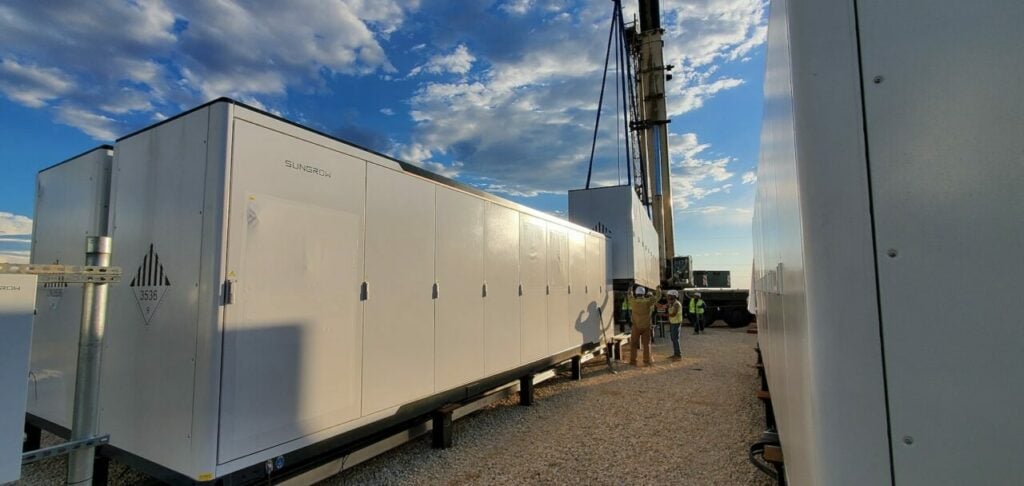
After coming down last year, the cost of containerised BESS solutions for US-based buyers will come down a further 18% in 2024, Clean Energy Associates (CEA) said.
The average 2024 price of a BESS 20-foot DC container in the US is expected to come down to US$148/kWh, down from US$180/kWh last year, a similar fall to that seen in 2023, as reported by Energy-Storage.news, when CEA launched a new quarterly BESS pricing monitor.
The consultancy and market intelligence firm provided the update in a long-form article by Dan Shreve, VP of market intelligence, which will be published in the next edition (38) of PV Tech Power, Solar Media’s quarterly journal for the downstream solar and storage industries, later this month.
It means the price for a BESS DC container – comprising lithium iron phosphate (LFP) cells, 3.7MWh and 4-hour duration, delivered with duties paid from China to the US – will have nearly halved by the end of 2024 compared to the highs of 2022, when it hit US$270/kWh.
Try Premium for just $1
- Full premium access for the first month at only $1
- Converts to an annual rate after 30 days unless cancelled
- Cancel anytime during the trial period
Premium Benefits
- Expert industry analysis and interviews
- Digital access to PV Tech Power journal
- Exclusive event discounts
Or get the full Premium subscription right away
Or continue reading this article for free
That year saw supply chain shocks across global industries as the world emerged from Covid-19 lockdowns, which increased demand for battery services, while Chinese manufacturing’s ramp-up was limited by further lockdowns.
Within energy storage, fears of critical raw material shortages in the face of soaring EV demand (with growth rates of 60%) led to “irrational buying behaviour”, Shreve said, leading to a 270% increase in lithium carbonate costs from Q3 2021 to Q4 2022.
The fall in BESS pricing since then is down to a confluence of factors, he explained: “The removal of China’s New Energy Vehicle incentive in 2023, lingering range anxieties among western consumers and a global increase in interest rates cast a pall on the EV market, resulting in a ‘disappointing’ year-on-year growth rate of 31%. As demand slipped, suppliers were left sitting atop mountains of inventory, and thus moved aggressively on price to bring their balance sheets back in order.”
However, there are numerous other factors driving a continued fall in BESS pricing, including new automation at gigafactories and significant competition by China-based suppliers in the US market, something highlighted by Wood Mackenzie at the tail-end of last year. The fall in lithium carbonate prices from the highs of 2022 is only a small factor, CEA said.
Energy-Storage.news’ publisher Solar Media will host the 5th Energy Storage Summit USA, 19-20 March 2024 in Austin, Texas. Featuring a packed programme of panels, presentations and fireside chats from industry leaders focusing on accelerating the market for energy storage across the country. For more information, go to the website.