South Carolina public utility company Santee Cooper has applied for a Certificate of Environmental Compatibility and Public Convenience and Neccessity (CECPCN) with the state’s public service commission (PSC), for a 300MW/1,200MWh battery energy storage system (BESS).
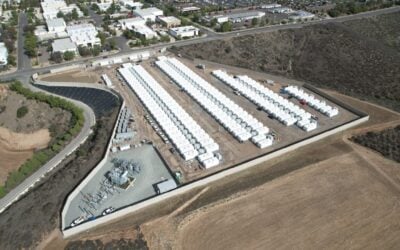
The BESS, dubbed the Pinopolis Reliability Project, will be use lithium iron phosphate (LFP) battery cells and be located at the retired Jefferies generating station in Berkeley County, South Carolina.
Energy storage developer-operator Aypa Power will build, own, and operate the facility, which Santee Cooper claims will become the largest battery storage installation in South Carolina.
Pinopolis is set to become operational in the winter season of 2027–2028. Aypa is submitting its application for the CECPCN through its wholly owned, single-member LLC, Piniopolis. Pinopolis itself is a single-member LLC entirely owned by Cedar Holdco LLC, which is also a single-member LLC wholly owned by Aypa.
Try Premium for just $1
- Full premium access for the first month at only $1
- Converts to an annual rate after 30 days unless cancelled
- Cancel anytime during the trial period
Premium Benefits
- Expert industry analysis and interviews
- Digital access to PV Tech Power journal
- Exclusive event discounts
Or get the full Premium subscription right away
Or continue reading this article for free
Aypa highlighted in its applications that the BESS site is ideal due to Santee Cooper’s existing 115kV substation at the location. The project will utilise the current interconnection capacity to “deliver long-term grid reliability and value.” Santee Cooper will have exclusive control over the facility’s dispatch as outlined in the Battery Energy Storage Agreement.
Aypa was selected to develop the BESS from Santee Cooper’s 2025 request for proposals (RFP) seeking BESS proposals.
The utility solicited bids for up to 300MW of 4-hour duration BESS at the generating station to take advantage of the “well-situated existing infrastructure” and the Energy Communities tax credit bonus under the Inflation Reduction Act (IRA).
According to the application, “The central economic justification for the Pinopolis BESS Project is Santee Cooper’s need for cost-effective and reliable energy to meet its load growth expectations.”
The enactment of HR1, or the so-called ‘One Big Beautiful Bill’ (OBBB) and its early termination or phase out of IRA tax credits was also cited as an important factor for building the BESS within the stated timeframe.
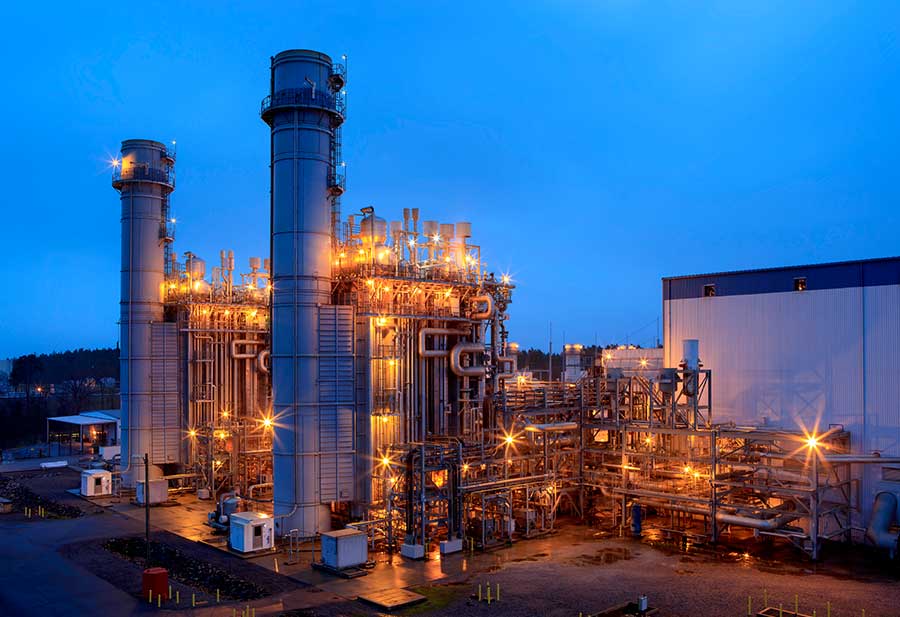
Along with Pinopolis, other projects recently approved by Santee Cooper’s board of directors include a 2,200MW natural gas combined cycle plant and the construction of two dual-fuel simple-cycle combustion turbines totalling 100MW.
The utility noted its intention to add over 5,000MW of new electricity to South Carolina’s grid, which also includes a 250MW expansion at the Rainey generation station and the potential restart of two nuclear units totalling 2,200MW.
In October, major utility company Duke Energy filed its biennial long-range energy modernisation plan for North and South Carolina. The plan included a 5,600MW battery storage target.
The state is also home to Duke Energy’s Bad Creek Pumped Storage Hydroelectric Station, for which, in August, the utility submitted its final license application to the Federal Energy Regulatory Commission (FERC) to extend operation for an additional 50 years.