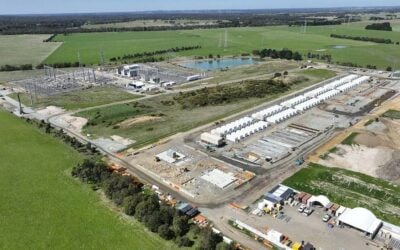
A 30MW / 30MWh battery energy storage system has been inaugurated with a ceremony in Victoria, Australia, with one project partner describing the switching-on as “a real watershed moment in the continuing modernisation” of the state’s energy supply.
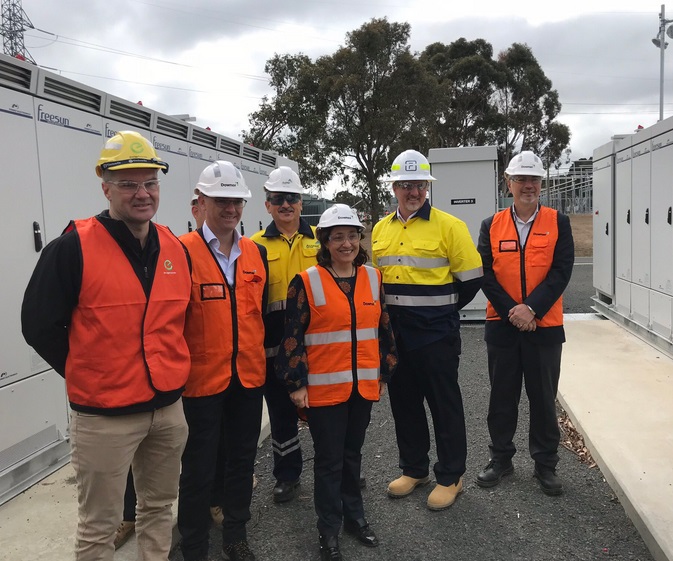
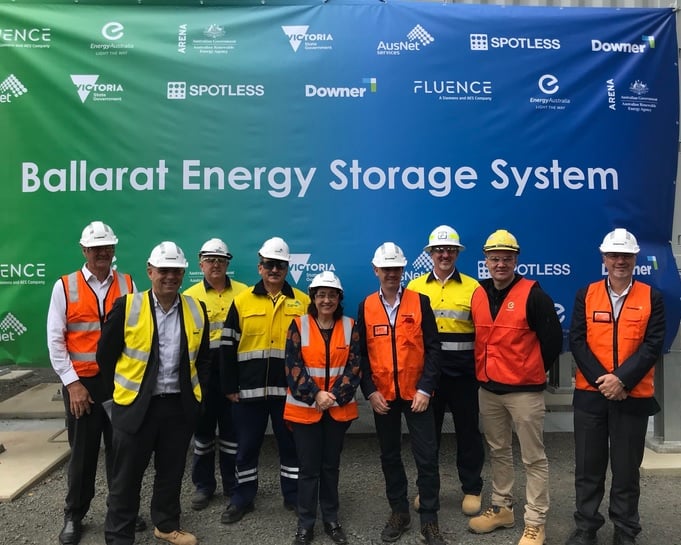
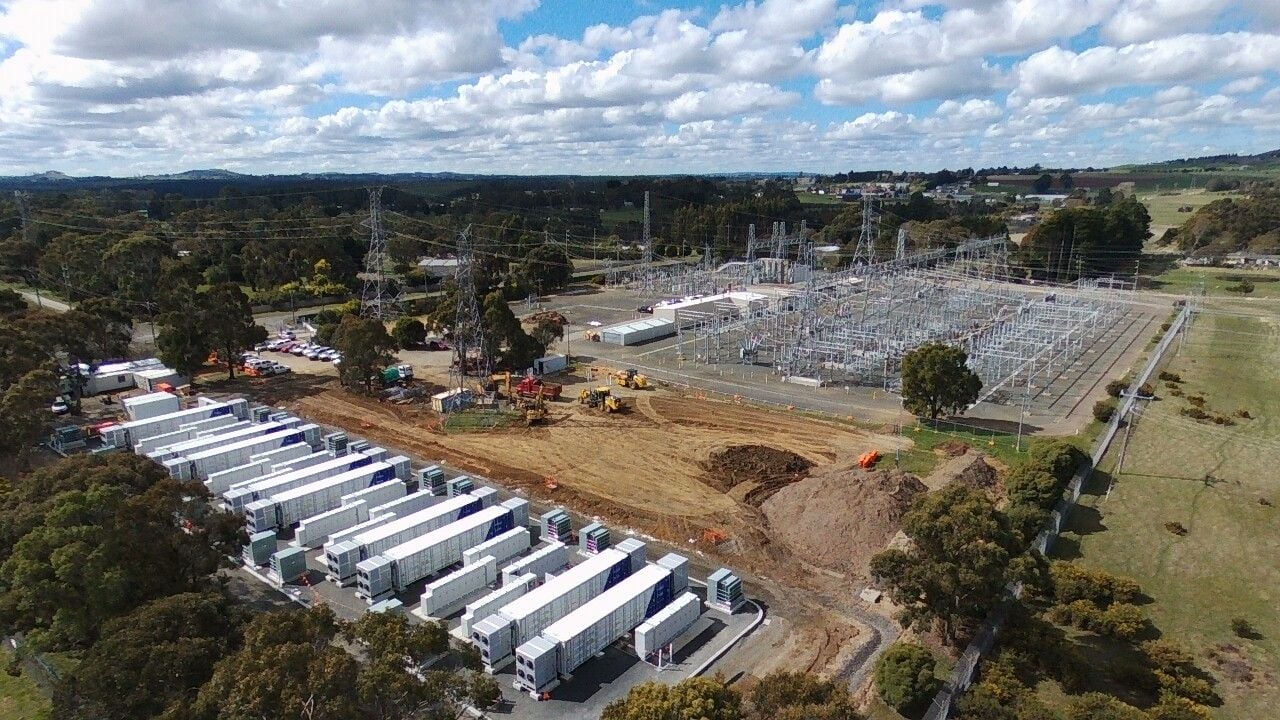
This morning, Victoria’s Minister for Energy, Environment and Climate Change Lily D’Ambrosio officially opened the battery energy storage system (BESS) at Ballarat Terminal Station, Warrenheip. The lithium-ion battery project was announced in March this year, along with another 25MW/50MWh project at the 60MW Gannawarra Solar Farm.
At the time of that announcement in March, AES-Siemens joint venture company Fluence was announced as supplier of the Ballarat system, part of a consortium which includes developer Spotless (now Downer-Spotless, having been taken over by the former company), electricity and gas supplier EnergyAustralia and energy delivery company AusNet. Meanwhile the Gannawarra project is being supplied with its battery system by Tesla along with developer Wirsol and project owner Edify Energy.
The two projects are being funded by the Australian Renewable Energy Agency (ARENA) and Victoria’s government, with each organisation matching the AU$25 million (US$19.31 million) commitment of the other. The electricity transmission terminal at Ballarat is congested, particularly at peak times, meaning the storage system can help stabilise the grid by drawing power at times of peak generation and push it out again when demand peaks. The batteries could also prevent the need for expensive substation upgrades. Both battery projects will be operated by EnergyAustralia through long-term power purchase agreements (PPA).
Try Premium for just $1
- Full premium access for the first month at only $1
- Converts to an annual rate after 30 days unless cancelled
- Cancel anytime during the trial period
Premium Benefits
- Expert industry analysis and interviews
- Digital access to PV Tech Power journal
- Exclusive event discounts
Or get the full Premium subscription right away
Or continue reading this article for free
Attempt to provide security of electricity prices
A paper produced by Fluence to explain the aims of the Ballarat project shows that volatility of energy prices in the Australian National Electricity Market (NEM) caused an increase of around AU$20 per MWh in average energy prices in Victoria in the first quarter of this year. The paper said energy storage is a flexible and fast-responding tool – capable of millisecond response – to balance mismatches in supply and demand and balance both real and reactive power.
“Broadly, the system can be utilised to provide flexible peaking capacity, to provide ancillary frequency control services, and the potential for other network services by agreement with a transmission or distribution network provider,” the paper reads.
“The layering of these services enables the storage asset to deliver maximum value to the benefit of all customers in the region.”
AusNet will own the battery system, Spotless’ Sustainability Services division has served as lead EPC (engineering, procurement and construction) partner. As well as having supplied the storage system, Fluence also remains responsible for long-term operational services. EnergyAustralia will manage operations of the system for peak demand mitigation, while the battery will also be used to play into ancillary services markets.
Both the battery projects are being delivered through the Energy Storage Initiative of Victoria’s state government, led by Daniel Andrews’ Labor Party and first outline in the state’s Renewable Energy Action Plan of July 2017.
“The successful energisation of this battery marks a real watershed moment in the continuing modernisation of Victoria’s energy supply. Integrating this leading technology into our Ballarat Terminal Station means it is well placed to enhance the stability of the state’s energy supply, especially during the coming summer peak demand periods,” AusNet Services director Nino Ficca said.