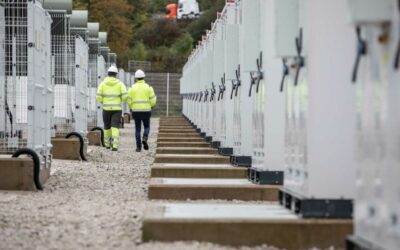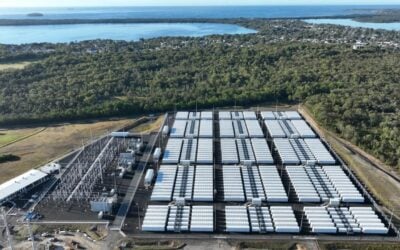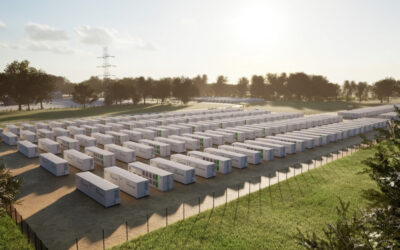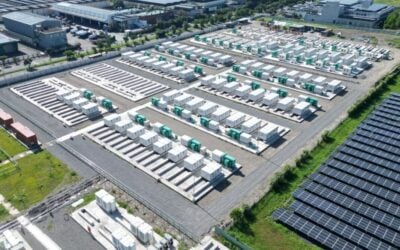
Nearly double the megawatt-hours of large-scale battery energy storage systems (BESS) were under construction in Australia by the end of 2022 compared to the previous year.
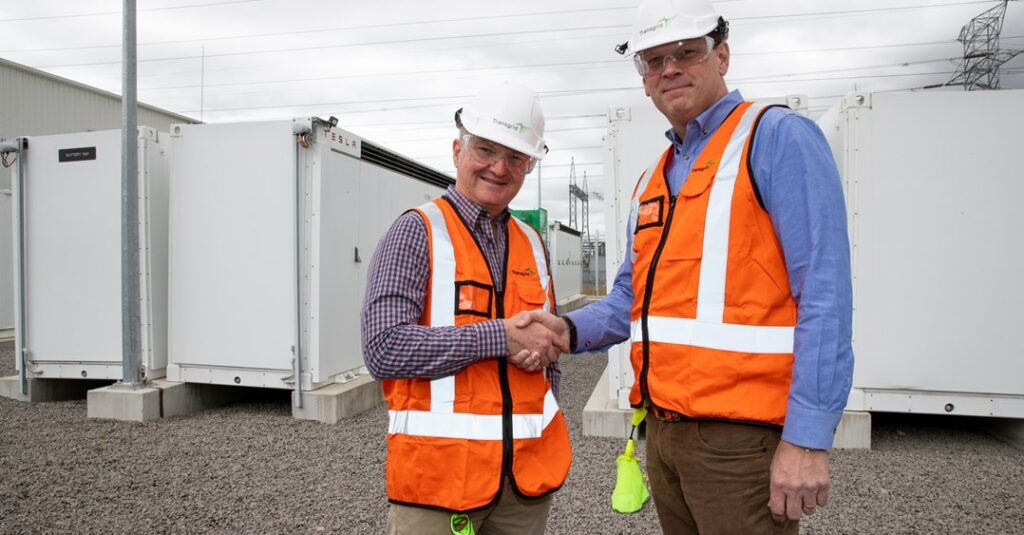
According to national trade association Clean Energy Council’s latest annual report into the country’s clean energy sector, the combined capacity of 19 BESS projects being built last year totalled 1380MW output and 2,004MWh energy capacity.
At the end of 2021, the figures had been 921MW and 1,169MWh respectively. Meanwhile, investment in large-scale wind, solar and storage was at AU$6.2 billion (US$4.17 billion) for 2022, a 17% increase on 2021 figures.
In a foreword to the Clean Energy Australia Report 2023, Clean Energy Council (CEC) chief executive Kane Thornton noted however that overall, clean energy development actually slowed down a little last year over a “stellar” 2021.
Try Premium for just $1
- Full premium access for the first month at only $1
- Converts to an annual rate after 30 days unless cancelled
- Cancel anytime during the trial period
Premium Benefits
- Expert industry analysis and interviews
- Digital access to PV Tech Power journal
- Exclusive event discounts
Or get the full Premium subscription right away
Or continue reading this article for free
That was in part due to supply chain and workforce constraints causing a slowdown in rooftop solar uptake, from 3.3GW added in 2021 to 2.7GW in 2022. The growth did mean however that for the first time ever, rooftop PV comprised more than a quarter of all renewable energy generation in Australia.
The number of new wind projects was down too, from 1.7GW in 2021 to 1.4GW in 2022, but project sizes grew.
The number of new megawatts of large-scale solar also decreased, by quite a significant amount, dropping from 1,683MW in 2021 to 860MW last year. That said, as of the end of last year, 48 large-scale PV projects were in construction across the country versus 42 at the end of 2021, and again, with average project sizes growing larger, CEC said it was confident total generation from utility-scale solar PV will rise in the coming years.
It was a similar dynamic for utility-scale batteries: while at the end of 2021, 30 projects were under construction versus the 19 recorded at the end of last year, the more recently announced projects dwarf the scale of what has gone before.
CEC’s report estimated that around 50,000 residential battery systems were installed during the year, again, a considerable increase on an estimated 34,731 installations in 2021 and broadly in line with a recent market size estimate of 47,100 new systems as reported by solar consultancy Sunwiz a few weeks ago.
Good outlook, but pace of large-scale deployment needs to increase
Thornton said that the figures showed that despite a slowdown in some areas, the energy transition economy in Australia remains strong, particularly as coal power plant retirements accelerate.
Australia’s political direction gives good cause for optimism, the CEC executive said, with the Labor government voted in last year setting a 43% by 2030 emissions reduction target and announcing initiatives like the Rewiring the Nation AU$20 billion grid upgrade scheme and forthcoming tenders for large-scale BESS.
Renewable energy in 2022 accounted for 35.9% of all generation, up from 32.5% in 2021, more than double the 16.9% share it had in 2017 when Australia’s clean energy “boom” began, CEC said. A total 2,257MW of new large-scale renewables were added to the grid last year, and 500MW of large-scale wind and solar was in construction as of the end of 2022, another record.
Thornton said however that the sustained growth of renewable energy cannot be taken for granted. Even with the “greater policy clarity” the sector now enjoys, reaching the federal government’s targeted 82% renewables in the generation mix will require the pace of large-scale project deployment “to at least double”.
Australia’s national science group, the Commonwealth Scientific and Industrial Research Organisation (CSIRO), recently published a roadmap for renewable energy storage which found that a 10-14x increase in energy storage capacity will be needed in the National Electricity Market (NEM) between 2025 and 2030.
View the full Clean Energy Council’s ‘Clean Energy Australia Report 2023’ PDF in full here.
Energy-Storage.news’ publisher Solar Media will host the 1st Energy Storage Summit Asia, 11-12 July 2023 in Singapore. The event will help give clarity on this nascent, yet quickly growing market, bringing together a community of credible independent generators, policymakers, banks, funds, off-takers and technology providers. For more information, go to the website.