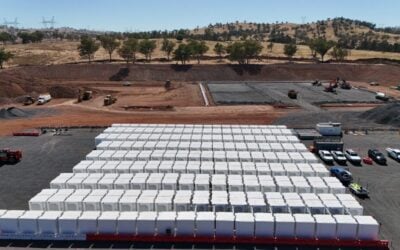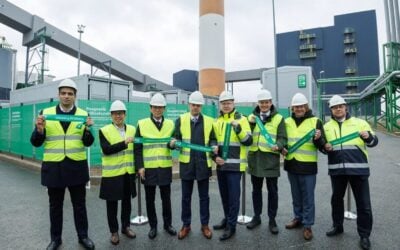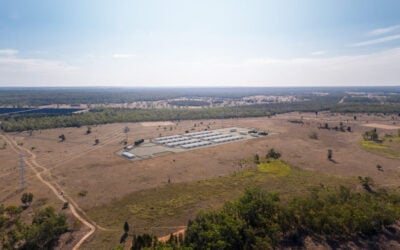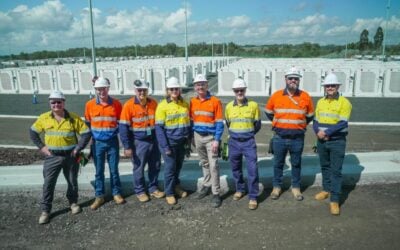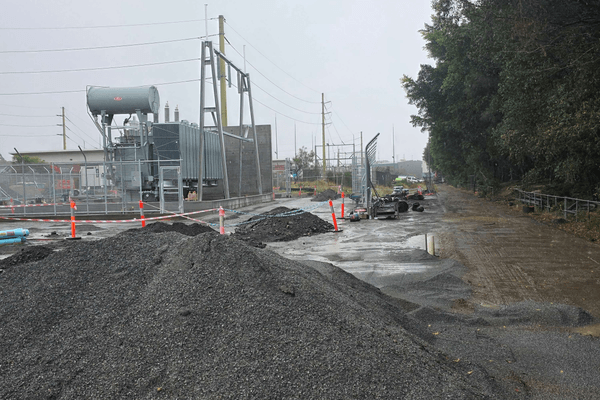
The New South Wales Independent Planning Commission (IPC) has approved Ausgrid’s 200MW/400MWh Steel River East battery energy storage system (BESS), located within the Hunter and Central Coast Renewable Energy Zone (REZ).
The approval, announced by the IPC, allows the network operator to proceed with the large-scale battery storage system at the existing 132kV Mayfield West zone electricity substation near the City of Newcastle local government area.
Documents stated that the BESS will be built and operated by a third party on behalf of Ausgrid, though the network operator has not yet disclosed the identity of the construction or operational partner.
The 400MWh battery storage system is designed to provide network stability and grid firming by storing energy during periods of low demand and releasing it during peak consumption, a function that becomes increasingly critical as New South Wales integrates higher volumes of variable renewable energy generation.
Try Premium for just $1
- Full premium access for the first month at only $1
- Converts to an annual rate after 30 days unless cancelled
- Cancel anytime during the trial period
Premium Benefits
- Expert industry analysis and interviews
- Digital access to PV Tech Power journal
- Exclusive event discounts
Or get the full Premium subscription right away
Or continue reading this article for free
The approval comes at a key moment for New South Wales’ energy storage ambitions. As heard at the Energy Storage Summit Australia 2026 in Sydney last week, the state has increased its 2030 storage target by 40% to 56GWh, responding to accelerating solar deployment that has fundamentally rewritten grid management requirements.
Indeed, New South Wales now requires six times more energy storage capacity before the end of the decade to maintain grid stability as coal-fired generation exits the system, a challenge that has prompted both regulatory reform and accelerated project approvals across the state.
Navigating community opposition through the planning process
The Steel River East project’s path to approval was not without complications.
The State significant development application was referred to the Independent Planning Commission for determination specifically because more than 50 public objections were lodged with the Department of Planning, Housing and Infrastructure during the assessment period.
This threshold triggered the requirement for independent Commission review rather than departmental approval, adding an additional layer of scrutiny to the project.
The Commission conducted a thorough assessment process that included meetings with Newcastle City Council, the Department of Planning, Housing and Infrastructure, and Ausgrid itself.
Commissioners also undertook a site inspection and locality tour to understand the project’s physical context within the Steel River Industrial Estate, and received nine written submissions from members of the public during the Commission’s own consultation phase.
Despite the initial opposition, the Commission ultimately found in favour of the project.
In its Statement of Reasons for Decision, the IPC concluded that the Steel River East BESS “would contribute positively to the State’s transition to a lower-carbon energy system and deliver benefits to the State’s electricity network by enhancing grid reliability and supporting the integration of renewable energy sources.”
The Commission determined that the battery facility aligned with key state policies collectively designed to accelerate renewable energy deployment and improve grid reliability across New South Wales.
Strategic positioning within the Hunter’s energy transition
The project’s location within the Hunter and Central Coast REZ adds strategic significance to the approval. The Hunter region is undergoing a fundamental energy transition as traditional coal-fired generation capacity retires and is replaced by renewable energy generation and storage infrastructure.
The Steel River East battery will play a role in managing this transition by providing the flexibility and fast response capabilities that large-scale battery storage can deliver to networks experiencing increasing variability in generation patterns.
Ausgrid has positioned the project as part of broader planning for “the energy network of the future,” emphasising that battery storage infrastructure is essential as the grid transitions to renewable energy sources such as solar and wind.
The network operator also highlighted multiple benefits from the facility, including enabling greater renewable energy integration, reducing the need for new transmission infrastructure, creating local construction employment, improving grid stability and reliability and ultimately enabling more affordable electricity for consumers.
The approval adds to a growing pipeline of large-scale battery projects across New South Wales.
AGL recently started commissioning its 500MW/1,000MWh Liddell grid-forming battery storage system, which represents one of the largest such facilities in Australia and demonstrates the scale of storage deployment now underway in the state.
The Liddell project, located at the site of the retiring coal-fired power station, showcases how storage infrastructure is being strategically positioned to replace dispatchable thermal generation capacity.
With construction and operational partners yet to be announced, the timeline for the Steel River East battery’s development remains unclear.
However, the IPC approval removes a critical regulatory hurdle and allows Ausgrid to advance commercial arrangements for the facility’s delivery.