The Asian Development Bank (ADB) will lend the Georgia government US$104 million to support a transmission-connected battery energy storage system (BESS) project.
The multilateral finance institution announced last week (16 April) that it has approved the loan, along with US$400,000 worth of technical assistance toward the development of a green hydrogen programme for the former Soviet state.
Georgia, which borders on the intersection of Eastern Europe and West Asia and has minimal energy independence, is receiving support from the ADB’s Energy Storage and Green Hydrogen Development Project.
“The project aims to improve energy security, reduce Georgia’s reliance on grid stability support from neighbouring countries, and pave the way for greater private sector participation for green energy development,” according to an ADB description.
Try Premium for just $1
- Full premium access for the first month at only $1
- Converts to an annual rate after 30 days unless cancelled
- Cancel anytime during the trial period
Premium Benefits
- Expert industry analysis and interviews
- Digital access to PV Tech Power journal
- Exclusive event discounts
Or get the full Premium subscription right away
Or continue reading this article for free
A 2022 technical study by European Union (EU)-funded consultants for the Georgian State Electrosystem (GSE) found BESS to be the “most appropriate option” for enhancing the stability of the electric grid and aiding the integration of variable renewable energy (VRE).
This was due to factors including cost-effectiveness and expected community opposition to alternative options, including pumped hydro energy storage (PHES). Georgia’s electricity supply is currently about 75% renewable, with hydroelectric generation comprising the bulk (68% according to the International Energy Agency).
However, it is highly dependent on imports for natural gas and oil as well as relying on grid stability services from neighbours, and in tandem with the deployment of battery storage, green hydrogen could be a path to storing surplus renewable power.
ADB noted that while it considered the country’s legal and regulatory framework “quite advanced,” policy and regulatory intervention would still be required to make BESS and green hydrogen “sustainable and financially attractive to private investors”.
‘Significant step towards energy independence’
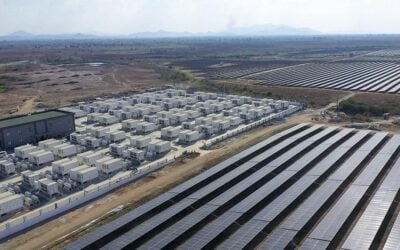
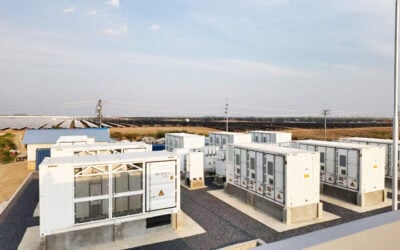
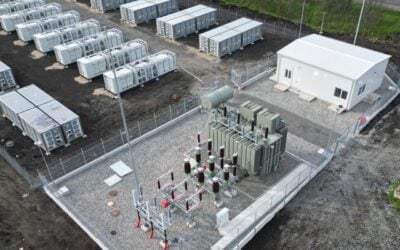
A 200MW/200MWh (1-hour duration) battery storage system will be installed and connected to the transmission network via Ksani Substation, near the Georgian capital, Tbilisi.
ADB Country Director for Georgia Lesley Bearman Lahm said the BESS project “marks another significant step toward enhancing the country’s energy independence.”
“With abundant clean energy potential and ambitious development goals, Georgia is well-positioned to unlock greater economic benefits from its renewable resources,” Lahm said.
Meanwhile, ADB loan-funded technical assistance will support the Georgian government in identifying green hydrogen potential and figuring out how to attract private sector investment.
The ADB programme will help Georgia develop legal and regulatory frameworks to include BESS and hydrogen storage technologies into the network. It is hoped it will facilitate private investment in further BESS and green hydrogen projects.
The country’s Ministry of Economy and Sustainable Development will oversee the project and implement recommended reforms, while GSE will act as the overall Implementation Agency.
To date, the development bank has invested US$5 billion in Georgia, and a five-year partnership runs from 2024 to 2028.
According to a recent report from the International Renewable Energy Agency (IRENA), Georgia has an estimated 15GW of hydropower generation potential but has tapped less than a quarter of that to date. It also has 4GW of “unexploited capacity” for wind generation and 4.5GW for solar PV, IRENA’s Energy Transition Assessment for Georgia, also published 16 April, said.
Other recent BESS funding commitments announced by the ADB include the bank’s participation in a consortium to support a portfolio of 12 renewable energy and storage projects in Thailand, and a loan for grid infrastructure upgrades in Sri Lanka, including the South Asian country’s first-ever grid-scale battery project.
ADB also supports the BESS Consortium, launched by non-profit Global Energy Alliance for People and Planet (GEAPP) to support the deployment of grid-connected battery storage in low- or middle-income countries.