Ark Energy to add 2,000MWh BESS at wind project in New South Wales, Australia

August 1, 2025
LinkedIn
Twitter
Reddit
Facebook
Email

Australian renewable energy developer Ark Energy has submitted plans for a 2,000MWh wind-plus-storage project to the New South Wales Independent Planning Commission (IPC).

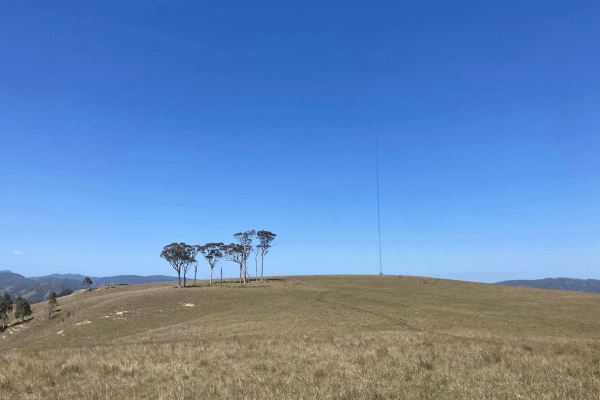
The Bowmans Creek Wind Farm project will be located in the Hunter Valley region of New South Wales, 12km east of Muswellbrook, a rural town that is well known for its coal mining and horse breeding industries.

Muswellbrook itself has recently become a hub for clean energy projects, with several large-scale projects, such as a 3.2GWh pumped hydro site being developed by AGL and a 270MWh solar-plus-storage project being developed by OX2.

The Bowmans Creek Wind Farm would be developed across two stages. The first stage aims to build 54 wind turbines, generating 335MW of clean energy, coupled with a 250MW/2,000MWh 8-hour duration BESS.

This article requires Premium SubscriptionBasic (FREE) Subscription

Try Premium for just $1

  • Full premium access for the first month at only $1
  • Converts to an annual rate after 30 days unless cancelled
  • Cancel anytime during the trial period

Premium Benefits

  • Expert industry analysis and interviews
  • Digital access to PV Tech Power journal
  • Exclusive event discounts

Or get the full Premium subscription right away

Or continue reading this article for free

The second stage would then add a further 21 wind turbines, bringing the overall generation capacity to 455MW.

Ark Energy, the regional entity of Korea Zinc, a South Korean company specialising in non-ferrous metal smelting, received approval from the IPC in February 2024. However, it has modified its initial stage one development application to add the 2,000MWh BESS to the project.

A separate development application is being sought for the second stage of the Bowmans Creek Wind Farm. Environmental and technical studies for the environmental impact statement (EIS) are currently underway for this stage, and Ark Energy expects to lodge the application in 2026.

The project has already received approval from the Australian Department of Climate Change, Energy, the Environment and Water (DCCEEW) under the Environment Protection and Biodiversity Conservation (EPBC) Act.

Ark Energy confirmed the BESS would be used for “efficient storage of excess energy generated during peak production for later use during low production periods or high demand, improving reliability and reducing energy costs.”

Readers of Energy-Storage.news may be aware that Ark Energy is developing another co-located 8-hour duration BESS in New South Wales.

In August 2024, the developer submitted a development application for the Richmond Valley solar-plus-storage project, which couples a 500MW solar PV power plant with a 275MW/2,200MWh BESS.

At the time, the project was said to be located close to existing transmission infrastructure and had been described as a “great location for solar energy”.

Our publisher, Solar Media, will host the Battery Asset Management Summit Australia 2025 on 26-27 August in Sydney. You can get 20% off your ticket using the code ESN20 at checkout.
17 March 2026
Sydney, Australia
As we move into 2026, Australia is seeing real movement in emerging as a global ‘green’ superpower, with energy storage at the heart of this. This Summit will explore in-depth the ‘exponential growth of a unique market’, providing a meeting place for investors and developers’ appetite to do business. The second edition will shine a greater spotlight on behind-the-meter developments, with the distribution network being responsible for a large capacity of total energy storage in Australia. Understanding connection issues, the urgency of transitioning to net zero, optimal financial structures, and the industry developments in 2026 and beyond.
9 June 2026
Stuttgart, Germany
Held alongside The Battery Show Europe, Energy Storage Summit provides a focused platform to understand the policies, revenue models and deployment conditions shaping Germany’s utility-scale storage boom. With contributions from TSOs, banks, developers and optimisers, the Summit explores regulation, merchant strategies, financing, grid tariffs and project delivery in a market forecast to integrate 24GW of storage by 2037.
15 September 2026
San Diego, USA
You can expect to meet and network with all the key industry players again in 2025 from major US asset owners, operators, RTOs and ISOs, optimizers, software and analytics providers, technical consultancies, O&M technology providers and more.
15 September 2026
Berlin, Germany
Launching September 2026 in Berlin, Energy Storage Summit Germany is a new standalone event dedicated to Germany’s energy storage market. Bringing together investors, developers, policymakers, TSOs, manufacturers and optimisation specialists, the Summit explores the regulatory shifts, revenue models, financing strategies and technology innovations shaping large-scale deployment. With Germany targeting 80% renewables by 2030, it offers a focused platform to connect with the decision-makers driving the Energiewende and the future of utility-scale storage.

Read Next

Premium
February 27, 2026
We caught up with the CEO of owner-operator BW ESS, Erik Strømsø, about the firm’s next deployment plans, tolling trends, procurement and LDES, with its 11.5-hour Bannaby BESS in Australia further proof of lithium-ion’s long-duration potential.
February 26, 2026
Energy Storage Summit 2026 finished yesterday, having brought the industry together for its first major meeting of the year.
February 26, 2026
Energy storage developer and subsidiary of Canadian Solar, Recurrent Energy, has sold its 200MWh Fort Duncan battery energy storage system (BESS) project, located in Texas, US, to developer Hunt Energy Network.
February 26, 2026
The US Department of Energy (DOE) has closed a US$26.5 billion loan package to two wholly owned subsidiaries of utility Southern Company, in Georgia and Alabama, US.
February 26, 2026
MGA Thermal has secured AU$3.25 million in funding from ARENA to conduct up to five FEED studies for its thermal energy storage technology.