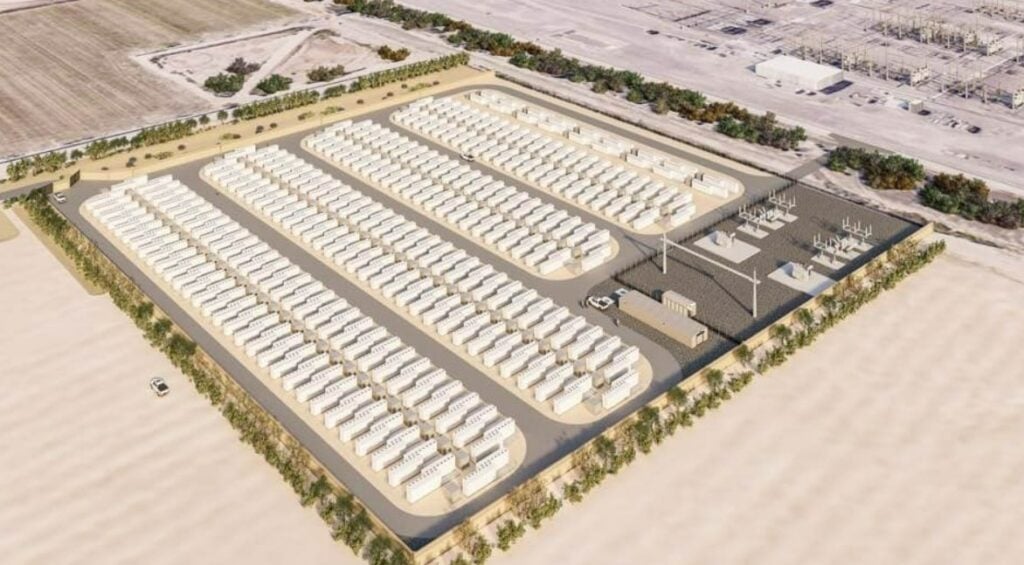
Developer Strata Clean Energy and utility Arizona Public Service (APS) have agreed a 20-year tolling agreement for a 255MW/1GWh battery energy storage system (BESS).
The pair announced the agreement, which will see Strata build, own and operate the project but exclusively provide its energy to APS over the period, yesterday (24 May).
The project, called Scatter Wash, is located in Phoenix and will increase clean energy capacity in one of the US’ fastest growing cities and stabilise the grid in a drought-prone region. A spokesperson said it has an investment value of US$500 million.
It resulted from an All-Source request for proposals (RFP) that APS conducted in May last year which saw it commit to adding 1GW of clean energy resources. The utility is the largest in Arizona, serving 1.3 million homes and businesses.
Try Premium for just $1
- Full premium access for the first month at only $1
- Converts to an annual rate after 30 days unless cancelled
- Cancel anytime during the trial period
Premium Benefits
- Expert industry analysis and interviews
- Digital access to PV Tech Power journal
- Exclusive event discounts
Or get the full Premium subscription right away
Or continue reading this article for free
The four-hour duration is similar to the market standard in California, which is required by grid operator CAISO’s Resource Adequacy framework and means BESS projects primarily monetised through energy and capacity, rather than ancillary services.
Scatter Wash first announced it was working on the project in late 2021, when it said it would be connected to the grid in 2024. Yesterday’s announcement did not give a firm commercial operation date, however. A related substation for the project may not be coming online until the end of 2023 according to this regulatory document.
Josh Rogol, president of Strata Clean Energy, commented: “We believe that APS will continue to be a leader in battery energy storage and that our experienced Scottsdale-based team is well positioned to help move the state towards achieving its clean-energy objectives with projects like Scatter Wash. We have a large pipeline of additional clean energy projects in the Western United States and world-class execution capabilities.”
The project is the same in energy capacity as a 250MW/1GWh BESS being developed by Plus Power for another big Arizona Utility, Salt River Project (SRP), set to come online in 2024. Tucson Electric Power (TEP) is the other large utility in the state.
Grid-scale BESS projects in the Arizona have been on the larger side. Recent ones covered by Energy-Storage.news include an 860MWh project system integrator Powin is deploying and a co-located 600MWh project being developed by developer BrightNight.