Supervisors in Maricopa County, Arizona, US, have approved a 100MW/400MWh battery storage project from independent power producer (IPP) National Renewable Solutions (NRS).
The Board of Supervisors for the county approved the standalone BESS project’s development plan last month in a unanimous vote, which followed a recommendation from the county’s Planning and Zoning commission to approve the project.
First established in 2011, NRS developed a claimed 1GW portfolio of renewable energy projects before being acquired by a subsidiary of BlackRock in 2021.
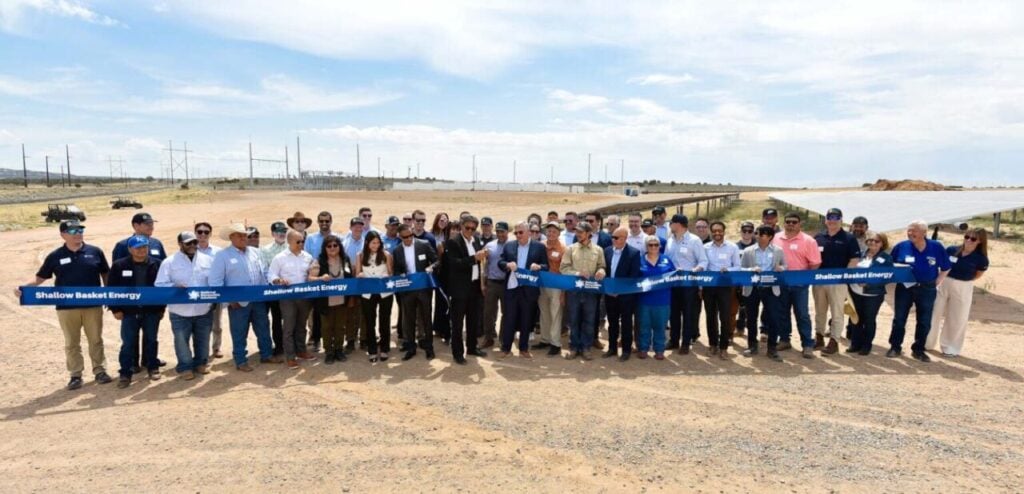
In terms of noteworthy coverage since then, the developer announced in August that its Shallow Basket Energy project located in New Mexico, which pairs 140MWac of solar with a 50MW BESS, had been brought online.
Try Premium for just $1
- Full premium access for the first month at only $1
- Converts to an annual rate after 30 days unless cancelled
- Cancel anytime during the trial period
Premium Benefits
- Expert industry analysis and interviews
- Digital access to PV Tech Power journal
- Exclusive event discounts
Or get the full Premium subscription right away
Or continue reading this article for free
Ranger Energy Center
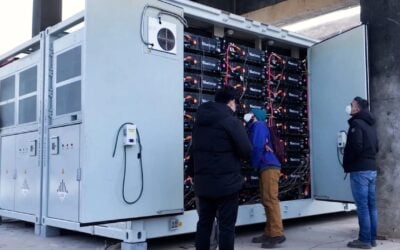
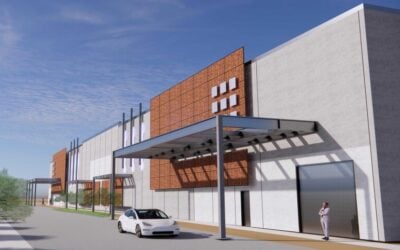
NRS is proposing to deploy Ranger Energy Center, featuring 168 lithium iron phosphate (LFP) battery storage containers, near the City of Surprise in Maricopa County, Arizona.
Interconnection to the local electricity grid will be achieved via a 69kV generation tie line connecting to utility Arizona Public Service’s (APS’s) electricity grid through its Trilby Wash substation.
NRS has already executed a purchase and sale agreement with a local real estate investment firm for acquisition of the land upon which the BESS will be developed.
It’s hoped that construction on the site will commence during February 2027, with NRS aiming for commercial operations in May 2028.
Surprise BESS explosion
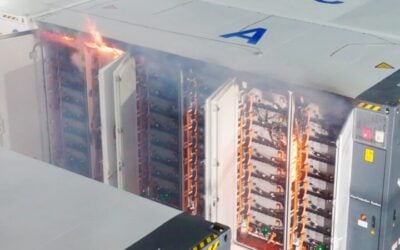
Some residents of Surprise are understandably wary of battery energy storage technology, following an explosion which occurred in April 2019 at a battery storage facility located that injured four firefighters.
Owned and operated by APS, the 2MWh McMicken BESS project was brought online during 2017 as one of the utility’s first forays into utility-scale storage.
With the project having been designed in the mid-2010s, it lacked the modern fire suppression systems and mitigation measures that are now commonplace in today’s battery storage facilities.
For example, investigations looking into the event have highlighted the lack of barriers between individual batteries, which led to thermal runaway propagating from cell to cell. Additionally, the system didn’t have an adequate ventilation system, leading to the creation of a flammable atmosphere and ultimately to an explosion.
As with many facilities developed during that period, it also utilised nickel manganese cobalt (NMC) battery technology, which is something the industry has since moved away from due to the increased chance of thermal runaway when compared to LFP technology.
Other investigations have revealed that emergency response plans didn’t address fire extinguishing or entry procedures and on top of this, local firefighters weren’t trained on the basics of BESS fires.
Technical analysis carried out by DNV on behalf of APS found that the fire originated in a single 0.24kWh cell going into thermal runaway likely due to an internal defect. It was then allowed to propagate by the absence of “adequate thermal barrier protections between battery cells,” a DNV report said, noting that the incident could serve as a valuable reference point for a safer industry.
Another report into the incident, from UL Research Institutes’ Fire Safety Research Institute (UL FSRI), found that firefighters who opened a BESS enclosure door that caused the subsequent explosion had acted in accordance with best practices as they were understood at the time, again highlighting a need for the work which has since been done in the space.
With lessons having been learned from the McMicken incident, a representative for NRS described modern BESS technology at the recent meeting as being “very safe for first-responders.”
Nowadays, the design of BESS containers is guided by comprehensive sets of internationally recognised standards, such as those issued by the National Fire Protection Association (NFPA).
In September, the NFPA released its 2026 edition of NFPA 855, the standard for the safe installation of stationary energy storage facilities, which is published in a full updated version every three years. The new version includes mandatory large-scale fire testing (LSFT) to assess propagation and the development of emergency response protocols at a project level, in collaboration with local authorities and first responders.
Endorsements of BESS technology
During the public hearing portion of the recent Maricopa County BoS meeting, former Republican Chair for Legislative District 29 and local resident, Lisa Everett, spoke in favour of the project and reminded officials of just how far the industry has come since the explosion.
“Many years ago we had a major fire but you know, technology has changed, international codes have changed … Today, we need to have efficient ways to bring power to the citizens of Surprise,” said Everett.
Most importantly, plans for the Ranger Energy Center have been reviewed and endorsed by Deputy Chief for the Arizona Fire & Medical Authority, Robert Olmstead, who would ultimately be responsible for dealing with a fire at the project if one were to occur.
After hearing from residents opposing the project and discussion amongst the board, officials approved NRS’ request for a Military Compatibility Permit and Plan of Development (PoD).
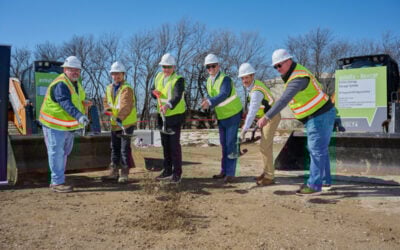
With an approved PoD, NRS must now obtain a building permit for the site to commence construction.
This article has been amended to accurately reflect the name of UL Research Institutes’ Fire Safety Research Institute (UL FSRI).