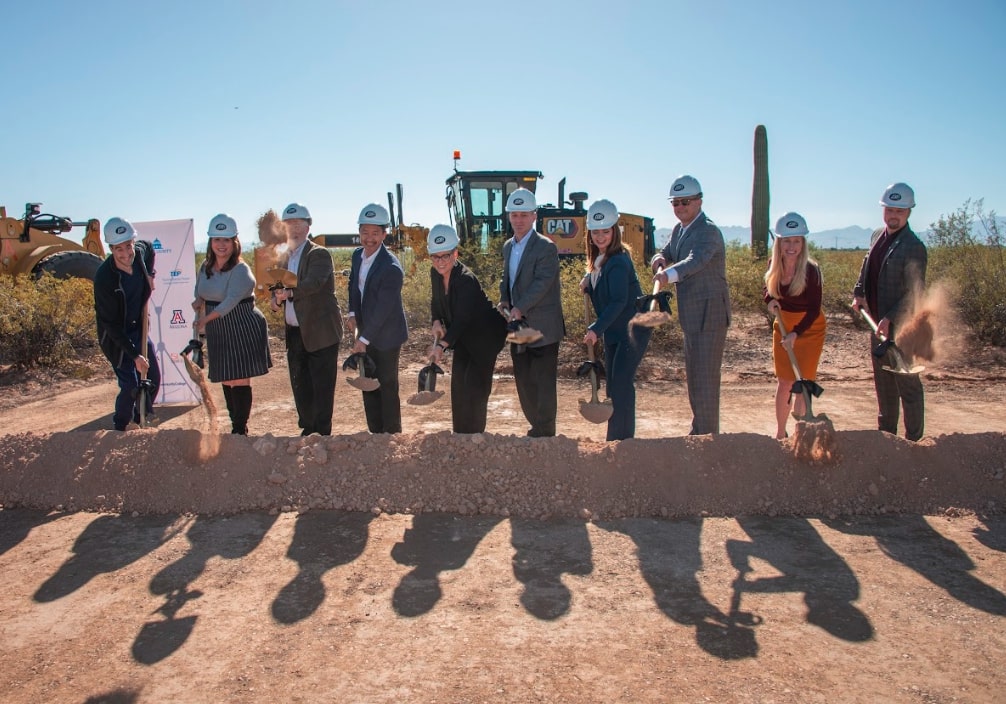
American Battery Factory has started construction on its gigafactory in Arizona, US, which will produce lithium iron phosphate (LFP) battery cells.
The company announced the groundbreaking on its first facility last week (26 October), which sits on on 267 acres in Pima County’s Aerospace Research Campus.
The two million square foot facility will create 1,000 jobs and require US$1.2 billion of investment, American Battery Factory (ABF) claimed. It is aiming the headquarters, R&D centre and initial factory module to be completed by 2025.
The facility will use a tension-based fabric membrane structure, which the company says saves time and money on construction, although the structure type’s suitability for a lithium-ion cell gigafactory has been questioned by some industry sources.
Try Premium for just $1
- Full premium access for the first month at only $1
- Converts to an annual rate after 30 days unless cancelled
- Cancel anytime during the trial period
Premium Benefits
- Expert industry analysis and interviews
- Digital access to PV Tech Power journal
- Exclusive event discounts
Or get the full Premium subscription right away
Or continue reading this article for free
Energy-Storage.news interviewed the then-CEO Paul Charles about ABF’s plans last year, since when Charles has stepped down and been replaced by co-founder Zhenfang “Jim” Ge.
Speaking in March 2022, Charles said the company was targeting the military, large electric vehicle (EV) and stationary energy storage system (ESS) markets.
The company has secured strategic partnerships with technology companies including Celgard, Anovion and FNA Group, and has “…raised significant development capital to make its vision a reality”, it said.
Gigafactories and other manufacturing facilities producing clean energy technologies can benefit from generous incentives under the Inflation Reduction Act including the 45X direct payment of US$35/kWh of battery cell production.
Clean Energy Associates recently forecasted that incentives like these would lead US-made battery energy storage system (BESS) containers to become cost-competitive with those from China in the US market by 2025.
Our publisher Solar Media is hosting the10th Solar and Storage Finance USA conference, 7-8 November 2023 at the New Yorker Hotel, New York. Topics ranging from the Inflation Reduction Act to optimising asset revenues, the financing landscape in 2023 and much more will be discussed.See the official site for more details.