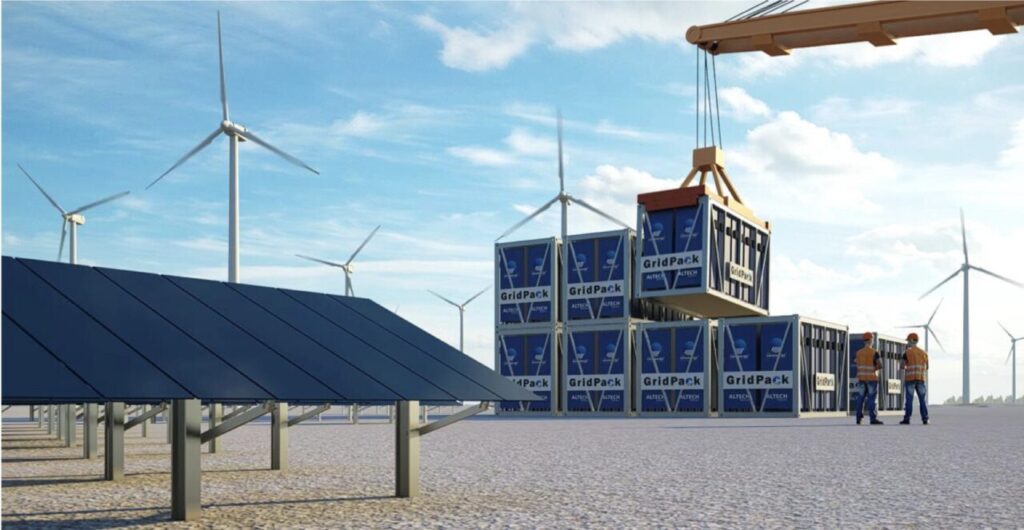
Western Australia’s Altech Batteries has inked an offtake agreement to supply the Western defence market with its CERENERGY battery energy storage system (BESS) technology.
Under the terms of the agreement revealed today (18 December), Germany’s Axsol, an integrated renewable energy solutions provider and certified supplier to the North Atlantic Treaty Organisation, better known as NATO, will exclusively distribute the energy storage technology to Western allied forces.
The technology has been described by the company as “highly robust, durable and non-flammable batteries” and thus ideally suited for defence applications and government agencies.
Starting in 2027, Axsol has committed to purchasing 10MWh of CERENERGY GridPacks in the first year, scaling to 30MWh annually from 2029 to 2031. Subject to availability this could be increased to 30MWh and 120MWh annually in the same timeframes.
Try Premium for just $1
- Full premium access for the first month at only $1
- Converts to an annual rate after 30 days unless cancelled
- Cancel anytime during the trial period
Premium Benefits
- Expert industry analysis and interviews
- Digital access to PV Tech Power journal
- Exclusive event discounts
Or get the full Premium subscription right away
Or continue reading this article for free
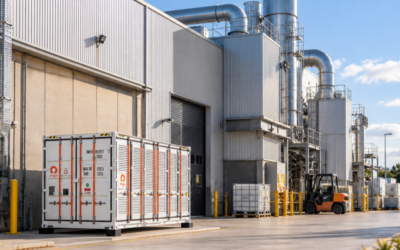
The CERENERGY sodium nickel chloride solid-state battery targets larger-scale applications, such as grid-level storage and industrial power backup, and has a capacity of 1MWh.
In October, the company successfully switched on a 60kW sodium-chloride solid-state battery prototype in Dresden, Germany. Perth-based Altech Batteries has a joint venture agreement with the German government battery institution Fraunhofer IKTS.
Future plans include commercialising the CERENERGY battery and constructing a 120MWh production facility on Altech-owned land in Saxony, Germany. Altech Batteries has a 75%-owned subsidiary called Altech Industries Germany GmbH (AIG).
Iggy Tan, CEO of Altech Batteries, said Axsol’s interest in sodium-chloride solid-state battery technology highlights its advantages.
“We are delighted to have secured such a competent partner in Axsol, enabling Altech to enter the highly attractive defence-related market segment with our CERENERGY GridPack BESS,” Tan added.
Alongside the offtake agreement, Axsol and the manufacturer will also collaborate on developing an advanced energy management system, dubbed AXOS.
Altech Batteries secures third offtake agreement in Germany
This offtake agreement becomes the third such deal to have been signed for Altech Batteries’ energy storage technology. On 13 September 24, the company announced the execution of an offtake letter of intent with Zweckverband Industriepark Schwarze Pumpe (ZISP) via its Altech Batteries GmbH entity.
Under the terms of this agreement, ZISP, an industrial park in Saxony, will purchase 30MWh of energy storage capacity annually in the form of GridPack technology during the first five years of production.
The second offtake agreement came in November 2024 when Altech Batteries penned a deal with Referenzkraftwerk Lausitz GmbH (RefLau), a joint venture between German utility companies Enertrag SE (Enerttag) and Energiequelle GmbH.
RefLau will purchase 30MWh of CERENERGY energy storage capacity in the first year, then 32MWh per year thereafter for the next four years of production. As part of the letter of interest, it was further agreed that Altech will purchase green electricity at competitive prices directly from the partners in the region for its planned production plant in the region.
RefLau aims to mitigate supply gaps from solar PV and wind intermittency, whilst enhancing grid stability with sector coupling and battery storage solutions.