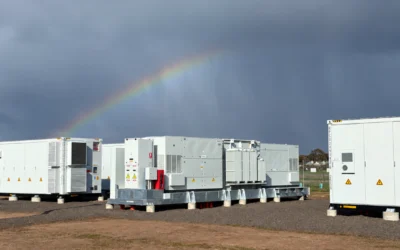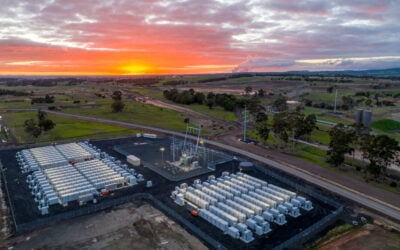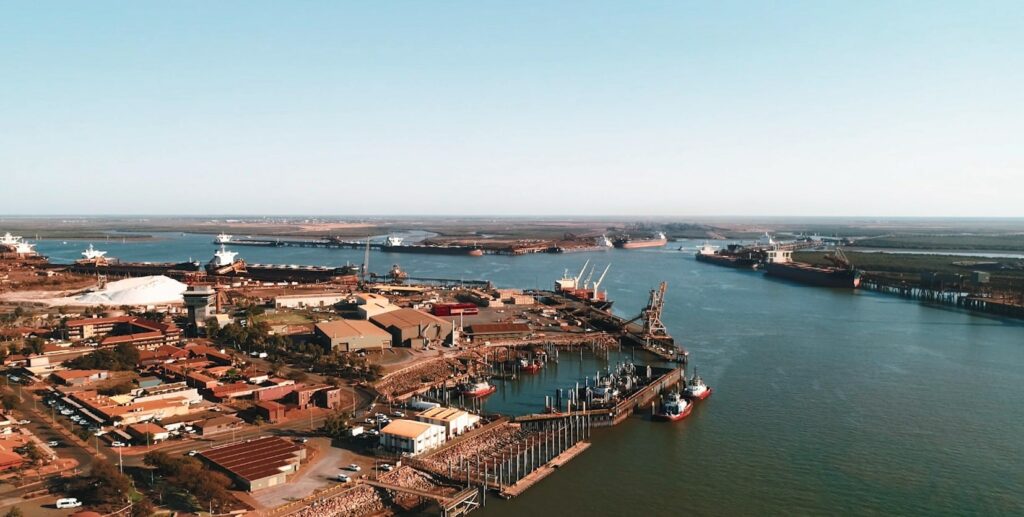
UGL has been selected to design, test and commission a battery energy storage system (BESS) which will provide power for BHP’s iron ore port in Western Australia (WA).
UGL, a subsidiary of Australian construction company CIMIC Group, was chosen by Alinta Energy, the utility company delivering the hybrid solar-plus-storage project. It will reduce emissions and increase the use of renewable energy at the port, which connects mining giant BHP’s Western Australia Iron Ore (WAIO) operations to export markets.
In addition to installing battery storage and power condition system (PCS) equipment, UGL will build out an extension to the existing high voltage transmission network to connect up the renewable energy solution.
“Projects in high-tech, energy transition and sustainable infrastructure are a key focus for our Group,” CIMIC executive chairman Juan Santamaria said of the awarded contract.
Try Premium for just $1
- Full premium access for the first month at only $1
- Converts to an annual rate after 30 days unless cancelled
- Cancel anytime during the trial period
Premium Benefits
- Expert industry analysis and interviews
- Digital access to PV Tech Power journal
- Exclusive event discounts
Or get the full Premium subscription right away
Or continue reading this article for free
Comprising a 35MW/35MWh BESS paired with a 45MW solar PV power plant, the project will be built at the site of Alinta Energy’s Port Hedland power station, which is a 210MW dual fuel gas and distillate power plant around 14km from the BHP Iron Ore port.
It is one of the largest iron ore ports in the world, the largest in Australia, and is one of three major facilities of its kind in the Pilbara mining region of WA. As reported by Energy-Storage.news last September BHP and Alinta Energy have a power purchase agreement (PPA) in place for the forthcoming project, and it has been claimed it could halve emissions from the BHP facility based on current forecasted demand, versus emissions in BHP’s FY2020.
It would be a further step towards the daunting task of decarbonising Australia’s natural resources industry.
While there have been a number of BESS-based clean energy projects at various mining operations around the country to date, a group called the Electric Mine Consortium produced a report last year which found nearly a terawatt-hour of energy storage could be needed for Australia’s mining industry to get in line with national net zero pathway goals.
As for Western Australia, the state has seen some major BESS policy and industry activity in the past few weeks: WA’s biggest project to date, a 100MW/200MWh system, began pre-commissioning testing in the middle of May. That announcement from the government came just a couple of days after the state’s budget committed AU$2.3 billion (US$1.5 billion) towards two large-scale, 4-hour duration battery storage assets.
Other BESS projects Alinta’s contractor UGL is working on include providing balance of plant (BOP) services for independent power producer Neoen’s 200MW/400MWh Western Downs Battery project in Queensland.
Tesla Megapacks will be used at the Western Downs Battery. Alinta has yet to announce a BESS solutions provider for the Port Hedland system, which is expected to go online before the end of 2024.
Energy-Storage.news’ publisher Solar Media will host the 1st Energy Storage Summit Asia, 11-12 July 2023 in Singapore. The event will help give clarity on this nascent, yet quickly growing market, bringing together a community of credible independent generators, policymakers, banks, funds, off-takers and technology providers. For more information, go to the website.