AES Andes has received environmental review approval for a 560MW project in Chile converting an existing coal plant to renewable energy and energy storage, using a molten salt-based technology.
An approval of the project’s environmental impact assessment (EIA) was given on Monday (27 November) by the Environmental Evaluation Service of the Antofagasta regional government, where the plant is located.
The project, called Alba, will convert the existing 560MW coal-fired Angamos power plant in Mejillones into a renewable energy storage and generation system based on heating salt. The project will require US$450 million of investment.
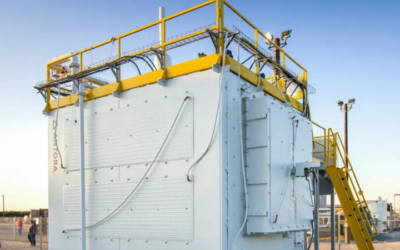
The technology was explained in its EIA review a little over a year ago, covered by Energy-Storage.news at the time. The energy storage unit would use a system of salts heated to 310-560°C, which would then enter a water/salt heat exchanger to release the stored thermal energy and generate steam to move a turbogenerator.
Try Premium for just $1
- Full premium access for the first month at only $1
- Converts to an annual rate after 30 days unless cancelled
- Cancel anytime during the trial period
Premium Benefits
- Expert industry analysis and interviews
- Digital access to PV Tech Power journal
- Exclusive event discounts
Or get the full Premium subscription right away
Or continue reading this article for free
It was implied in the review that the system could have a discharge duration of 10 hours, meaning potentially 5,600MWh of energy storage capacity.
The potential technology provider has not been revealed but there are several long-duration energy storage (LDES) companies globally that use heated salt as the basis for their tech, including Malta Inc, Kyoto Group and Hyme Energy.
AES Andes hasn’t given an expected commercial operation date (COD) for the project. The company is a subsidiary of global energy firm AES responsible for its operations in Chile, Argentina and Colombia. AES founded the one of the world’s largest battery energy storage system (BESS) integrators Fluence, along with electronics giant Siemens.
The energy storage market in Chile is set to soar in the next few years, with huge solar curtailment prompting almost all large solar PV projects to be paired with energy storage, and the government creating a mechanism for standalone projects to sell energy in the electricity market. The country’s northern Atacama desert region is said to be the ‘sunniest place in the world’.
Just recently, IPP Grenergy unveiled plans for a 4.1GWh BESS – the world’s largest, it claimed – while investor SUSI Partners entered a development deal for two solar-plus-storage projects with 900MWh of energy storage capacity.
See the EIA approval note (in Spanish) for the Alba project here.