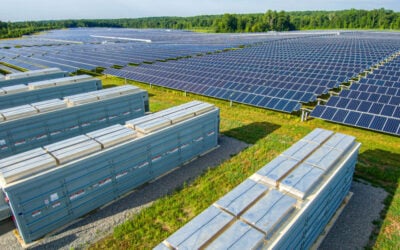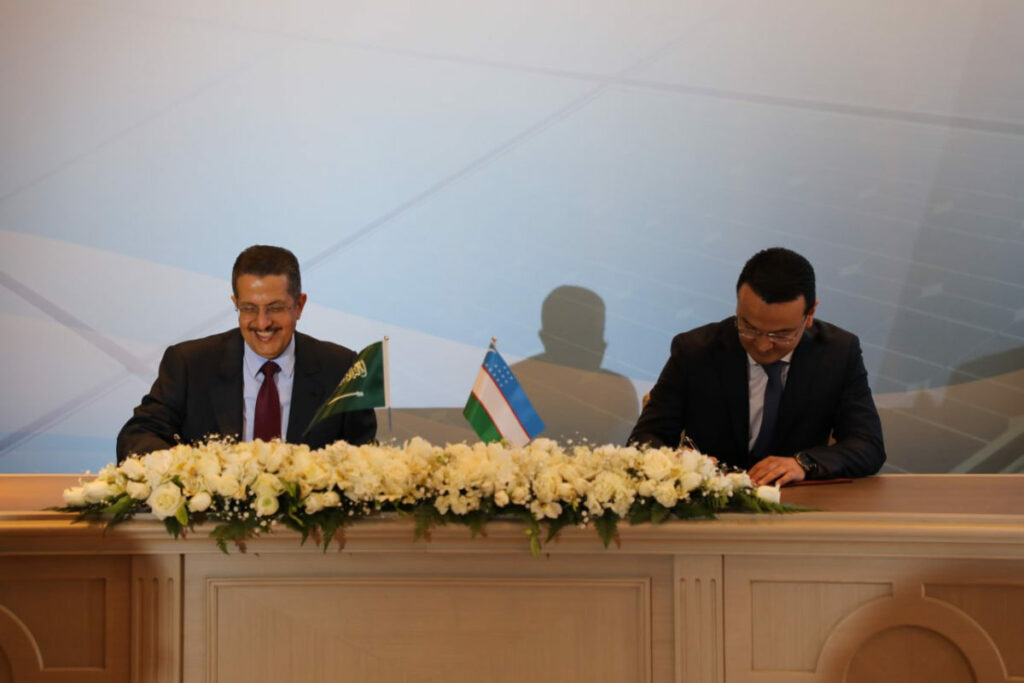
Saudi energy provider ACWA Power has signed agreements to develop 1.4GW of solar PV and 1.2GW of energy storage projects in Uzbekistan to be financed by the country’s Ministry of Investment, Industry and Trade.
The agreements are for two solar projects – a 1GW facility in the Samarkand region and a 400MW plant in the Tashkent region – and three 400MW storage projects. Investment will come from the Uzbekistani government, and ACWA signed power purchase agreements (PPA) for the projects with JSC Uzbek National Electricity Grids, the country’s grid operator.
The investment agreements form part of a US$10 billion plan signed last year between ACWA Power and the Ministry of Energy and Ministry of Investment, Industry and Trade to finance projects through 2027. These new projects will constitute around US$2.5 billion.
As part of the announcement the government clarified its commitment to providing 35% of its electricity generation through renewables by 2030. To do so, it plans to deploy 10GW of solar capacity and 5GW of wind.
Try Premium for just $1
- Full premium access for the first month at only $1
- Converts to an annual rate after 30 days unless cancelled
- Cancel anytime during the trial period
Premium Benefits
- Expert industry analysis and interviews
- Digital access to PV Tech Power journal
- Exclusive event discounts
Or get the full Premium subscription right away
Or continue reading this article for free
In December, Uzbekistan confirmed that it had awarded 500MW of solar in the most recent round of its renewable energy tender. The country was included in a September 2022 report that highlighted the need for rapid renewables deployment in Eastern Europe, the Caucuses and Central Asia following the Russian war in Ukraine.
The ACWA Power announcement comes just a few days after the company signed an agreement with the government of Kazakhstan and a Kazakh sovereign wealth fund for a US$1.5 billion wind energy and battery storage project, as reported by Energy-Storage.news.
It’s the third agreement of its type to include battery storage between the Saudi Arabian sustainable infrastructure and energy developer and governments in Central Asia reported by the site already this year. In February ACWA Power signed a Memorandum of Understanding (MoU) with the government of Azerbaijan to explore the potential for battery energy storage system (BESS) projects.
This story first appeared on PV Tech.
Additional reporting for Energy-Storage.news by Andy Colthorpe.
Energy-Storage.news’ publisher Solar Media will host the 1st Energy Storage Summit Asia, 11-12 July 2023 in Singapore. The event will help give clarity on this nascent, yet quickly growing market, bringing together a community of credible independent generators, policymakers, banks, funds, off-takers and technology providers. For more information, go to the website.