The New South Wales (NSW) government has declared two pumped hydro projects representing AU$7 billion (US$4.84 billion) in investment and totalling 22,000MWh of storage capacity as critical infrastructure.
The government has today (6 February) confirmed it is fast-tracking development of the Western Sydney Pumped Hydro Project at Lake Burragorang and the Yarrabin (Phoenix) Pumped Hydro Project near Mudgee.
The critical infrastructure designation provides streamlined planning pathways and enhanced coordination across government agencies for both projects, which collectively offer substantial long-duration energy storage (LDES) capacity to support NSW’s renewable energy transition.
The Western Sydney project proposes 2,000MW/10,000MWh capacity with 8-hours of storage, while the Phoenix project targets 1,000MW/12,000MWh with 12-hour duration capability.
Try Premium for just $1
- Full premium access for the first month at only $1
- Converts to an annual rate after 30 days unless cancelled
- Cancel anytime during the trial period
Premium Benefits
- Expert industry analysis and interviews
- Digital access to PV Tech Power journal
- Exclusive event discounts
Or get the full Premium subscription right away
Or continue reading this article for free
As previously reported by Energy-Storage.news, ACEN Australia’s 11,990MWh Phoenix Pumped Hydro Energy Storage Project entered the EPBC Act referral process in September 2025. This was after the project was awarded a Long-Term Energy Service Agreement (LTESA) in the fifth round of the tender scheme.
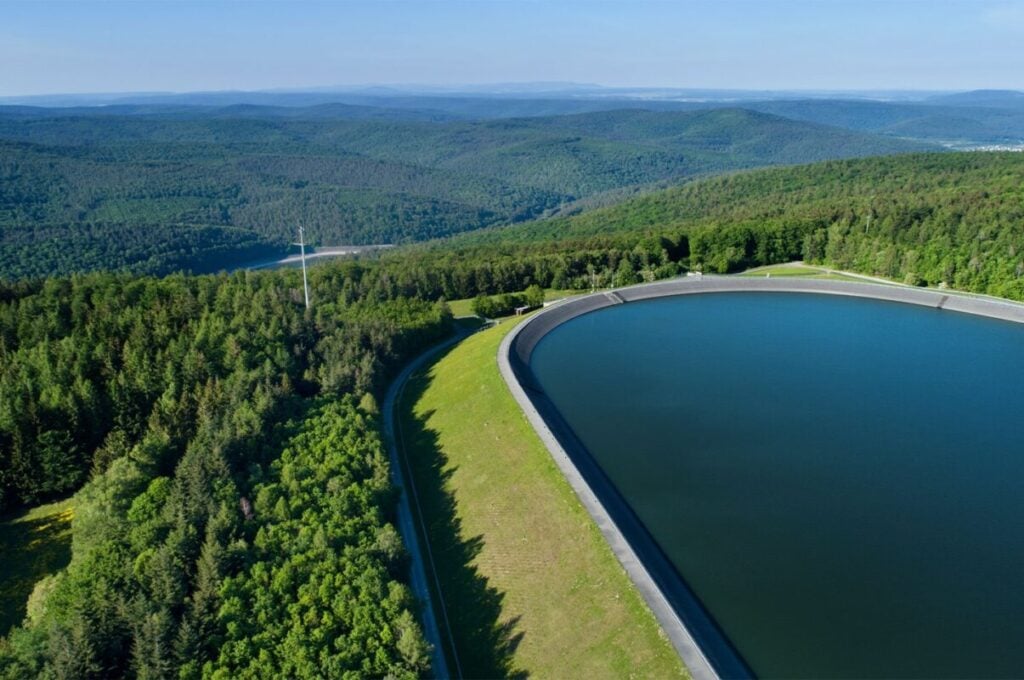
The facility will feature purpose-built upper and lower storage reservoirs connected by a tunnel to a powerhouse containing pump-turbine units, with each reservoir spanning approximately 50 hectares and holding up to 20,000ML of water.
Meanwhile, the Western Sydney project at Lake Burragorang, being explored by ZEN Energy, will utilise existing water infrastructure, connecting to the Warragamba Dam system to create a closed-loop pumped hydro facility.
The project’s 2,000MW capacity positions it among Australia’s largest proposed pumped hydro developments, in terms of power output, with 8-hour duration storage providing 16,000MWh of energy capacity.
WaterNSW, the state-owned water supplier, identified both newly designated sites through feasibility studies examining potential locations across the state. Energy-Storage.news previously covered how WaterNSW selected pumped hydro sites with potential to support renewable energy objectives.
Pumped hydro energy storage (PHES) continues to become a cornerstone in NSW’s energy transition. In 2024, three other pumped hydro projects received Critical State Significant Infrastructure status, including the Stratford Pumped Hydro and Solar project with 3,600MWh capacity, the 250MW Muswellbrook project developed by AGL and Idemitsu Australia, and EnergyAustralia’s 335MW Lake Lyell facility.
The critical infrastructure designation enables coordinated planning across multiple government departments and agencies, potentially reducing development timelines for both projects.
The critical infrastructure designation follows federal government commitments to major pumped hydro developments, including the Snowy 2.0 expansion in NSW and Tasmania’s ‘Battery of the Nation’ initiative.
Last year, the Clean Energy Finance Corporation (CEFC) committed AU$3.8 billion to the Marinus Link interconnector, a key part of the Battery of the Nation plan and therefore supporting Tasmania’s pumped hydro development strategy.
Construction timelines for both NSW pumped hydro projects remain subject to environmental approvals and final investment decisions, with the critical infrastructure status expected to facilitate coordination across regulatory processes and accelerate development schedules for these strategically important energy storage assets.
The development comes as the NSW government announced that six battery storage projects totalling 1.17GW/11.98GWh had been granted LTESAs in the latest LDES tender round.
The Energy Storage Summit Australia 2026 will be returning to Sydney on 18-19 March. It features keynote speeches and panel discussions on topics such as the Capacity Investment Scheme, long-duration energy storage, and BESS revenue streams. ESN Premium subscribers receive an exclusive discount on ticket prices.
To secure your tickets and learn more about the event, please visit the official website.