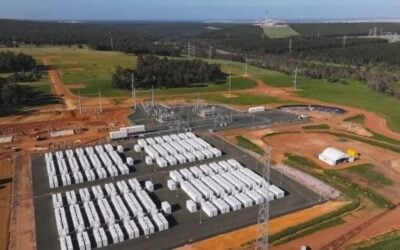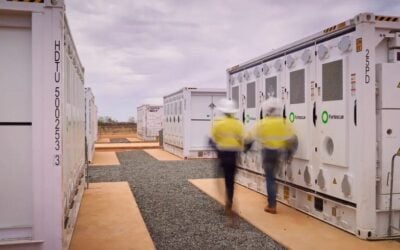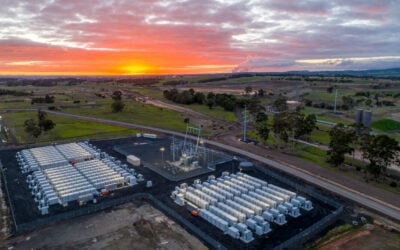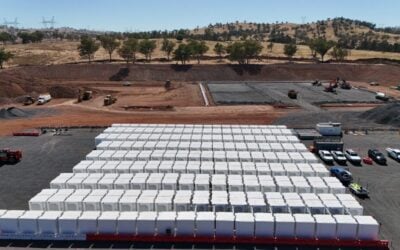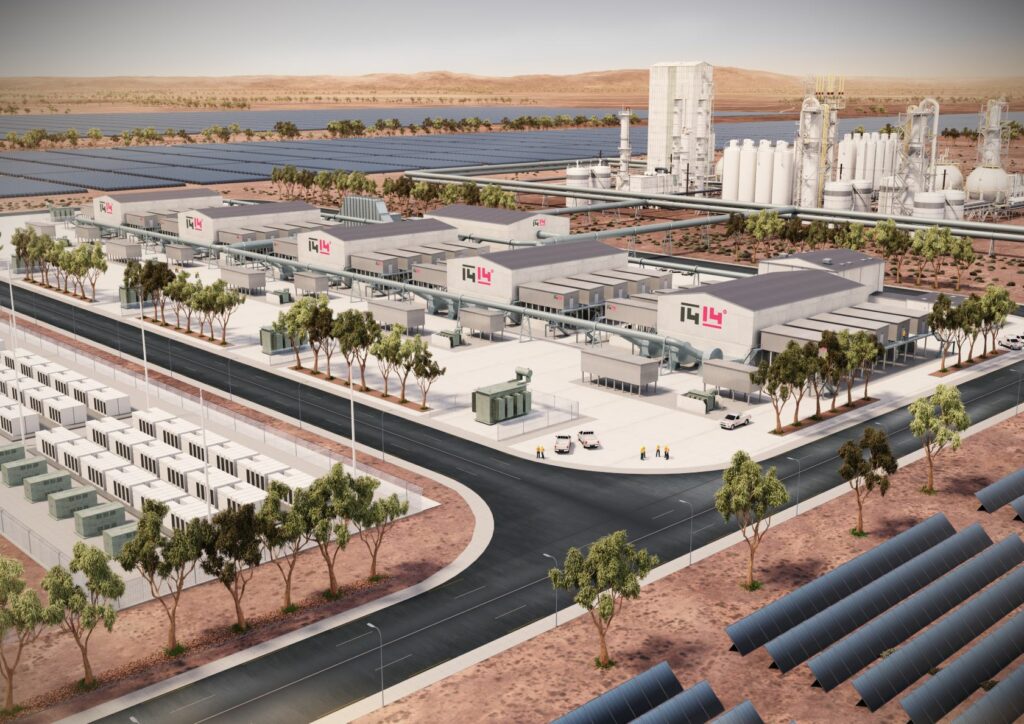
Australian thermal energy storage company 1414 Degrees has received critical regulatory approval from the Australian Energy Market Operator (AEMO) for its 140MW Aurora battery energy storage system (BESS).
This marks a major milestone on the path to the project’s target of commercial operation in 2026.
The company announced on Friday (16 January) that AEMO accepted the proposed Generator Performance Standards (GPS) for the Aurora BESS under clauses 5.3.4A(d) and 5.3.4B of the National Electricity Rules, with South Australian transmission network service provider ElectraNet also confirming acceptance of the full standards package.
GPS approval gives a developer the regulatory authorisation to connect their generating system to Australia’s electricity grid. It provides legal certainty that their project meets the technical requirements, enables them to finalise transmission connection agreements, and allows them to commence commercial negotiations for power purchase agreements (PPAs) with customers.
Try Premium for just $1
- Full premium access for the first month at only $1
- Converts to an annual rate after 30 days unless cancelled
- Cancel anytime during the trial period
Premium Benefits
- Expert industry analysis and interviews
- Digital access to PV Tech Power journal
- Exclusive event discounts
Or get the full Premium subscription right away
Or continue reading this article for free
Both authorities determined that connecting the battery storage system would not adversely affect the strength of other existing or committed generating systems on the network, clearing a major technical hurdle for the project’s advancement.
The Aurora project represents the first component of what 1414 Degrees describes as a “Continuous Energy Hub” designed to serve data centres and other high-demand industrial applications.
The 140MW system is being developed on behalf of SiliconAurora, which holds the Crown Lease over the 15.8-hectare site near Port Augusta, South Australia, and has invested over AU$3.5 million (US$2.34 million) to date in generator studies and regulatory approvals for development of the broader Aurora Renewable Energy Precinct.
The regulatory approvals are valid for 12 months, subject to execution of the Transmission Connection Agreement (TCA), and enable 1414 Degrees to advance toward securing PPAs with customers.
AEMO indicated that the final due diligence assessment of the system’s capability to meet agreed performance standards will commence following the submission of finalised technical models and detailed design information, which will mark the next phase of technical validation for the project.
The GPS approval has been granted for the 140MW battery storage system. The wider Aurora Energy Project will also include a pilot of the company’s SiBox thermal energy storage technology.
1414 Degrees’ thermal energy storage system technology
Thermal energy storage systems, like those developed by 1414 Degrees, represent an alternative to traditional lithium-ion battery storage, using heat as the storage medium rather than electrochemical processes.
The company’s proprietary SiBrick technology harnesses the exceptionally high latent heat capacity of silicon, which melts at 1,414°C, to store renewable energy as thermal energy that can be converted back to electricity or used directly as industrial heat.
This approach offers particular advantages for long-duration energy storage (LDES) applications and industrial processes requiring high-temperature heat, positioning the technology as complementary to conventional battery systems rather than directly competitive.
The SiBox system, 1414 Degrees’ complete thermal energy storage solution, integrates heating elements with SiBrick storage media within an insulated heat store, coupled with an energy recovery system.
This technology can deliver temperatures ranging from 700°C to 1,000°C, making it suitable for high-temperature industrial applications that currently rely on fossil fuels, including cement production, alumina processing and steel manufacturing.
The system’s ability to provide both electricity and industrial heat represents a key differentiator from conventional battery storage technologies, which can only provide electrical output.
1414 Degrees has reached several major milestones in the energy storage landscape. In the third quarter of 2022, the company joined the Long Duration Energy Storage Council, and in 2018, the organisation kicked off a molten silicon storage project in Australia.
The company noted that separate negotiations remain ongoing with the current sole user of the existing transmission line to enable reclassification as a Dedicated Connection Asset, which would allow open access to the National Electricity Market (NEM), which spans Australia’s eastern and southern states.
Executive chairman Dr Kevin Moriarty expressed confidence that an agreement would be reached on this matter, describing it as a necessary step to unlock the project’s full commercial potential.
“In addition to revenue from the BESS, it supports broader development opportunities, including data centre potential previously outlined by the company,” Dr Moriarty added.
The Aurora Precinct’s positioning for potential data centre applications reflects broader market trends, with increasing global investment in AI-driven digital infrastructure creating demand for a reliable, continuous power supply.
The company referenced recent initiatives involving NEXTDC and OpenAI, along with continued expansion by operators such as Firmus, as indicators of growing market opportunity for facilities capable of providing uninterrupted renewable energy.
Data centres require an extremely reliable power supply with minimal downtime, making the combination of battery storage and thermal storage particularly attractive for such applications. Energy-Storage.news has been tracking several major data centre developments featuring energy storage.
The Energy Storage Summit Australia 2026 will be returning to Sydney on 18-19 March. It features keynote speeches and panel discussions on topics such as the Capacity Investment Scheme, long-duration energy storage, and BESS revenue streams. To secure your tickets and learn more about the event, please visit the official website. ESN Premium subscribers receive an exclusive discount on ticket prices.