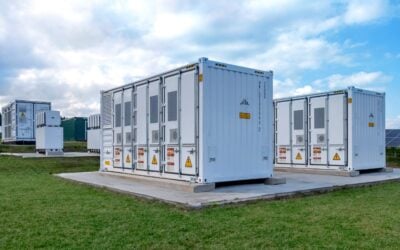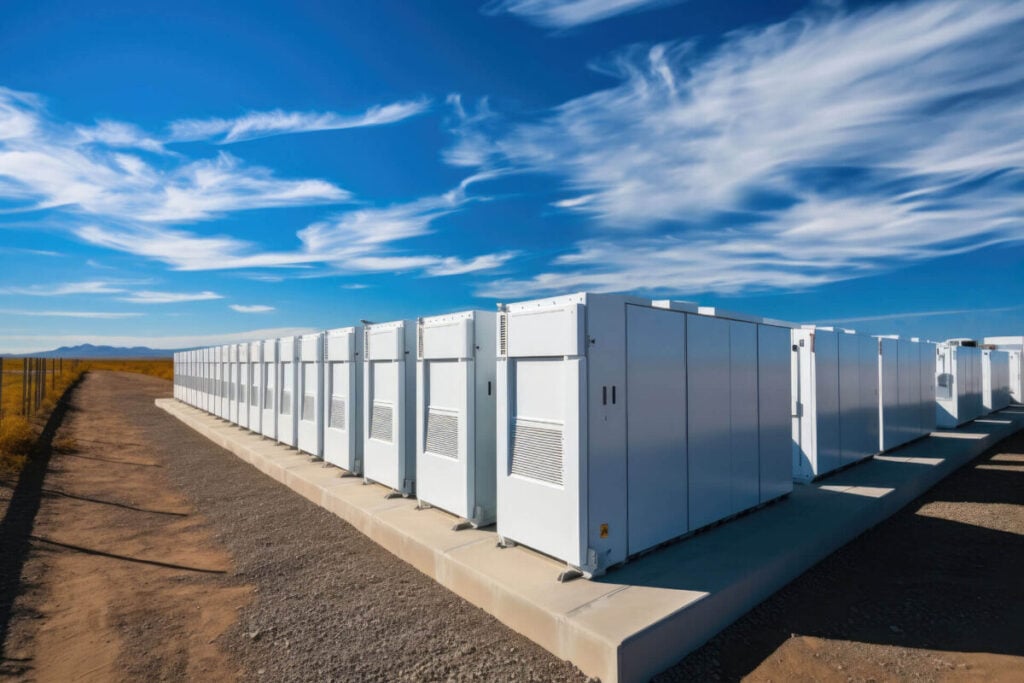
Renewable energy developer ACE Power has submitted a 500MW battery energy storage system (BESS) in Queensland to Australia’s Environment Protection and Biodiversity Conservation (EPBC) Act.
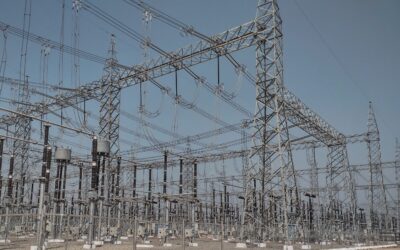
The battery, which will be connected to the Raglan substation, owned by government-owned network operator Powerlink, is being developed across 9.1 hectares in the Gladstone region of Queensland, around 529km north of the state capital, Brisbane.
Raglan has numerous renewable energy and storage projects currently under development, including a 300MW solar PV plant being pursued by London-based renewable energy developer Eco Energy World.
Documents submitted as part of the EPBC Act application confirmed that the BESS would import electricity from the grid, store it, and then export it for use in the grid during periods of peak demand. The duration of the asset has not been disclosed.
Try Premium for just $1
- Full premium access for the first month at only $1
- Converts to an annual rate after 30 days unless cancelled
- Cancel anytime during the trial period
Premium Benefits
- Expert industry analysis and interviews
- Digital access to PV Tech Power journal
- Exclusive event discounts
Or get the full Premium subscription right away
Or continue reading this article for free
ACE Power said the BESS will use lithium-ion technology. The BESS components will be fully encased within a storage container, with the final dimensions and number of containerised batteries subject to the provider’s choice.
The project will have one construction phase: the 500MW BESS, the switchyard transmission infrastructure, and an access driveway. This phase is expected to take around 18 months and employ around 60 workers at its peak.
Once completed, the BESS would operate for 45-years with a repower option available after the first 20-years.
ACE Power eyes 3.6GWh BESS in Queensland
Queensland has become one of ACE Power’s focus regions in recent years for its renewable energy generation and energy storage portfolios. For instance, Energy-Storage.news reported late last month that the developer had submitted an EPBC Act application for its 900MW/3.6GWh 4-hour duration Nebo BESS located near the rural town of Nebo in the Isaac region.
According to documents submitted to the EPBC Act, the project will have two 450MW stages that could be developed separately or concurrently. The project’s first stage will include developing 450MW of BESS, a switchyard, and transmission infrastructure alongside the access driveway to the project site. Stage two will add 450MW of BESS and a second switchyard.
ACE Power confirmed that the construction phase of the Nebo BESS will take 12 to 18 months and is likely to start in the first quarter of 2026, subject to timely planning approval.
The developer is also exploring a 400MWh 2-hour duration BESS in Yabulu, set to be located near a proposed 101MW solar PV power plant. The project received development approval from Townsville City Council in 2022 and EPBC approval in early 2023.
Renewable energy and storage in Gladstone
Gladstone has seen greater interest from investors and developers of renewable energy and storage in recent years. In November 2022, the Gladstone Regional Council launched a 10-year economic transition roadmap to support and guide the region’s transition to becoming a “renewable energy superpower”. This included variable generation such as solar PV and wind complemented with energy storage facilities at its core.
The Queensland government previously singled out Gladstone as a region that could play a vital role in the energy transition and enable the state to capture the economic opportunity of clean energy technologies.
According to the government, Gladstone already has the skills available in manufacturing and export, which it claims will be “invaluable to utilise, diversify and build on, and set the region up strongly”.
This potential saw Australian mining giant Fortescue Metals Group’s green energy entity open Australia’s first commercial-scale hydrogen electrolyser manufacturing facility, which the government claimed was one of the largest in the world. It will have an initial production capacity of over 2GW per annum.
Alongside hydrogen, energy storage could benefit from the projected growth around Gladstone. One of the largest energy storage projects in the region, BE Power Group’s 9.6GWh Big-G pumped hydro energy storage (PHES) project, was recently submitted to the government’s EPBC Act for approval.
The project’s electricity would be supplied to the National Electricity Market (NEM) via a new privately owned transmission line. Planning documents submitted to the government disclosed that ongoing discussions with Powerlink, a government-owned network operator selected to deliver Queensland’s Renewable Energy Zones (REZ) in September last year, were taking place with two possible options identified.
Energy storage in the EPBC Act
The EPBC queue, administered by the Federal government, aims to protect nationally threatened species and ecological communities. The approval must be received before a project can be developed.
One project recently submitted to the EPBC Act is Quinbrook Infrastructure Partners’ plans for a 750MW BESS co-located with a proposed polysilicon plant in Townsville, Queensland.
Squadron Energy, a renewable energy developer owned by one of Australia’s wealthiest citizens, Andrew Forrest, entered the EPBC Act to secure consent for an 8-hour duration 1,200MWh BESS in New South Wales, to be co-located with a 300MW wind project.
Similarly, the Australian entity of global renewable energy investor Cubico Sustainable Investments (Cubico) recently submitted two wind-plus-storage projects, both of which include a 200MW BESS, for approval under the EPBC Act.