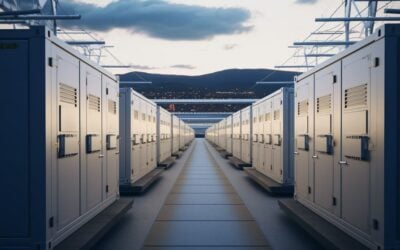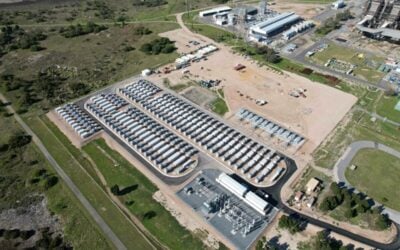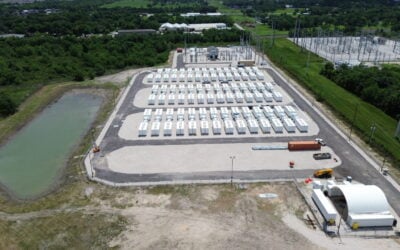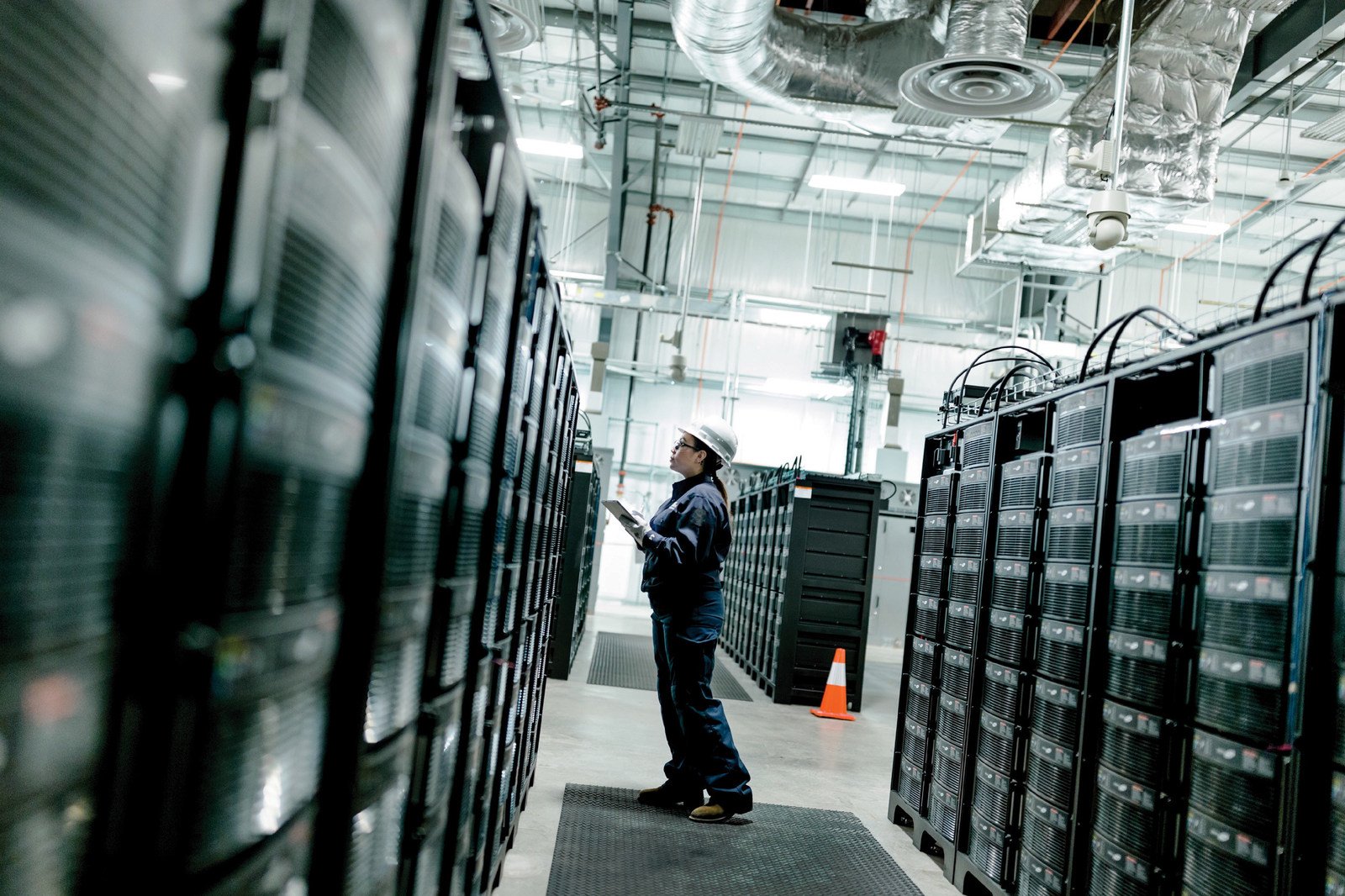
Duke Energy Florida has announced three large-scale battery storage projects which will take the utility almost halfway to its target of installing 50MW of grid-connected battery systems by 2022.
The company issued a release earlier this week announcing 22MW of projects: one of 11MW and two of 5.5MW each. Megawatt-hour figures were not given, although Duke Energy Florida (DEF) did provide brief explanations of the applications and services each project is set to deliver.
Once again, lithium-ion battery-based solutions have been selected for projects that will “improve overall reliability” of electricity supplies, to enhance the grid and make it more efficient, while also providing backup in case of outages – clearly a major concern in the often extreme weather-hit state. Early last year, Holly Raschein, a Republican member of the House of Representatives proposed legislation for the state that could make energy storage and solar the de facto go-to solution for disaster relief and resiliency from extreme weather events.
The “number and intensity of storms that have recently impacted the state,” the release said, make this backup function an increasingly important role that battery energy storage systems (BESS) can play. Meanwhile in day-to-day use they will provide “significant energy services to the power grid,” DEF state president Catherine Stempien said.
Try Premium for just $1
- Full premium access for the first month at only $1
- Converts to an annual rate after 30 days unless cancelled
- Cancel anytime during the trial period
Premium Benefits
- Expert industry analysis and interviews
- Digital access to PV Tech Power journal
- Exclusive event discounts
Or get the full Premium subscription right away
Or continue reading this article for free
DEF is also manager and operator of the grid in its service area, meaning the utility will be able to realise all of the multiple benefits of installing the batteries, whereas other utilities in other markets may be prohibiting from accessing certain markets. The three lithium-ion systems will help balance energy supply and demand, help integrate variable renewable energy sources, increase energy security and prevent the utility from overspending on expensive transmission and distribution system upgrades.
The largest, Trenton (11MW), is being used to add reliability to the local network. Meanwhile Cape San Blas (5.5MW) will add power capacity in a constrained area which continues to experience growth in demand, with DEF describing it as “an economical alternative” to building out the distribution grid. Jennings (also 5.5MW) will improve power reliability in the local area while again being a lower cost alternative to installing additional distribution equipment.
As was the case with solar PV, Florida, ‘The Sunshine State’, has been slow to embrace battery storage for renewables. DEF only installed its first utility lithium-in battery system coupled with solar in the state last winter, a 100kW solar array with a small Tesla device.
Another utility, Florida Power & Light has claimed some victories thus far in the field, connecting a DC-coupled grid-scale battery at a solar farm in early 2018, announcing a 10MW / 40MWh project later that year and then in March of this year said it would be developing what at the moment stands to be the world’s largest battery combined with solar. Duke Energy Florida is meanwhile committed to constructing or acquiring 700MW of solar PV and 50MW of battery storage by 2022, which is expected to require investment of around US$1 billion.