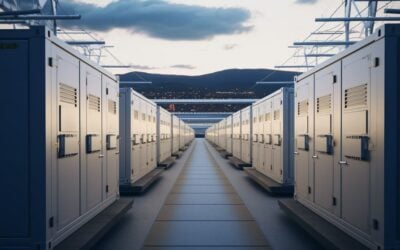
Western Australia’s GreenTech Hub, dedicated to supporting emerging green technologies, will explore advanced energy storage systems as its first challenge.
The Western Australian government and the Chevron-operated Gorgon Joint Venture fund the Hub, which Curtin University operates as a standalone facility.
The first ‘Innovation Challenge’ will be dedicated to advanced energy storage technologies and solutions. It aims to strengthen the sector’s pursuit of government targets, such as having at least 82% renewable energy by 2030 on the South-West Interconnected System (SWIS).
According to the government, the challenge will be to identify how technology can provide communities with new, clean, and stable solutions in the future. This includes investigating long-duration and scalable technologies to enhance reliability and efficiency for urban and remote applications.
Try Premium for just $1
- Full premium access for the first month at only $1
- Converts to an annual rate after 30 days unless cancelled
- Cancel anytime during the trial period
Premium Benefits
- Expert industry analysis and interviews
- Digital access to PV Tech Power journal
- Exclusive event discounts
Or get the full Premium subscription right away
Or continue reading this article for free
It is worth noting that Western Australia is currently exploring long-duration energy storage (LDES) technologies via a vanadium flow battery pilot in the town of Kununurra. This will explore the use of the technology in microgrids and off-grid power systems.
Western Australia’s GreenTech Hub aims to support start-ups and industry players by creating and scaling solutions for the energy transition and a low-carbon energy future. The facility partners with industry leaders to provide knowledge and expertise to the facility’s activities.
Stephen Dawson, Western Australia’s innovation and digital economy minister, hailed the Hub as a means to catalyse and mobilise green entrepreneurship and commercialisation across the state.
“The hub has now set its first challenge with energy storage and will work alongside industry, government, academics and others on how Western Australia can lead the charge into the future,” Dawson said.
The Hub’s partners are generally separated into three categories: industry, entrepreneur, investment, and research.
These partners include companies such as bp, Fortescue, the Australian Energy Market Operator (AEMO), and CSIRO, amongst others.
Western Australia’s need for large-scale energy storage
Western Australia and the wider Wholesale Electricity Market (WEM) must mobilise energy storage deployment to ensure its energy transition remains on target. The state has committed to retiring its coal-fired power stations by 2030, and thus, the void left by these will need to be replaced by energy storage and renewable energy generation.
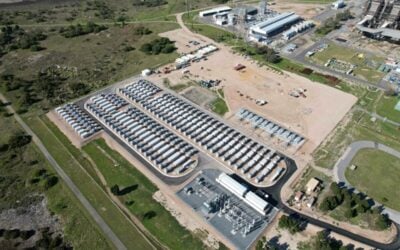
This has already led the state to develop some of the largest battery energy storage systems (BESS) in operation in Australia. One of these, the 200MW/800MWh Kwinana 2 BESS project, recently saw its construction phase completed having started in July 2023. Now that it is complete, the project is expected to be switched on before Christmas 2024.
The lithium-ion phosphate (LFP) battery will be connected to the SWIS, which links urban areas such as Albany, Bunbry, Perth, Merredin, Kalgoorlie, and Geraldton in Western Australia.
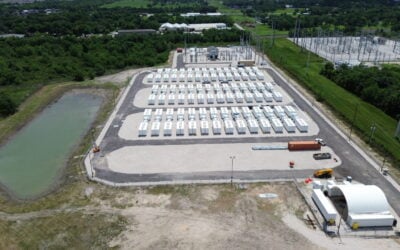
Alongside the Kwinana BESS projects, Western Australia is also home to Neoen’s 500MW/2,000MWh Collie battery, one of the largest in Australia. Origin Energy’s Eraring site is the largest BESS in Australia, and an expansion plan was recently released to bring the capacity to 2,800MWh.
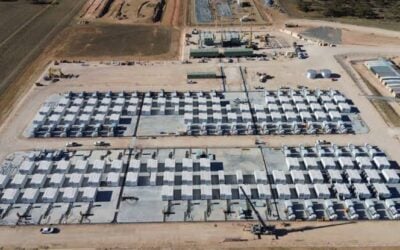
The Collie BESS first entered construction in March 2024, and the first stage was completed at the end of October. Neoen confirmed that the second stage of the Collie BESS, which will see a further 341MW/1,363MWh installed and connected to the grid, is currently under construction and expected to be completed in 2025.