French renewable energy power producer Voltalia has begun construction of its Artemisya “strategic cluster” project in Uzbekistan, Central Asia.
Voltalia announced on New Year’s Eve 2025 (31 December) that it has started deploying a 100MW/200MWh battery energy storage system (BESS) and 100MW of wind generation, representing the first phase of the Artemisya project.
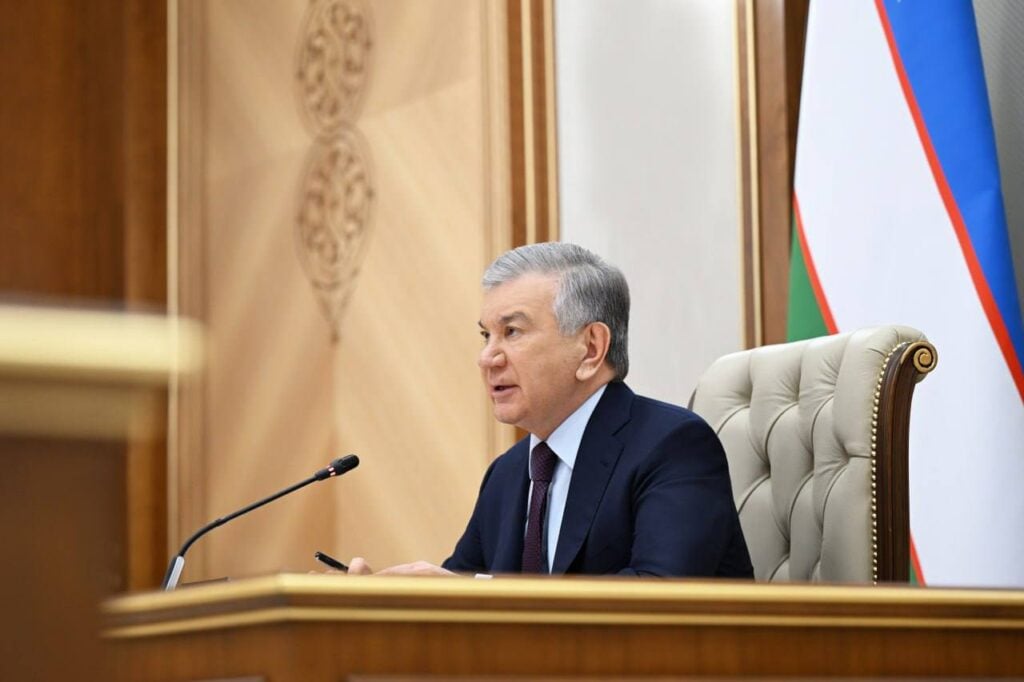
The commencement of construction follows the 5 December signing of investment agreements in the presence of Shavkat Mirziyoyev, president of the Republic of Uzbekistan.
The cluster is located in the region of Bukhara, which played a prominent role in the Silk Road trade route and is an ancient city, approximately 570km southwest of the Uzbek capital, Tashkent.
Try Premium for just $1
- Full premium access for the first month at only $1
- Converts to an annual rate after 30 days unless cancelled
- Cancel anytime during the trial period
Premium Benefits
- Expert industry analysis and interviews
- Digital access to PV Tech Power journal
- Exclusive event discounts
Or get the full Premium subscription right away
Or continue reading this article for free
The first phase of Artemisya is expected to be complete in the first quarter of 2027. Subsequent phases of the project will add 126MW of solar PV generation and a further 200MW of wind.
Voltalia signed a power purchase agreement (PPA) in March 2025 for the output of the project with state-owned power company JSC Uzenergosotish. Contracts were signed in France in the presence of Uzbek Premier Mirziyoyev during a state visit.
Financial terms of the PPA were not disclosed, but the agreement covers a 25-year term for the solar and energy storage portion of the hybrid renewable energy cluster and a 15-year term for wind power output.
Voltalia entered the Uzbekistan market in 2023 with support from the European Bank of Reconstruction and Development (EBRD), one of its main shareholders.
The company kicked off its activities with the signing of a framework agreement for the Artemisya cluster with the Central Asian country’s Ministry of Energy and Ministry of Foreign Trade and Investment. This signing took place during a state visit by French president Emmanuel Macron to Uzbekistan, marking the strategic importance of the energy infrastructure developments.
Power producer Voltalia has also signed agreements with the two Uzbek ministries for the co-development of Turan Storage, a 500MW/1,000MWh standalone BESS project.
Power producer Voltalia already began construction of Sarimay Solar, a first solar-plus-storage cluster in May 2024 comprising 126MW of PV generation and a 50MW/100MWh BESS and has also signed agreements with the two Uzbek ministries for the co-development of Turan Storage, a 500MW/1,000MWh standalone BESS project.
The EBRD also recently put its support behind the development of two solar-plus-storage projects totalling 1GW of solar PV and 1.3GWh of battery storage in Uzbekistan. The European development finance institution pledged US$142 million in financing in October to the two projects, which are in development by a special purpose vehicle (SPV) majority owned by Saudi developer ACWA Power and co-owned by Japanese investors Sumitomo Corporation, Shikoku Electric Power Company and Chubu Electric Power Company.
Like Voltalia, ACWA Power signed PPAs for renewables backed with energy storage with state power company JSC Uzenergosotish in 2023 before later signing a binding agreement with the Uzbek Ministry of Energy for up to 2GWh of BESS projects at the sidelines of COP29 in November 2024.
Another Middle East-headquartered developer, the UAE’s Masdar, signed a Battery Storage Service Agreement with JSC Uzenergosotish in November 2025, for a 300MW/600MWh BESS project in the Navoiy region, planned to go into operation in Q3 2028. Masdar signed its own agreements with the Uzbek government in 2023, targeting the development of up to 575MW/1,150GWh of BESS across Uzbekistan.