Utility-scale renewables developer Intersect Power has secured US$2.6 billion in financing for the construction and operations of a portfolio of solar and energy storage projects in California and Texas.
Eight separate transactions cover construction financing, tax equity, land financing and portfolio level term debt for the six-project portfolio, which includes 2.2GWdc of late-stage solar with 1.4GWh of energy storage.
The Athos III, Oberon I and Oberon II projects are in California, while the Radian, Lumina I and Lumina II plants will be constructed in Texas. They are all expected to be operational by 2023.
It was revealed earlier this year that Signal Energy was appointed EPC contractor for the 313MWdc Athos III and 415MWdc Radian projects, with Nextracker supplying its NX Horizon trackers and First Solar providing its Series 6 modules for both plants.
Try Premium for just $1
- Full premium access for the first month at only $1
- Converts to an annual rate after 30 days unless cancelled
- Cancel anytime during the trial period
Premium Benefits
- Expert industry analysis and interviews
- Digital access to PV Tech Power journal
- Exclusive event discounts
Or get the full Premium subscription right away
Or continue reading this article for free
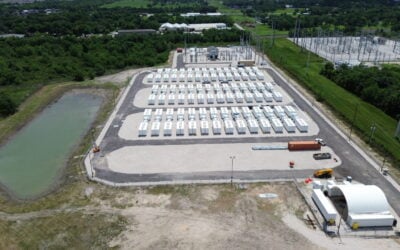
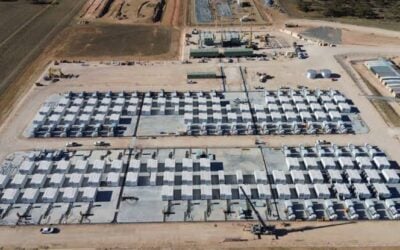
Approximately US$800 million of construction financing proceeds will be used for both Radian and Athos III, which will be colocated with a 453MWh battery energy storage system, with the financing led by MUFG and Santander Bank, and including KeyBanc Capital Markets, CoBank and Helaba. Intersect also secured approximately US$400 million of commitments from tax equity investors, including Bank of America and Morgan Stanley Renewables.
According to Intersect, the financings are distinguished from typical renewable projects by the US$1.4 billion term debt funding provided by HPS Investment Partners and co-investors, as well as CarVal Investors, Generate and Climate Adaptive Infrastructure. Proceeds from the term facility will support both the construction and operation of the portfolio.
Intersect CEO Sheldon Kimber said the financing will allow the company to deliver a core set of projects in the next two years that will serve as the platform for future growth into green hydrogen.
“These closings demonstrate what Intersect has been saying for some time now – that today’s long-term offtake contracts actually destroy value, and that there are innovative ways to finance clean energy assets which enable more valuable offtake structures,” he said.
A previous 1.7GW solar portfolio from Intersect of plants – which also featured equipment from Nextracker First Solar – in Texas and California was acquired by SoftBank subsidiary SB Energy in 2019.
This story first appeared on PV Tech.