The US Department of Energy (DOE) is investing US$28.7 million into grid resilience projects for Florida.
Announced on 20 December, the investment, aimed at protecting Florida’s electric grid against extreme weather, is supported by the Grid Resilience and Innovation Partnership (GRIP) Program.
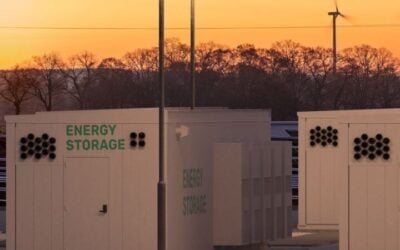
The City of Tallahassee Electric & Gas Utility will use the investment to deploy a utility-scale battery energy storage system (BESS). The BESS will be implemented at the Birmingham Street Substation to provide backup power for Lawrence-Gregory Community Centre, Lincoln Centre, Miracle Hill Nursing and Rehabilitation Centre and Tallahassee Senior Centre.
A Community Benefits Agreement will be developed by community-based organisations, local universities and the Resilient Infrastructure and Disaster Response (RIDER) Centre at Florida A&M University-Florida State University College of Engineering.
Try Premium for just $1
- Full premium access for the first month at only $1
- Converts to an annual rate after 30 days unless cancelled
- Cancel anytime during the trial period
Premium Benefits
- Expert industry analysis and interviews
- Digital access to PV Tech Power journal
- Exclusive event discounts
Or get the full Premium subscription right away
Or continue reading this article for free
The RIDER Centre brings together engineers, social scientists, social workers, health, public policy, community and information specialists to collaborate on solutions for improving resilient infrastructure and disaster response capacities, especially in under-served areas of Florida most affected by extreme weather.
The GRIP Program supporting the investment has committed to investing US$10.5 billion across the US to enhance grid flexibility and resilience. Since October 2023, the DOE has announced a total of US$7.6 billion for 105 GRIP projects across all 50 US states and Washington, DC.
In October 2024, developer and IPP Elevate Renewables announced a grid-forming BESS at a fossil fuel peaker plant in Connecticut, supported by the GRIP Program with US$27.5 million from the DOE.
The DOE also invested US$2.2 billion through the programme in August 2024 to support eight grid resilience and reliability projects across 18 US states. This amount included US$147 million for an 8.5GWh ‘multi-day’ BESS project hosted at a disused paper mill in Maine. A full list of GRIP projects can be found on the DOE’s website.
The GRIP Program and this investment in Florida is also part of the Biden-Harris administration’s Justice40 Initiative, which requires that 40% of the benefits of federal financing for clean energy investments go to disadvantaged communities.
In December 2024, the US Department of Agriculture (USDA) announced a US$4.37 billion investment in rural utilities through the Empowering Rural America (New ERA) programme, which supported the Justice40 Initiative.
US Secretary of Energy Jennifer M. Granholm said of the deal: “The residents of Florida repeatedly bear the impacts of extreme weather change, and the Biden-Harris Administration continues to work hard to ensure that all of the nation’s grid is hardened in the face of intensified effects of climate change.”
“The Administration’s Investing in America agenda has delivered the largest grid investment in U.S. history, adding more power to the grid faster, improving reliability and resilience, and investing in innovative technologies so all Americans can have access to affordable, reliable energy.”
The DOE expects to launch a third round of GRIP Project funding in 2025.