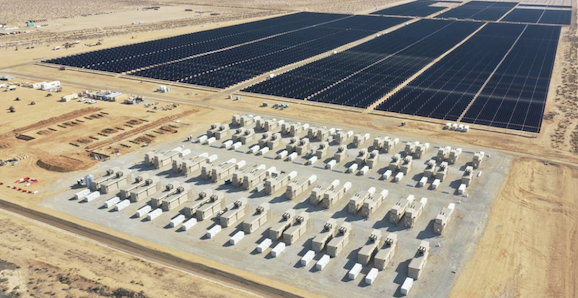
Cost inflation and supply chain issues have forced California utility PG&E to increase the prices it will pay for 2GWh of battery storage projects, in a move which has been approved by regulators.
The California Public Utilities Commission (CPUC) approved investor-owned utility PG&E’s request to amend four of its Mid-Term Reliability Contracts for battery storage last week (1 December).
The standalone battery storage projects, which were were approved earlier this year, were contracted for by the utility in response to a CPUC order to California’s utilities to procure 11.5GW of new clean energy resources.
Specifically, the (confidential) contract prices for all will now be increased, three have been delayed and one has been halved in size. See a table of the four which have been modified further down with the old values in parentheses (and a full table in our coverage of all nine projects’ approval in April).
Try Premium for just $1
- Full premium access for the first month at only $1
- Converts to an annual rate after 30 days unless cancelled
- Cancel anytime during the trial period
Premium Benefits
- Expert industry analysis and interviews
- Digital access to PV Tech Power journal
- Exclusive event discounts
Or get the full Premium subscription right away
Or continue reading this article for free
Beaumont, Canyon County and Inland Empire projects have been delayed to June 2024 while Inland has also been halved in size. The four projects total 530MW/2,120MWh (versus 580MW/2,320MWh before).
Explaining the move, PG&E said that after the contracts were executed developers brought “concerns regarding unprecedented changed market conditions which render the projects uneconomical”, the CPUC filing read.
Specifically, they cited significant increases in battery prices due to commodity price inflation, supply chain constraints, increased balance of system costs because of wider inflation and the increasing cost of capital due to the Federal Reserve raising rates.
| Project name | Developer/Owner | Output/Capacity | Location | Online date |
| Beaumont Energy Storage | Terra-Gen | 100MW/400MWh | Beaumont, Riverside County | June 2024 (August 2023) |
| Canyon Country Energy Storage | Terra-Gen | 80MW/320MWh | Santa Clarita, LA County | June 2024 (October 2023) |
| Inland Empire Energy Storage | Strata Clean Energy | 50MW/200MWh (100MW/400MWh) | Rialto, San Bernadino County | June 2024 (April 2024) |
| Nighthawk Storage | Tenaska | 300MW/1,200MWh | Poway, San Diego County | June 2024 |
PG&E stated in the CPUC filing that it has negotiated aggressively with the counterparties with respect to the price increases. What’s more, the price adjustments agreed on reflect the effects of the investment tax credit (ITC) for standalone energy storage contained within the recently passed Inflation Reduction Act.
PG&E expects its nine projects totalling 1.6GW/6.4GWh to be fully operational by 2024. Although the CPUC docket filing did not specify the new MWh capacity of the adjusted Inland project, all large-scale battery energy storage system (BESS) projects being procured by utilities in California are four-hour systems.
This is in order to qualify for Resource Adequacy, the California Independent System Operator’s (CAISO’s) means of ensuring there is enough supply to meet demand (without centralised capacity auctions).
The other five projects in PG&E’s Mid-Term Reliability which have not been amended in this procedure include a portion of the Edwards Sanborn solar-plus-storage project, which looks set to be among the biggest battery storage facilities in the world, also being developed by Terra-Gen.
Also being procured is part of the extension to Moss Landing, the world’s current largest BESS, two projects by NextEra Energy (one of the world’s largest energy storage system integrators) and a facility being built by developer Origis Energy.
California now has 4,471MW of battery energy storage online as of 31 October, 2022, according to CAISO’s website.
Energy-Storage.news’ publisher Solar Media will host the 5th Energy Storage Summit USA, 28-29 March 2023 in Austin, Texas. Featuring a packed programme of panels, presentations and fireside chats from industry leaders focusing on accelerating the market for energy storage across the country. For more information, go to the website.