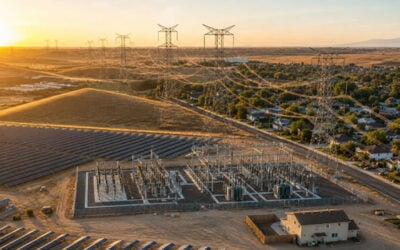
SSE Renewables has launched its first operative battery energy storage system (BESS) with a capacity of 50MW/100MWh.
The final energisation tests for the 2-hour duration BESS, located at Salisbury, Wiltshire in South West England, were completed last week, and the asset is now trading in Great Britain’s wholesale energy market.
SSE Renewables is the renewable energy development subsidiary of UK-headquartered power generator and project developer SSE, which has its roots in public sector electricity suppliers that were later privatised. The company sold its retail utility business in 2019.
Richard Cave-Bigley, director of development and construction – solar and battery at SSE, said the “first-of-a-kind” project for SSE Renewables will be a “fantastic asset”.
Try Premium for just $1
- Full premium access for the first month at only $1
- Converts to an annual rate after 30 days unless cancelled
- Cancel anytime during the trial period
Premium Benefits
- Expert industry analysis and interviews
- Digital access to PV Tech Power journal
- Exclusive event discounts
Or get the full Premium subscription right away
Or continue reading this article for free
Construction of the 26-unit battery project started in 2022 in conjunction with project partners, technology group Wärtsilä. Completion was marked by the Member of Parliament for Salisbury, John Glen MP, at a ceremony on 12 April.
As SSE’s flagship site, Salisbury BSS will contribute to SSE’s Net Zero Acceleration Programme, a fully funded five-year investment plan. SSE Renewables will invest over £7 billion (US$8.71 billion) up until 2027 – an average of almost £4 million a day – to deliver low-carbon infrastructure.
SSE Renewables is also constructing a 150MW battery project in Ferrybridge, West Yorkshire, which is due for completion in the first half of 2025, and a 320MW/640MWh battery project in Monk Fryston, North Yorkshire, which is expected to be completed in up to two years’ time.
“This welcome investment means supply of energy from renewable sources is reliable. Salisbury is leading the way as we continue our journey to net zero,” MP John Glen said of the new project.
To read the full version of this story, visit Solar Power Portal.