The UK government’s head of smart energy has admitted that Brexit – Britain’s planned departure from the European Union – is causing delays in the passage of primary legislation to define energy storage, which may not be achieved until 2022.
Speaking at yesterday’s Utility Week Live event in Birmingham, England, Will Broad was providing an update on the progress of the Smart Systems and Flexibility Plan (SSFP), which was published in July 2017, outlining 29 actions to enable the future energy system of the UK.
The plan set about to amend the Electricity Act 1989 and other relevant legislation to explicitly define electricity storage as a distinct subset of generation.
This was in opposition to many voices from industry that claimed energy storage should not be continually defined as a form of generation owing to its unique capabilities within the energy system.
Try Premium for just $1
- Full premium access for the first month at only $1
- Converts to an annual rate after 30 days unless cancelled
- Cancel anytime during the trial period
Premium Benefits
- Expert industry analysis and interviews
- Digital access to PV Tech Power journal
- Exclusive event discounts
Or get the full Premium subscription right away
Or continue reading this article for free
Broad yesterday conceded that the vote to leave the European Union, and the associated legislative requirements, meant that time could not be secured within government to move forward on the issue.
“We’re still seeking opportunities for parliamentary time to define storage in primary legislation and Brexit is making this difficult. But we still commit to do it this Parliament,” he said.
The original Call For Evidence in November 2016, which resulted in the actions outlined in the SSFP, made clear the industry’s appetite for a bespoke definition of energy storage.
It was argued that the current generation class assigned to the technology has led to a series of barriers to deployment, such as double charging of final consumption levies at the time of both importing from and exporting electricity to the grid.
This has left developers clamouring for faster progress on the issue, with an audience member at yesterday’s event accusing Broad of using Brexit “as an excuse” for delays.
In response, he said: “In terms of getting parliamentary time to do the last thing that we said we’d do in terms of regulatory clarity, which is to provide a definition of storage in primary legislation, we’ve signed up to doing this but it is difficult at this moment in time with so many bills going through parliament to make sure we get that one through.”
In defence of Broad’s position, Tim Rotheray, director of the Association for Decentralised Energy (ADE) who chaired the session, added: “Whether you’re anti or pro-Brexit, [it] has definitely poured treacle on government. There’s lots of stuff in all areas backing up and that’s going to happen for the next few years.”
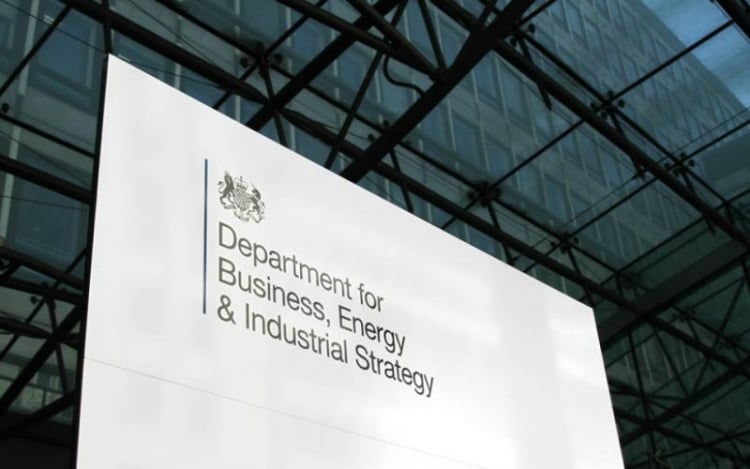
Instead the Department of Business, Energy and Industrial Strategy (BEIS), in conjunction with Ofgem, has developed the modified generation licence which in the meantime Broad said would offer some progress.
“The licence for storage, which we didn’t have before, should provide not sufficient but quite a big increase in regulatory clarity over what we had before.”
A response to this consultation is imminent, with the licence to be made available soon after, which should allow holders to avoid some of the network costs associated with energy storage projects.
Broad also defended the government’s progress in other areas of the SSFP, which he said had seen seven of the 29 actions completed.
He also said the department felt “quite proud” of the primary legislation it has been able to bring forward around smart metering and automated and electric vehicles, both of which are nearing their journey through the Houses of Parliament.