UK prime minister Rishi Sunak’s decision to delay net zero policies is disappointing, but unlikely to deter its battery storage industry from pushing forwards.
That was the take of Nick Bradford, managing director at developer Atlantic Green, writing in a Guest Blog published on Friday (29 September) on our sister site Solar Power Portal.
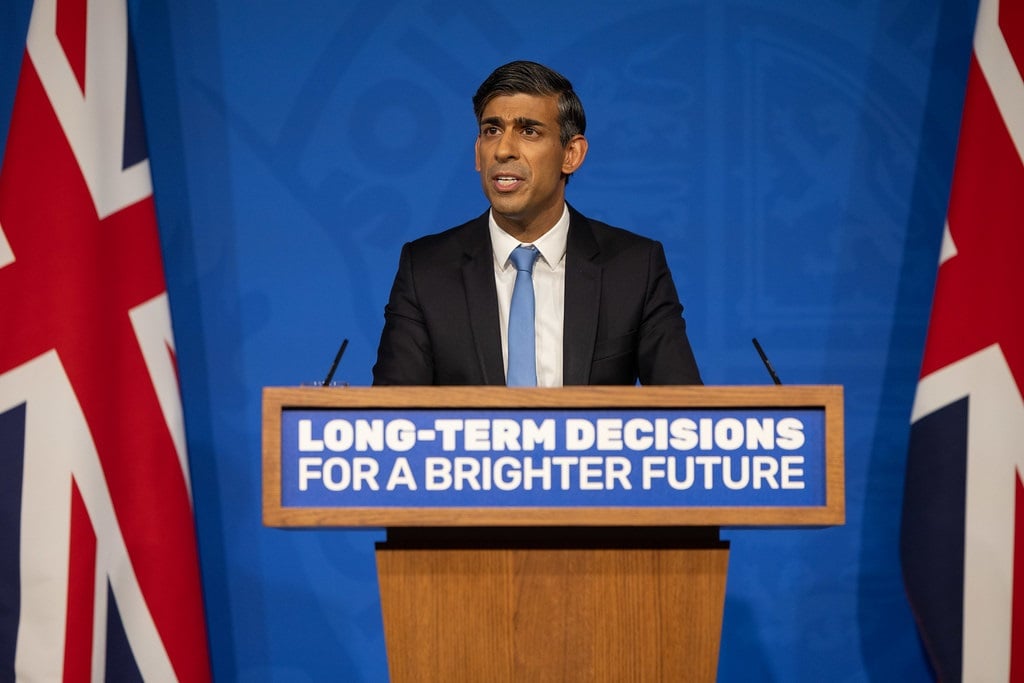
After rumours swirled a couple of weeks ago that Sunak was preparing to water down environmental policies, such as those relating to the phaseout of fossil fuel-powered cars and heating, the prime minister made his shock announcement in a press conference on 20 September, earlier than reportedly had been planned.
While the clean energy industry and environmental advocates reacted to the news negatively, as might be expected, it also appeared from polling that the populist move had not played out as well with the voting base as Sunak and his Conservative Party might have hoped. Surveys showed, meanwhile, that 89% of energy businesses remained committed to net zero targets.
Try Premium for just $1
- Full premium access for the first month at only $1
- Converts to an annual rate after 30 days unless cancelled
- Cancel anytime during the trial period
Premium Benefits
- Expert industry analysis and interviews
- Digital access to PV Tech Power journal
- Exclusive event discounts
Or get the full Premium subscription right away
Or continue reading this article for free
The prime minister effectively chose “short term political gain at the expense of delivering on net zero,” Atlantic Green’s Bradford wrote in his blog. The postponements of the internal combustion engine and gas boiler phaseouts well into the 2030s will slow the deployment of renewable energy “and the vital integration of battery energy storage systems (BESS) into the grid”.
“Like many, we are dismayed with certain aspects of Sunak’s announcement, particularly the setback it represents in terms of crucial climate targets and the potential impact on investor sentiment,” Bradford wrote.
The prime minister faces an imminent general election, which must be staged during 2024 under UK parliamentary law.
However, aside from the overall big picture gloom that the announcement cast, Bradford did acknowledge that certain measures and policies namechecked or unveiled by Sunak are positive for the industry.
Chief among those is that permitting for Nationally Significant Infrastructure Projects (NSIPs), which refers to grid-connected projects over 50MW in the energy sector, will be sped up; transmission network planning will be overhauled from ‘first come, first served’ to ‘first ready, first served’, as the regulator FERC is also seeking to do in the US; and the addition of spatial planning for project zoning rules.
The government and its relevant agencies had already announced plans to work on and improve in these areas, so Sunak may have alluded to them in order to try and counter a perception that he was abandoning green policy altogether.
Nonetheless, Bradford said the spatial planning and grid overhaul would create positive outcomes, particularly if they can help end the long waits – sometimes of as much as 15 years – to connect to the grid.
The NSIP overhaul meanwhile “would be a material improvement compared with existing application processes which are onerous and puts off investors and developers,” Bradford wrote.
Overall, while Atlantic Green, “like many” was dismayed at the prime minister’s U-turn, for setting back the UK’s commitment to combating the climate crisis and its potential impact on investor sentiment, the developer’s outlook remained optimistic, Bradford said.
“We firmly believe in the resilience of market fundamentals and are committed to pursuing our development strategy with unwavering determination, confident that we can overcome the challenges posed by this announcement and continue to thrive.”
You can read Nick Bradford’s blog for Solar Power Portal, ‘What impact will the Prime Minister’s net zero policies have on BESS development?’, here.
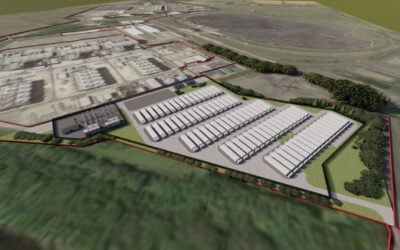
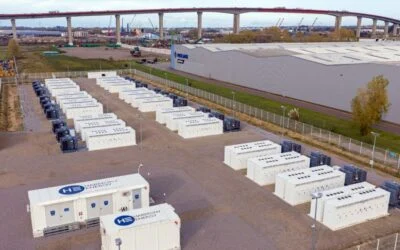
Atlantic Green is a joint venture between independent power producer Nofar Energy and private investor Interland, investing in, developing, owning and operating battery energy storage system BESS projects with a focus on the UK. The company won two awards last week in the Energy Storage Awards 2023, hosted by our publisher Solar Media.