Harmony Energy Income Trust (HEIT) has scrapped its first quarter dividend and appointed advisors JLL to sell some or all of its BESS assets, partly to demonstrate that the fund is undervalued by the markets.
Despite a 48% quarter-on-quarter increase in revenues in the three months to 30 April, the firm has now engaged JLL to “seek offers for some or all of the company’s assets, in order to maximise value and demonstrate the continuing disconnect with the share price,” it said yesterday (30 May). Its share price is down 57% compared to a year ago.
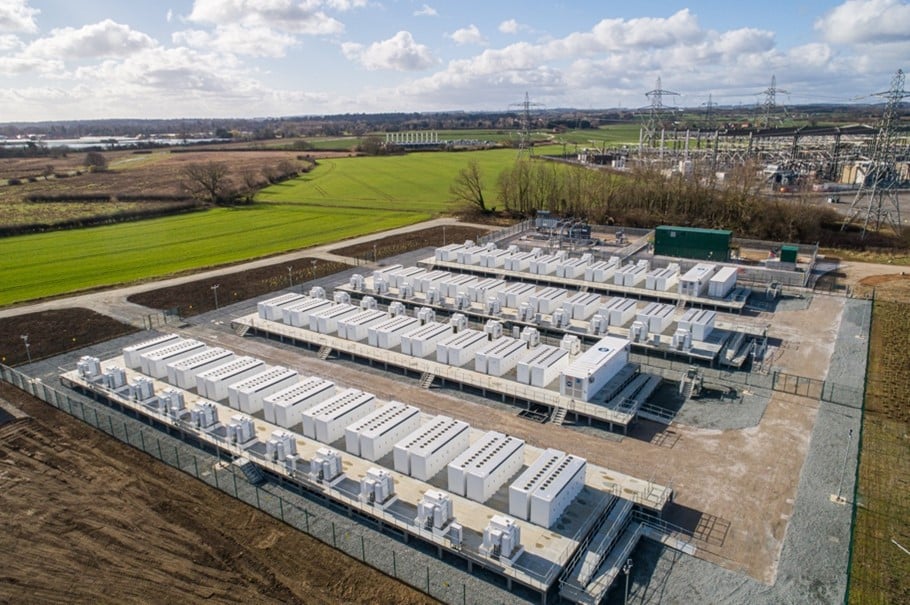
The fund, which is managed by developer Harmony Energy and trades as HEIT, has five operational UK battery energy storage system (BESS) projects and three set to be commissioned this year, all in all totalling 395.4MW/790MWh. Those include the two joint-largest operational systems in the UK and Europe, Pillswood and Bumpers at 198MWh each.
The decision to appoint JLL comes as HEIT scrapped its first quarter dividend, which was initially set to only be postponed. It said it does not anticipate being in a position to pay a dividend for the remainder of the current financial year, which runs to 31 October.
Try Premium for just $1
- Full premium access for the first month at only $1
- Converts to an annual rate after 30 days unless cancelled
- Cancel anytime during the trial period
Premium Benefits
- Expert industry analysis and interviews
- Digital access to PV Tech Power journal
- Exclusive event discounts
Or get the full Premium subscription right away
Or continue reading this article for free
Revenues for all BESS projects in the UK fell dramatically in 2023 as ancillary service markets saturated. Other funds, like Gore Street Capital’s, have managed to partially offset this by going into newer markets in the US and Europe.
Revenues have recovered since then, HEIT said, thanks to growing day-ahead wholesale price spreads, revenue opportunities in the Balancing Mechanism (BM) and higher prices in the ancillary service markets.
The company’s three remaining BESS projects – Rusholme, Wormald Green and Hawthorn Pit – have also had their commercial operation dates (COD) pushed back to Q3 2024, the first because of minor delays to a distribution network operator’s (DNO) connection programme, and the other two because of balance of plant (BOP) contractor delays.
Harmony Energy is engaging the contractor to expedite completion of the Wormald Green and Hawthorn Pit projects as soon as possible, while also exercising its contractual rights to claim liquidated damages to compensate for the lost revenue opportunities.
The falling revenues in the UK market has led to a swathe of investors buying up BESS developer-operators and their portfolios, a trend explored in a recent Energy-Storage.news article (Premium access).