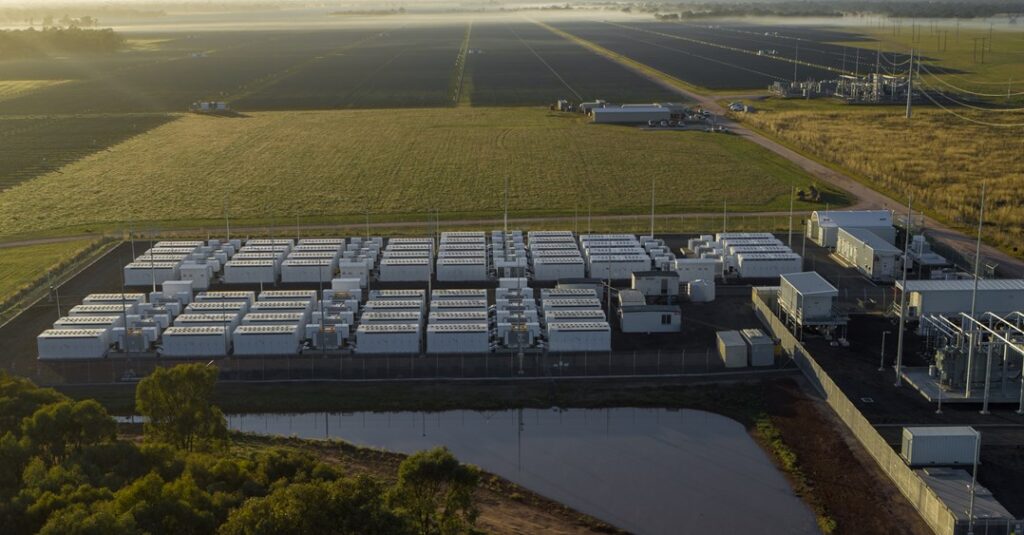
Australian transmission system operator Transgrid has contracted Edify Energy’s Riverina and Darlington Point battery energy storage systems (BESS) to increase its network capacity in New South Wales.
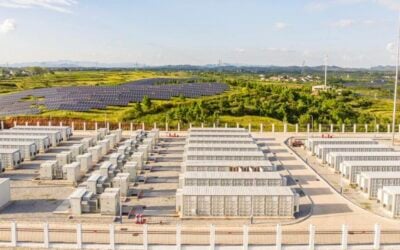
The project, comprising three BESS assets, owned by the Australian renewable energy developer Edify and fund manager Federation Asset Management, was brought online in May 2023, totalling 150MW/300MWh. It will be used to tackle a constrained area of Transgrid’s network between Darlington Point and Wagga Wagga in New South Wales, increasing its capacity by 120MW.
The BESS project is equipped with Tesla Megapacks, which form three separate operating systems co-located adjacent to an existing 333MWp solar PV power plant, connected at the 132kV Darlington Point substation.
Transgrid confirmed that the BESS technology will provide flexibility in planning future network augmentations, including the South West Renewable Energy Zone (REZ) and the VNI West project, a 500kV interconnector between Victoria and New South Wales currently in development.
Try Premium for just $1
- Full premium access for the first month at only $1
- Converts to an annual rate after 30 days unless cancelled
- Cancel anytime during the trial period
Premium Benefits
- Expert industry analysis and interviews
- Digital access to PV Tech Power journal
- Exclusive event discounts
Or get the full Premium subscription right away
Or continue reading this article for free
Marie Jordan, executive general manager of network at Transgrid, highlighted the importance of expanding network services in New South Wales as additional renewable energy generation is connected.
“Transgrid’s contracts with the Riverina and Darlington Point BESS facilities unlock extra capacity on the existing transmission network and deliver additional renewable energy to local households and businesses without the need to build a new transmission line between Wagga Wagga and Darlington Point,” Jordan said.
“This is Transgrid’s first contracted non-network solution to come into service with more to follow in other parts of New South Wales. These non-network solutions and technologies allow consumers to benefit from existing transmission infrastructure, avoiding the cost of building new towers and lines.”
New South Wales’ need for grid-forming BESS
Transgrid has been vocal about the need for grid-forming BESS in recent months. Data released in June found that 4.8GW will be necessary to stabilise the grid in New South Wales as more renewable energy generation is deployed.
Grid-forming BESS can provide inertia to maintain system stability through the integration of advanced inverters, which can be deployed as retrofits to existing assets or in new-build projects. The rotating mass of thermal power generators has historically offered this critical grid-balancing function.
Alongside grid-forming BESS assets, Transgrid stated that a “diverse portfolio of solutions is required to meet New South Wales’ system strength needs, including synchronous condensers, modifications to existing and future synchronous machines, contracts with hydro, coal and gas assets”.
The need for grid-forming BESS in the country attracted the attention of the Australian Renewable Energy Agency (ARENA), which, in December 2022, announced its support for 2GW/4.2GWh of grid-forming BESS capacity.