Canadian energy company TC Energy will work to develop “a potential long-term revenue framework” for its proposed pumped storage project in the Canadian province of Ontario, following a directive from Todd Smith, the minister of energy of Ontario.
The company first proposed the C$4.5 billion (US$3.3 billion) project in 2019, and has worked with the Saugeen Ojibway Nation on the project.
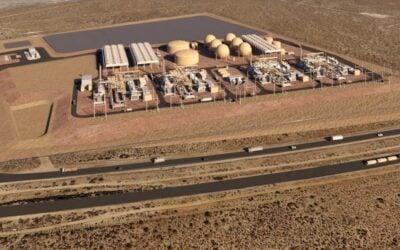
The proposed plant would provide 1GW of flexible power by pumping water from Ontario’s Georgian Bay to a reservoir when electricity demand is low, and releasing the water back, turning turbines to generate electricity, when demand is high.
Ontario’s Independent Electricity System Operator (IESO) expects the province to need an additional 15GW of new power capacity by 2035, and TC Energy is optimistic that this project will help meet this demand with flexible power generation.
Try Premium for just $1
- Full premium access for the first month at only $1
- Converts to an annual rate after 30 days unless cancelled
- Cancel anytime during the trial period
Premium Benefits
- Expert industry analysis and interviews
- Digital access to PV Tech Power journal
- Exclusive event discounts
Or get the full Premium subscription right away
Or continue reading this article for free
However, while the company planned to begin construction this year, it has still not received approval from the state government. Last week, Smith wrote, in an open letter to IESO president and CEO Lesley Gallinger, that he was “not prepared to make a final determination at this time” on either the TC Energy project, or a separate proposed storage project belonging to Ontario Power Generation and Northland Power.
Smith wrote that neither storage project would be a viable investment, compared to other energy projects such as battery storage, and would not provide net benefits to Ontario’s energy grid or ratepayers. However, he noted that the addition of new pumped hydro capacity could be of benefit to “enhancing the diversity of Ontario’s supply mix”, and that he would need to consider “a valuation of other broader societal and economic benefits” associated with these projects before granting approval.
As a result, TC Energy plans to submit a report, including a new revenue framework, for the project by the end of July 2024, and expects to receive approval from the Ontario government within 45 days, opening the door for the company to begin construction work in the latter part of this decade with commercial operation in the 2030s.
“The Minister’s direction to advance this project is a strong signal that the work TC Energy and Saugeen Ojibway Nation are doing is important,” said Annesley Wallace, executive vice-president of strategy and corporate development, and president of power and energy solutions, at TC Energy. “It recognises the critical role that pumped hydro storage will have in enhancing the diversity of Ontario’s supply mix and achieving a net-zero electricity grid.”
The news follows Boralex, EDF and Atura Power all seeking local support for large-scale battery energy storage (BESS) projects in Ontario, as interest in storage in the Canadian province grows.